

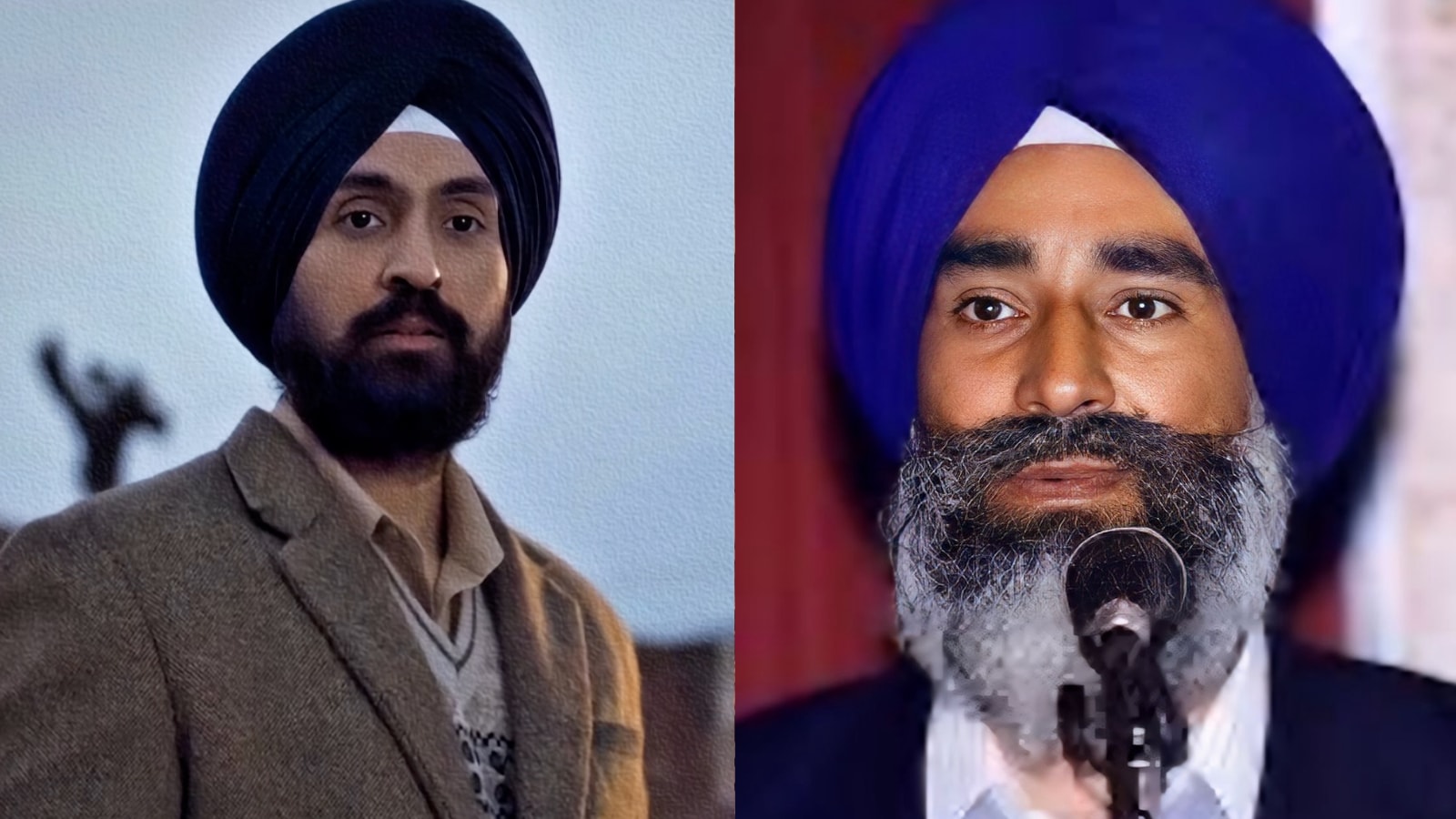
Jaswant Singh Khalra remains one of the most poignant figures in India's modern human rights history. Born in 1952 in the village of Batala, Punjab, Khalra was a chartered accountant by profession but became a relentless crusader for justice. His name is synonymous with the exposure of the so-called 'encounter deaths' and forced disappearances that marred the dark period of the Punjab insurgency in the 1980s and 1990s.
The upcoming Punjabi film Satluj, starring and produced by the iconic singer-actor Diljit Dosanjh, is reported to be based on Khalra's life. Dosanjh plays a character inspired by Khalra, bringing to light the activist's courageous stand against state-sponsored violence. The film's title, referencing the sacred river Sultej (Satluj), may allude to the deep-rooted relationship between the land and its people, symbolizing both life and the flow of justice.
Early Life and Background
Jaswant Singh Khalra was born into a Sikh family with a strong tradition of service. He completed his education in Patiala and later worked as a chartered accountant in Amritsar. However, his life took a dramatic turn when he began documenting cases of missing persons during the height of the Punjab insurgency. From the mid-1980s to early 1990s, Punjab witnessed a violent separatist movement led by militant groups, countered by the Indian security forces through aggressive anti-insurgency operations.
Khalra is believed to have been deeply affected by the story of a young man who disappeared after being picked up by police. This personal connection spurred him to investigate the fate of hundreds of others who had vanished. He started collecting data, visiting police stations, and meeting families of the missing. His work soon evolved into a systematic enquiry that challenged the official narrative of 'encounter deaths' – killed in alleged gunfights – which the authorities used to explain the bodies found across Punjab.
The Investigation: Unearthing the Truth
Khalra's most significant contribution was his meticulous research. He compiled lists of over 2,000 missing persons who had been last seen in police custody. In 1991, he filed a petition in the Punjab and Haryana High Court demanding a judicial inquiry. He also uncovered secret cremations and mass graves, which he photographed and documented. His evidence pointed toward a pattern of extrajudicial killings by police and paramilitary forces. Khalra even gathered cremation records from gurdwaras and other locations, linking them to the disappearances.
He also published a book titled Khabardar: Jhooth Hai Saara Dehshatgard (Beware: The Terrorist Story is All a Lie), which detailed his findings. His work garnered national and international attention, including from the United Nations. The Indian government, however, viewed him as a threat and he faced intense harassment and surveillance.
Assassination and Legacy
On September 6, 1995, Jaswant Singh Khalra was abducted by members of the Punjab Police. He was tortured and killed, his body never found. The police claimed he had escaped from custody and was 'untraceable'. This triggered a massive outcry from human rights groups. In 2006, a Central Bureau of Investigation (CBI) court convicted seven police officers for his murder, though many believe the higher echelons of power were complicit.
Khalra's legacy is immortalized in the fight for justice. His family continues to pursue the case. The Punjab and Haryana High Court later appointed a commission to investigate the disappearances, leading to the exhumation of hundreds of bodies. His work also inspired the formation of the Human Rights Committee of Punjab, which demands accountability for past human rights violations. The effect of his activism is felt today. In 2019, the Punjab government promised a memorial, but it remains delayed.
Diljit Dosanjh and Satluj
Diljit Dosanjh, one of the most popular figures in Punjabi music and cinema, has often used his platform to shed light on social and political issues. His film Satluj is expected to be a tribute to Khalra's sacrifice. Dosanjh himself expressed in interviews that he was moved by Khalra's story and wanted to bring it to a global audience. The film reportedly delves into the life and times of Punjab during the insurgency, exploring the price of speaking truth to power.
While Satluj is still in pre-production, it has already generated significant buzz. Fans are eager to see Dosanjh take on such a serious and political role, a departure from his often comedic or romantic characters. The film is expected to be a hard-hitting drama, perhaps even a biopic, that will not only entertain but also educate the younger generation about a painful chapter in Punjab's history.
The casting and crew details remain under wraps, but sources suggest that the film is aiming for an autumn 2024 release. The title 'Satluj' is symbolic – the river that flows through Punjab, eternal yet ever-changing. It may represent the flow of time and the persistence of the quest for justice despite attempts to suppress it.
Key Facts
- Jaswant Singh Khalra (1952–1995) was a Sikh human rights activist from Punjab, India.
- He exposed extrajudicial killings and forced disappearances during the Punjab insurgency, documenting over 2,000 missing persons.
- He was abducted and murdered by Punjab Police in 1995; his body has never been recovered.
- Several police officers were convicted for his murder in 2006, but broader accountability remains a controversy.
- Diljit Dosanjh's upcoming film Satluj is based on Khalra's life and activism, with Dosanjh playing a character inspired by him.
The Broader Context: Punjab Insurgency and Human Rights
The Punjab insurgency (1981–1995) was a complex period marked by violent clashes between Sikh militants demanding a separate state (Khalistan) and the Indian government's heavy-handed counter-insurgency operations. Human rights organizations have documented widespread abuses by both sides. Khalra's work brought international scrutiny to the Indian state's actions. His story is a reminder of the importance of independent fact-finding and the courage required to challenge authority in times of conflict.
Khalra's methods – collecting cremation records, photographing mass graves, and building a database using simple technology – predated the modern human rights investigation playbook. His commitment to detail and his willingness to risk his life for truth set a benchmark for activists worldwide. Today, his name is invoked in discussions about police accountability, custodial deaths, and the right to life. The Indian Supreme Court, in several rulings, has referred to the 'Khalra case' as a landmark in the fight against enforced disappearances.
Diljit Dosanjh's decision to make a film about Khalra is significant. It brings the story to millions of fans, particularly the Punjabi diaspora, who may not be deeply familiar with the history. Cinema has the power to humanize statistics and abstract concepts. By portraying Khalra's courage and sacrifice, Satluj could reignite conversations about justice, memory, and the need for reconciliation. It also places Dosanjh in a lineage of artists who use their craft to address social and political wrongs, from Guru Dutt's Kaagaz Ke Phool to Anurag Kashyap's Gangs of Wasseypur.
As details about Satluj emerge, anticipation builds. The film is expected to be released theatrically in India and abroad, and will likely be available on streaming platforms after its cinematic run. For those wanting to learn more about Jaswant Singh Khalra, several books and documentaries exist, including Khalra: The Martyr of Human Rights and the documentary Forced to Disappear. His legacy lives on not only through these films but through the many families who continue to seek closure for their loved ones.
In an era where fake news and alternate facts are prevalent, the story of Jaswant Singh Khalra stands as a testament to the power of one individual's search for truth. He paid the ultimate price, but his voice still echoes. As Diljit Dosanjh steps into his shoes on screen, audiences can reflect on the ongoing struggle for justice in Punjab and beyond.
Source:NDTV News