

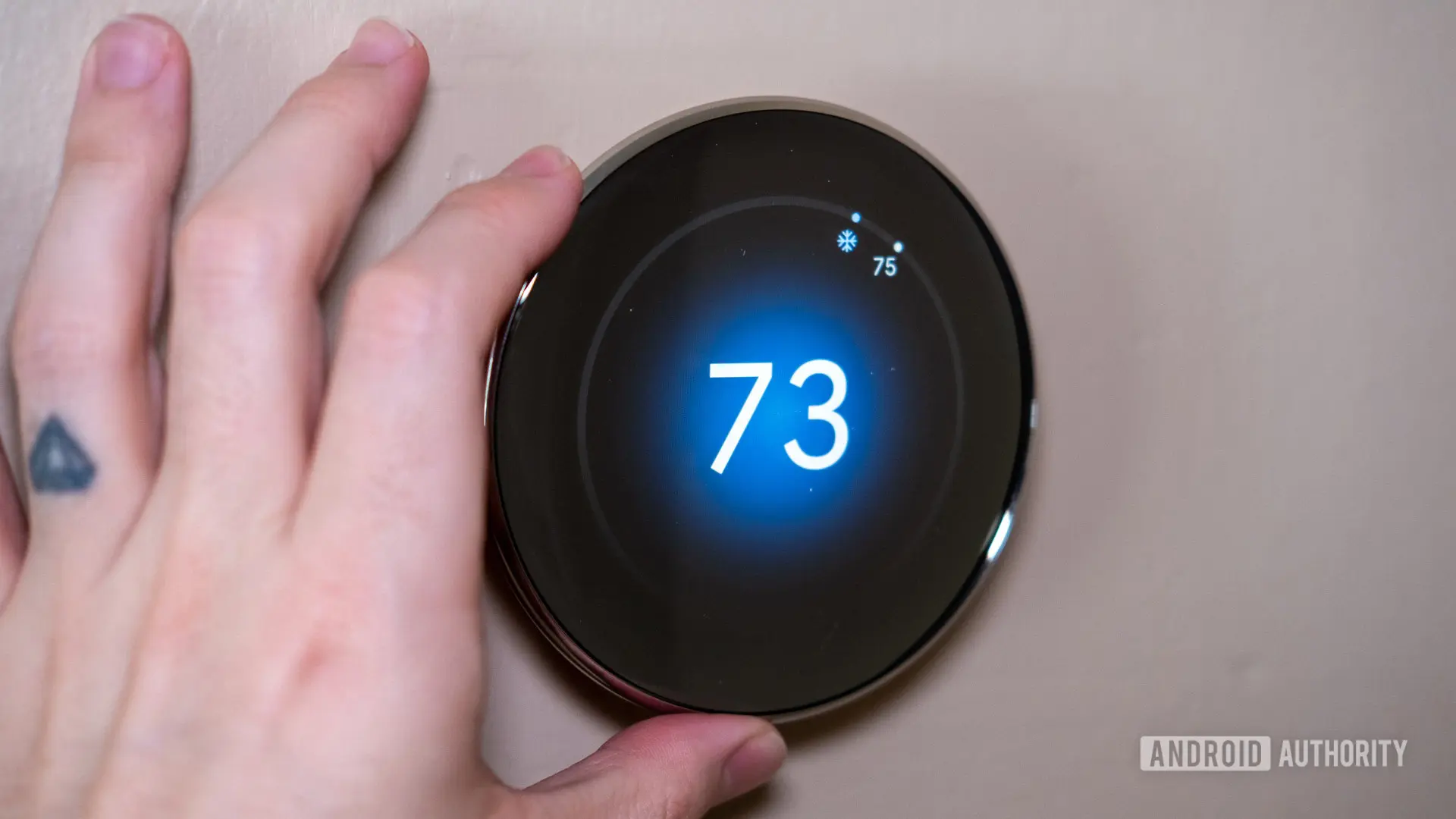
One of the key promises of a smart home is hands-free convenience. You walk into your living room, say a simple phrase like "Hey Google, set the thermostat to 72," and the temperature changes without needing to touch a screen or dial. But for many Google Home and Nest Thermostat owners, that effortless experience has recently been interrupted. A growing number of users are reporting that their Google Home speakers and smart displays cannot connect to their Nest Thermostats via voice commands, leaving them to adjust the temperature the old-fashioned way—by walking to the thermostat or using the app.
The Voice Control Breakdown
Reports began surfacing on social media platforms like Reddit, where users described a frustrating scenario: they would try to change the temperature using voice commands, only to receive a response from Google Assistant saying: "Sorry, I can't reach the Nest Thermostat right now." The same command works fine when issued through the Google Home app, suggesting the problem is not with the thermostat itself but with the voice control pathway. Affected users often find that the issue persists for a few hours or even a day, then spontaneously resolves—only to return later.
This glitch undermines one of the core selling points of a smart thermostat: the ability to adjust climate control without lifting a finger. For a device marketed as a smart home essential, such intermittent failures erode trust and highlight the fragility of cloud-dependent voice assistants. While the Google Home app remains a reliable fallback, many users rely on voice control for multitasking convenience—for example, when cooking with messy hands, carrying laundry, or coming home with arms full of groceries.
User Experiences and Community Frustration
The original Reddit post that brought attention to the issue quickly accumulated dozens of comments from users with similar experiences. Some reported that the issue started after a recent Google Home firmware update, while others noticed the problem coincided with changes in their Wi-Fi network. Interestingly, the error appears to be independent of the specific Nest Thermostat model—both the older Nest Learning Thermostat (3rd gen) and the newer Nest Thermostat (2020) are affected. Users have tried common troubleshooting steps such as rebooting their Google Home speakers, power cycling the Nest Thermostat, and re-linking their Google and Nest accounts, but most reported only temporary relief.
One user noted that their Nest Thermostat worked fine with Amazon Alexa voice commands, further suggesting the issue lies specifically with Google's voice control infrastructure. Another commenter, who owns multiple Google Home devices, observed that the error occurred simultaneously across all speakers in the house, implying a server-side problem rather than a device-level fault. These anecdotes align with the nature of smart home ecosystems, where voice commands rely on cloud processing to link Google Assistant to third-party device APIs.
The Technical Background: How Voice Control Works
To understand why this error occurs, it's helpful to look at how Google Home handles thermostat voice commands. When a user says "Hey Google, lower the thermostat to 68 degrees," the voice command is processed by Google's servers. Google Assistant then sends a request to the Nest service (former Works with Nest, now integrated into Google Home) to execute the command. If that communication link is disrupted—due to server congestion, authentication token expiration, or a temporary outage—the Assistant returns the generic "can't reach" error. Importantly, the Google Home app bypasses the voice processing layer and directly communicates with the Nest API, which is why the app typically works even when voice commands fail.
Historically, similar glitches have occurred when Google migrates backend systems or updates privacy policies. The transition from the Works with Nest program to the Google Home ecosystem in 2019 caused months of instability for some users. More recently, changes to how Google handles third-party device access may also play a role. Many users remain unaware that their Nest Thermostats are now managed through the Google Home structure, and any backend adjustments can inadvertently break voice control.
Potential Causes and Fixes
While Google has not yet released an official statement (the article notes that Android Authority reached out to Google for comment), the community has identified several potential workarounds. The most commonly recommended fix is to unlink and relink the Google Home account to the Nest service. This can be done through the Google Home app under Settings > Works with Google > Nest. Another suggestion is to ensure that both the Google Home app and the Nest app are updated to their latest versions, as outdated apps sometimes present authentication mismatches.
Some users have reported that resetting their Wi-Fi router or assigning a static IP address to their Nest Thermostat resolves the issue temporarily. Since the error seems to come and go, others simply wait it out—the original poster noted that the next day, their Google Home speakers began communicating with the Nest Thermostat again without any action on their part. This intermittent nature points to a temporary server-side problem rather than a permanent device failure.
For those who need a more reliable backup, creating a routine in the Google Home app that uses a voice command as a trigger but executes the action locally (when possible) may help, though cloud dependence remains a limitation. Another alternative is to invest in a smart speaker that supports Matter, the new smart home standard, which could eventually reduce reliance on proprietary cloud bridges.
Broader Implications for Smart Home Reliability
This incident underscores a broader challenge in the smart home industry: the trade-off between convenience and reliability. Voice assistants are inherently vulnerable to internet outages, server outages, and account synchronization issues. When a critical feature like thermostat control fails, it can make the entire smart home feel more like a gimmick than a genuine improvement to daily life. Google's ongoing integration of Nest devices into the Google Home ecosystem was supposed to streamline management, but it has also introduced new points of failure.
Competitors like Amazon and Apple face similar challenges. Alexa voice control for thermostats has also experienced occasional outages, though often with quicker resolutions. Apple's HomeKit architecture, which relies on local processing through a Home Hub, tends to be more robust for voice commands, but it requires more expensive hardware and is less widely adopted. For now, Google Home users are left hoping that the company will resolve the issue quickly and provide a transparent explanation.
Historical Context: Nest and Google Home Integration
Nest Labs was founded in 2010 by former Apple engineers Tony Fadell and Matt Rogers, launching the Nest Learning Thermostat in 2011. Google acquired Nest for $3.2 billion in 2014, and initially allowed the company to operate independently under the Nest brand. In 2018, Google began merging Nest into the larger Google Home hardware division, a move that included discontinuing the Works with Nest program and requiring users to migrate to Google accounts. This transition was controversial because it broke compatibility with many third-party apps and devices that relied on the old API.
By 2021, Google had fully absorbed Nest, releasing new thermostats under the Google Nest name. The integration brought benefits like unified control in the Google Home app and compatibility with Google Assistant across all devices. But it also meant that any changes to Google's cloud infrastructure could affect Nest products. The current voice control glitch may be a symptom of this ongoing consolidation, where backend updates inadvertently disrupt the voice command pipeline.
What Users Can Do While Waiting for a Fix
Until Google issues a permanent fix, users can take several steps to minimize disruption. First, ensure that both the Google Home and Nest apps are running the latest versions. Check the Google Home app for any pending updates under your profile. Second, try unlinking and relinking the Nest service from Google Home. This can refresh authentication tokens. Third, if the issue persists, consider rebooting your Wi-Fi router and all Google Home speakers. Some users have also had success by factory resetting only the affected Google Home device, but this should be a last resort as it requires reconfiguring the entire setup.
A more advanced workaround is to use the Google Home app to create a routine that can be triggered by voice but executes the command through a local integration, if available. However, as of now, most Nest Thermostat controls still require cloud connectivity. Another option is to use the Nest app directly for voice control via a third-party assistant like Siri (through Homebridge) or Alexa, if the user has those ecosystems. This, of course, adds complexity and additional hardware.
The Future of Nest and Google Home
Looking ahead, Google's adoption of the Matter standard promises to improve interoperability and potentially reduce cloud dependence. Matter, which launched in late 2022, enables smart home devices to communicate locally over Wi-Fi, Thread, or Ethernet without requiring a cloud server for every command. If Google updates its Nest Thermostats to fully support Matter, voice commands could be processed locally through a Matter-compatible hub, thereby avoiding the kind of server-side glitches that are currently plaguing users. However, it is still unknown when Google will roll out such updates for existing Nest Thermostats.
In the meantime, this incident serves as a reminder that the smart home is still an evolving ecosystem, and users should have backup plans for essential functions like heating and cooling. While the convenience of voice control is appealing, the ability to manually adjust a thermostat—whether through an app or physical touch—remains essential. Google has been made aware of the issue, and based on past patterns, a fix should be forthcoming. Until then, Nest owners can take comfort in knowing they are not alone in experiencing this temporary setback.
Source:Android Authority News