

Junior mining companies have long been described as the lifeblood of the global mining industry. They are the explorers, the risk-takers, and the discoverers of new mineral deposits that feed the world's growing demand for metals and commodities. Yet operating in this space is fraught with challenges, from volatile commodity prices and complex regulatory environments to intense geopolitical risks and funding constraints. A recent episode of the Moneyweb podcast brought together three experts to discuss the current state of junior mining, focusing on a landmark helium supply deal, rising US-China tensions, and weakening economic indicators in South Africa.
The ASP Isotopes Helium Deal: A Game-Changer?
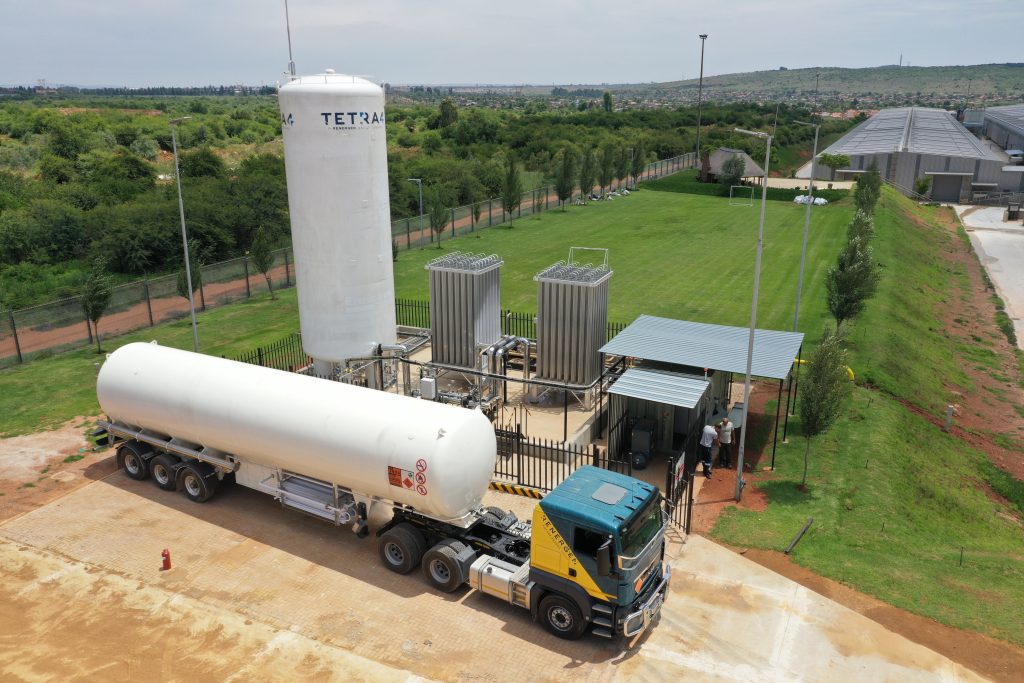
Chantal Marx from FNB Wealth & Investment highlighted the significance of ASP Isotopes' announcement that Renergen has secured its first contract for the supply of helium. Helium, a critical gas used in medical imaging, semiconductor manufacturing, and aerospace, has seen supply constraints globally. South Africa, through projects like Renergen's Virginia Gas Project, is emerging as a potential player in the helium market. Marx noted that this contract validates the commercial viability of the project and underscores the strategic value of junior miners who can bring niche resources to market. However, she warned that scaling up production and navigating infrastructure bottlenecks remain significant hurdles.
The deal also reflects a broader trend: major industrial consumers are increasingly looking to secure long-term supply agreements directly with producers, bypassing traditional commodity traders. For junior miners, such agreements can provide the financial stability needed to fund development. Yet Marx cautioned that investors must still be wary of execution risk, especially in a capital-intensive sector like helium extraction.
The Thucydides Trap and US-China Tensions
Jason Swartz, a portfolio manager at Old Mutual Investment Group, shifted the focus to geopolitics, specifically the Thucydides Trap — the concept that when a rising power challenges an established one, conflict is likely. Referencing President Xi Jinping's comments at a recent US-China summit, Swartz argued that the rivalry between the two superpowers is entering a new phase. For junior miners, this means increased uncertainty regarding supply chains for critical minerals like rare earths, lithium, and cobalt. Many of these are dominated by China, and Western efforts to diversify sources are creating opportunities for junior miners in jurisdictions like Africa, Australia, and the Americas.
Swartz emphasized that while geopolitical tensions can boost demand for certain commodities (as countries stockpile strategic materials), they also raise the risk of trade disruptions and sanctions. Junior miners with projects in politically stable countries may benefit from a 'friend-shoring' premium, but those in contested regions face heightened due diligence requirements from investors.
SA Leading Economic Indicators: A Warning Sign
Independent economist John Loos provided an analysis of the SARB Composite Leading Business Cycle Indicator, which fell in April. This index, designed to predict turning points in the economy, has been signaling weakness. Loos explained that the decline points to potential headwinds for South Africa's mining sector, including junior miners. Higher interest rates, load-shedding, and logistics constraints continue to weigh on the economy. For junior miners, a weaker economy can translate into lower commodity prices and tighter access to capital.
However, Loos also noted that some elements of the leading indicator — such as improved export orders — offer a glimmer of hope. South Africa's rich mineral endowment means that even in challenging times, there are opportunities for well-capitalized juniors to acquire distressed assets or advance projects with solid fundamentals.
Background: The Role and Risks of Junior Mining
To understand the significance of these discussions, one must appreciate the unique position of junior mining companies. Unlike major miners, juniors typically have no producing assets and rely solely on exploration success or the sale of discoveries to generate value. They are the first to enter new frontiers, often in remote or politically unstable regions. Their success is essential for replenishing the world's depleting resource base. Major discoveries by juniors have historically led to the development of entire new mining districts.
Yet the obstacles are formidable. Raising capital is the biggest challenge. In bear markets for commodities, juniors often struggle to fund even basic drilling programs. The recent downturn in global equity markets has made it even harder. Additionally, environmental, social, and governance (ESG) requirements demand higher standards, adding to costs. Regulatory delays, community opposition, and technical difficulties can also derail projects.
Despite these hurdles, the junior mining sector continues to attract passionate geologists, entrepreneurs, and investors who believe in the long-term demand for metals. The energy transition, urbanization in developing countries, and the need for defense-related minerals all underpin future demand.
Key Takeaways from the Experts
Chantal Marx's analysis of the ASP Isotopes helium deal illustrates that niche markets can offer high rewards for juniors that successfully overcome technical and commercial barriers. Jason Swartz's geopolitical insights remind us that global power shifts are reshaping mining investment flows, with junior miners acting as both beneficiaries and victims of these changes. John Loos's macroeconomic perspective serves as a caution that local conditions — such as South Africa's struggling economy — cannot be ignored.
Ultimately, junior mining remains a high-risk, high-reward endeavor. The sector's criticality to global supply chains means that even in challenging times, it will continue to attract interest. But for investors, thorough due diligence and a long-term horizon are non-negotiable. As the podcast episode made clear, the path from discovery to production is fraught with obstacles, but the potential rewards — both financial and strategic — make the journey worthwhile.
Source:Moneyweb News