

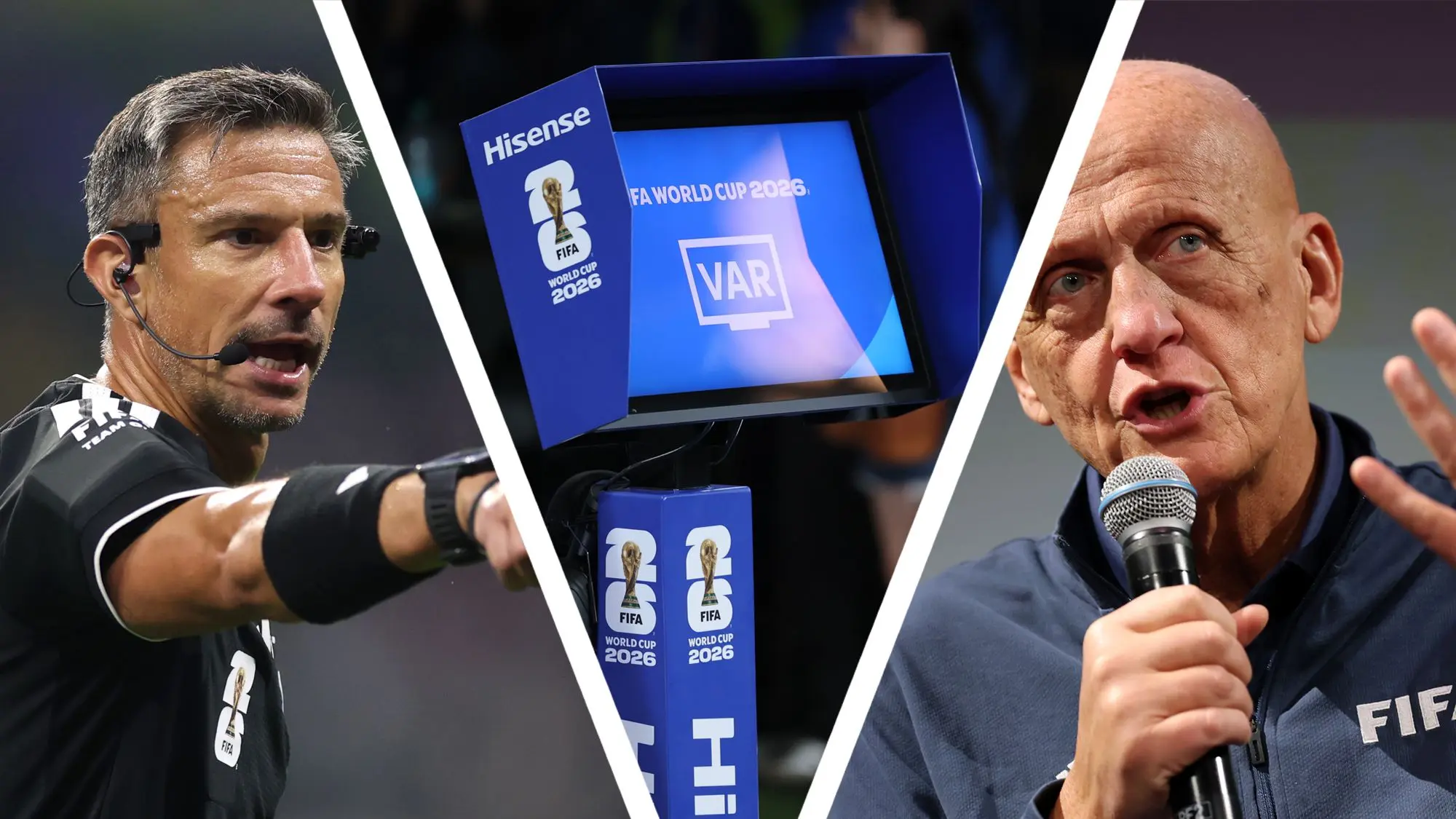
Few figures in football command as much respect as Pierluigi Collina. The Italian referee, renowned for his bald head and intense stare, officiated some of the biggest matches in history, including the 2002 World Cup Final. Now, as UEFA's chief refereeing officer, Collina remains a leading voice on the game's laws. In an exclusive conversation, he addressed a burning question: Has VAR killed the joy of celebrating a goal?
“Absolutely not,” Collina insists. “The emotion is doubled, it's not reduced. When you score and then you have to wait a moment—that split second of anxiety—when the goal is finally confirmed, the release is even greater.” His words come as the 2022 World Cup in Qatar showcased VAR's most significant role yet. Controversies persisted, but Collina believes the system has matured.
To understand his perspective, it's worth revisiting the introduction of VAR. Officially adopted by the International Football Association Board in 2018, the Video Assistant Referee system was designed to correct clear and obvious errors. Critics argued it disrupted the flow of the game and muted spontaneous celebrations. Yet Collina points to data showing that the average delay is only about 30 seconds, and that most decisions are accurate.
Collina's career provides a unique lens. Born in Bologna in 1960, he became a referee at 17 after a childhood injury ended his playing dreams. His rise was meteoric: by 1995 he was a FIFA referee, and he soon became the face of officiating. His authoritative style earned him the nickname “Kojak” after the bald detective. He refereed the 1999 Champions League Final and the 2002 World Cup Final between Brazil and Germany, a match that ended 2-0.
In that era, referees had no technological help. Decisions were final, and errors could change history. Collina recalls a match where he missed a clear penalty. “I felt awful. It stayed with me,” he says. That experience makes him a strong advocate for VAR. “If I had VAR, I would have used it. It's not about taking responsibility away from referees; it's about giving them the tools to be correct.”
The World Cup stage magnifies every call. In Qatar, VAR intervened in 22 penalty decisions, upheld 13, and overturned 9. It also assisted in offside checks, red card reviews, and goal-line technology. The average time for a VAR review was 51 seconds. For fans, the wait felt interminable. Yet Collina argues that the suspense creates a new kind of drama.
“Think about the roar when a goal is confirmed after a tight offside call. The fans' emotion is pent up and released in a wave. That is powerful,” he says. He compares it to a dramatic pause in a movie. “The celebration becomes a two-act play: the initial strike, the wait, then the explosion.”
Not everyone agrees. Players have complained about the delay. In the 2022 final, Kylian Mbappé scored quickly after a VAR check, but the pause before Messi's penalty in the shootout was tense. Yet Collina believes the technology has improved fairness. “Without VAR, many goals would have been wrongly disallowed. Is that better for joy? No.”
The evolution of refereeing is ongoing. Collina is involved in training the next generation of officials, emphasizing communication and empathy. “We need referees who understand the game's emotion but apply the law dispassionately. VAR doesn't change that; it supports it.”
Looking ahead, semi-automated offside technology, used in Qatar, reduces delays. It tracks 29 data points per player and alerts VAR officials instantly. Collina sees this as the future. “The technology gets faster, less intrusive. The emotion will only increase as fans trust the system more.”
His own legacy is secure. Collina retired from active refereeing in 2005 but remains iconic. A statue in his honor stands at the Italian Football Museum. He still watches games with passion. “When I see a goal now, I look for the flag. But I also wait for the confirmation. And when it comes, I celebrate just as hard.”
The broader debate about technology in sports is nuanced. In tennis, Hawk-Eye has eliminated questionable calls. In cricket, DRS adds drama. Football's version is still finding its rhythm. But Collina's message is clear: joy isn't diminished; it's transformed. “The emotion is doubled. It's not reduced. And that's a good thing for everyone who loves the game.”
His final thought: “Referees are human. We make mistakes. VAR helps us make fewer. And when the goal is given, the celebration is pure. That's what the World Cup is about.” As the football world debates the role of technology, Collina's voice—steady, authoritative, and passionate—reminds us that the heart of the game remains intact.
Source:TechRadar News