

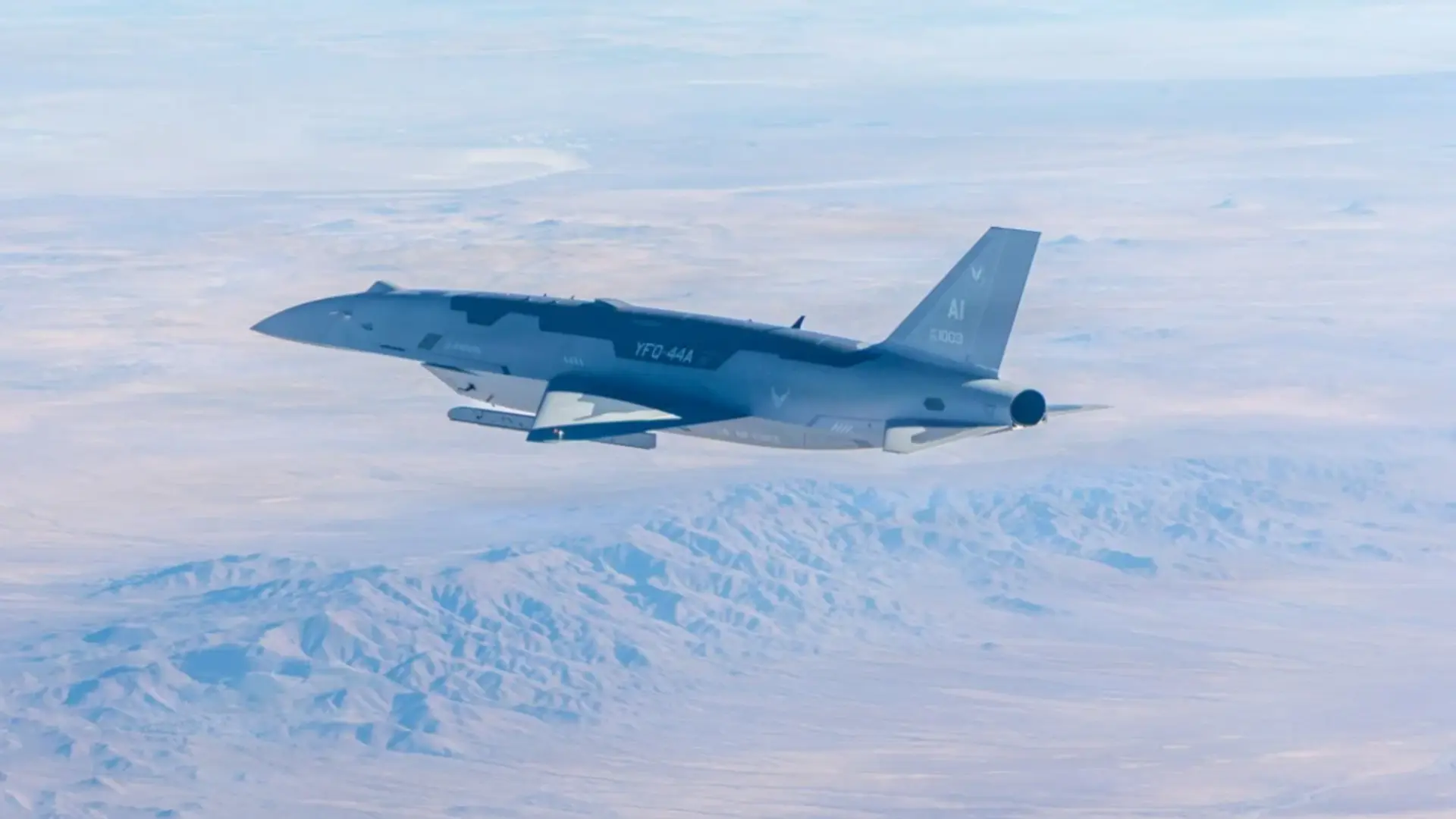
The United States Air Force has achieved a groundbreaking milestone in aerial warfare: an autonomous artificial intelligence-controlled fighter drone has successfully fired a live AIM-120 Advanced Medium-Range Air-to-Air Missile (AMRAAM) for the first time in history. The test, conducted recently at a undisclosed location, marks a significant leap forward in the integration of AI into combat aviation.
The aircraft involved is believed to be part of the Air Force's Collaborative Combat Aircraft (CCA) initiative, which aims to develop low-cost, unmanned wingmen that can operate alongside crewed fighters like the F-35 and F-15EX. These drones are designed to execute complex missions with minimal human intervention, relying on sophisticated AI algorithms to make real-time decisions.
The Significance of the AMRAAM Test
The AIM-120 AMRAAM is the primary beyond-visual-range air-to-air missile used by the U.S. military and its allies. With a range of over 100 miles and active radar homing, it is a weapon that requires precise coordination between sensors, navigation, and targeting systems. For an AI to control the launch of such a weapon autonomously, it had to demonstrate not only the ability to detect and track an enemy aircraft but also to comply with strict rules of engagement and safety protocols.
Previously, autonomous drones have fired missiles in tests, but these were typically air-to-ground munitions or simpler weapons. The AMRAAM launch represents a much higher level of complexity, as it involves intercepting a moving aerial target at high speed, often at long distances. The success of this test indicates that the AI can handle the full engagement chain from detection to weapon release.
Background: The Rise of Autonomous Combat Aircraft
The U.S. Air Force has been experimenting with unmanned combat aircraft for decades, from the Predator and Reaper drones to the more recent XQ-58A Valkyrie. However, these earlier platforms were either remotely piloted or operated under limited autonomy. The CCA program, part of the Air Force's broader Next Generation Air Dominance (NGAD) family of systems, aims to field a fleet of attritable drones that can fly alongside human pilots as trusted wingmen.
These CCAs are designed to perform a variety of roles: reconnaissance, electronic warfare, strike, and air-to-air combat. The key innovation is the AI brain that can process vast amounts of sensor data, communicate with other aircraft, and make tactical decisions faster than a human. The AMRAAM test validates that this AI can be trusted with lethal decision-making in a controlled environment.
How the Test Unfolded
According to officials familiar with the test, the AI-controlled drone was flying a routine patrol mission when it encountered a simulated adversary aircraft. The AI assessed the threat, coordinated with a manned command-and-control aircraft (likely an E-7 Wedgetail or a ground station), and then initiated an intercept. After receiving authorization—possibly from a human operator in the loop—the AI fired the AMRAAM, which successfully engaged the target drone.
The test was conducted over a restricted range, with multiple safety observers and the ability for a human to override the AI at any time. The fact that the AI was allowed to pull the trigger itself, rather than just recommending a shot to a human, marks a major step forward. It demonstrates the Air Force's growing confidence in AI capabilities.
Implications for Air Combat Doctrine
This milestone has profound implications for how the U.S. military will fight future air battles. Autonomous drones can operate in contested environments where communication links are jammed, or where the risk to human life is too high. They can also fly more aggressively, pulling high-G maneuvers that would incapacitate a human pilot. By teaming AI drones with crewed aircraft, the Air Force aims to create a combat force that is more lethal, survivable, and adaptable.
The AMRAAM test also highlights the importance of the Department of Defense's ethical guidelines for autonomous weapons. The Pentagon has long stated that a human will always be in the loop for lethal decisions, but the definition of "in the loop" is evolving. In this test, a human likely had the ability to veto the launch, but the AI performed the entire engagement chain autonomously. As technology matures, the debate over autonomous kill decisions will intensify.
Technical Challenges Overcome
Getting an AI to fire an AMRAAM successfully is no small feat. The missile's launch requires the aircraft to be within specific parameters of speed, altitude, and angle relative to the target. The AI had to manage the aircraft's flight dynamics, sensors, and weapons system simultaneously. It also had to handle unexpected events, such as a change in target course or a loss of datalink.
Engineers from the Air Force Research Laboratory (AFRL) and defense contractors like General Atomics and Kratos have been developing and refining the AI algorithms for years. The test likely involved thousands of hours of simulation and dozens of captive-carry flights before the actual live fire. The success validates the AI's ability to generalize from simulations to real-world conditions.
Future Prospects
The Air Force plans to field its first operational CCAs by the late 2020s. The AMRAAM test brings that timeline closer. Future tests may involve more complex scenarios, such as engagements against multiple adversaries, coordination between multiple drones, and the use of other weapons like the AIM-120D or even directed energy systems.
Other nations, including China and Russia, are also developing AI-controlled drones. The U.S. is moving quickly to maintain its technological edge. This test serves as a clear signal that autonomous air combat is no longer science fiction—it is a reality that will shape the future of warfare.
The successful launch of a live AMRAAM from an AI fighter drone is a testament to decades of research in artificial intelligence, robotics, and aerospace engineering. It also raises important ethical and strategic questions that military leaders and policymakers must now address. As the Air Force continues to integrate AI into its arsenal, the world will be watching closely.
Source:TechRadar News