

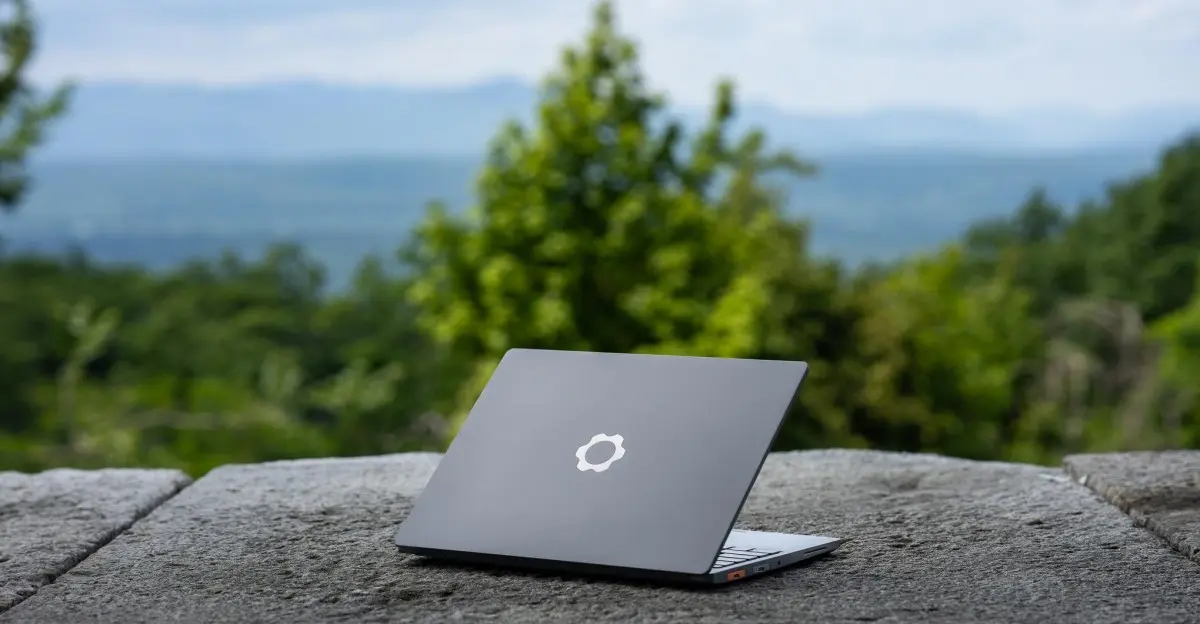
The Framework Laptop 13 Pro was supposed to be the ultimate expression of the company's DIY laptop philosophy. With a stunning all-black matte finish, a bright 120Hz touchscreen, and one of the best haptic trackpads outside of Apple, it seemed destined for top honors. But thanks to the ongoing global memory shortage—dubbed RAMageddon—the price of the prebuilt review unit skyrocketed from $2,299 to $3,099 before a single customer received it. That $800 increase casts a long shadow over what is otherwise a remarkable machine.
Framework has always asked buyers to accept compromises in exchange for repairability and upgradeability. The standard Laptop 13, while functional, felt a bit plasticky and lacked premium touches. The 13 Pro changes that entirely. The chassis is rigid, the keyboard deck has no flex, and the entire package feels like a premium ultrabook. Inside, the new Intel Panther Lake chips—specifically the Core Ultra X7 358H with 16 cores—are paired with LPCAMM2 memory, a user-replaceable module that offers the performance of soldered LPDDR5X without soldering. That flexibility is core to Framework's mission, but it comes at a cost: LPCAMM2 is expensive, and RAM prices globally are inflating.
The impact of RAMageddon is not just theoretical. Framework was forced to bump some reserved preorders from 32GB to 16GB and raise prices across its lineup. On Reddit, even die-hard fans have expressed frustration, with many canceling orders. The fear is that this price hike could undermine the long-term viability of niche products like the Laptop 13 Pro, especially when competitors like Apple's MacBook Pro offer similar performance at a lower price (the M5 MacBook Pro starts at $1,949). But Framework's appeal has never been raw price-to-performance; it's about ownership and longevity.
The Laptop 13 Pro's trackpad is a revelation. It uses haptics to simulate clicks, and it's responsive from corner to corner. The keyboard retains the 1.5mm key travel of the standard model but feels even better thanks to a one-piece aluminum frame. The 1080p webcam is adequate, and the port selection is fully modular—each of the four USB-C ports supports Thunderbolt 4, DisplayPort 2.1, and up to 140W charging, with no restrictions on which expansion card goes where. The screen is a 13.5-inch 2880x1920 IPS panel with 120Hz refresh rate and 700 nits brightness, making it excellent for productivity and media consumption.
Battery life is a standout feature. Framework claims up to 17 hours of active web usage, and in real-world tests with heavy multitasking, the laptop lasted around 10.5 hours on a single charge. That's a significant improvement over the previous AMD model. Performance is solid too: the integrated Arc B390 GPU can handle 1080p gaming at medium settings with upscaling, and the CPU handles Adobe Lightroom and even 4K video exports reasonably well. However, it still trails Apple's M5 in many benchmarks, and the chassis can get uncomfortably hot under load—reaching 57°C near the hinge during gaming.
The speakers remain a weak point. They are side-firing and lack bass, sounding thin and treble-heavy. Third-party software like FxSound can improve the audio on Windows, but Linux users are out of luck. The modular design, however, allows users to upgrade components individually. Existing Framework Laptop 13 owners can purchase the Intel mainboard, the new touchscreen, or the haptic trackpad a la carte—a flexibility no non-modular laptop offers. That's the whole point of Framework, and it's easier to overlook the flaws when you know you can fix or upgrade them later.
The 13 Pro is the most complete Framework laptop yet. It corrects many of the standard model's shortcomings and adds premium features that rival top-tier ultrabooks. But the RAMageddon-induced price increase makes it a painful purchase. At $3,099, it's $800 more than what was planned, and that's before any additional configuration costs. For those committed to repairability and modularity, the Laptop 13 Pro offers an unmatched experience. But for everyone else, the value proposition is now severely tested by market forces beyond Framework's control.
Source:The Verge News