

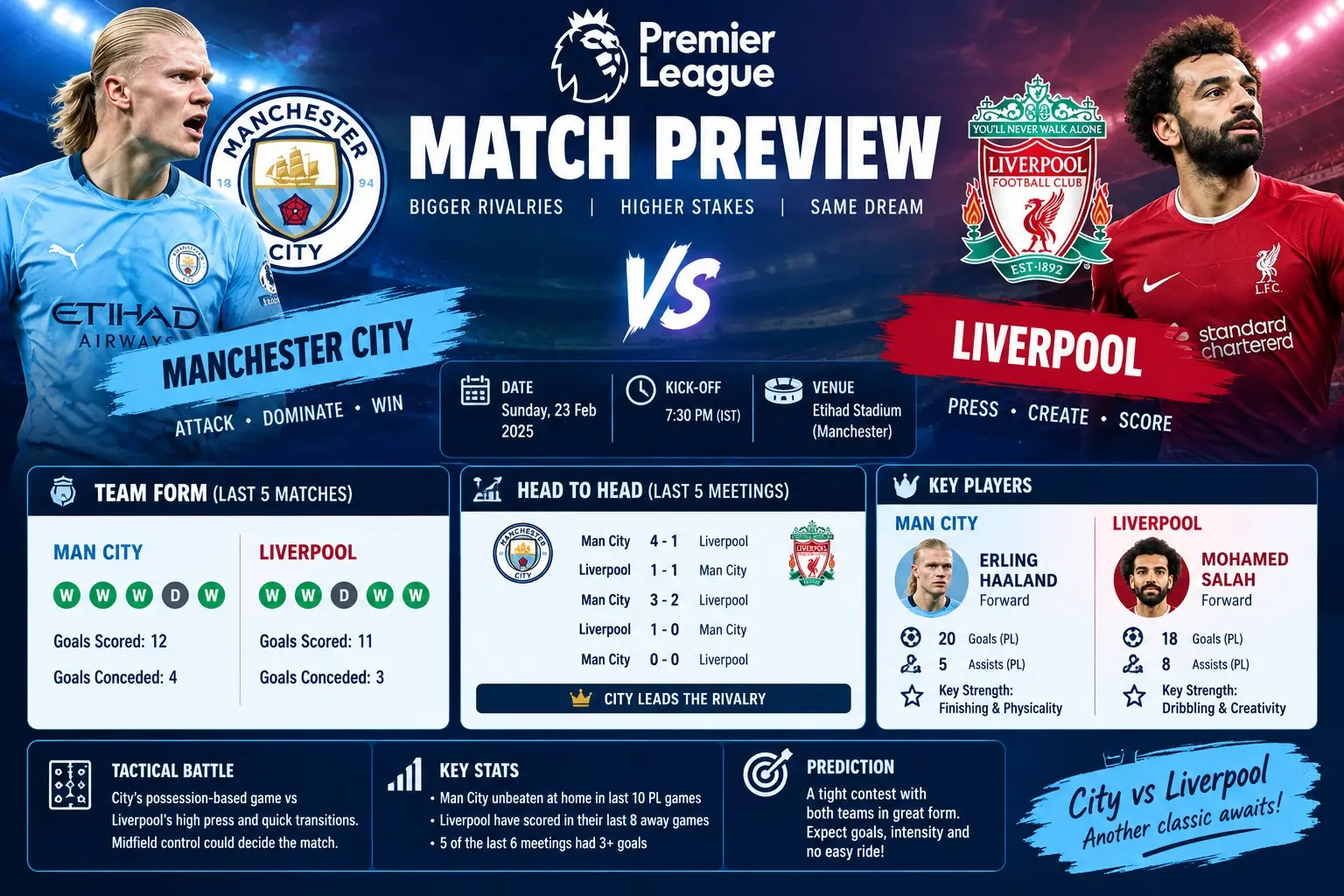
A Premier League match is decided long before the first whistle. In the modern era, where margins are measured in expected-goals fractions and set-piece routines rehearsed to the second, the pre-match period — team news, tactical match-ups, form cycles, travel, officiating appointments, and historical patterns — often tells observant supporters what to expect once the game begins. A structured match preview is more than a ritual for fans and broadcasters; it is a framework for understanding which variables genuinely influence outcomes and which are noise.
This guide breaks down the key factors to watch before kickoff in an EPL fixture, explaining what the research and performance data say about each one — and how to weigh them when forming an opinion on a match.
1. Team News and Availability
Nothing shapes a Premier League fixture more immediately than who is available. Modern squads are built around specific profiles: a ball-playing centre-back for a high line, a pressing number nine, an overlapping full-back whose delivery supplies the wing. Remove one pillar — through injury, suspension, or illness — and the entire structure can shift.
Key availability questions include:
· First-choice goalkeeper available? Goalkeeping changes produce among the largest single-player performance swings in football analytics. A deputy who is weaker with crosses or sweeping behind a high line directly raises the opponent's expected goals from set pieces and balls in behind.
· Centre-back pairing continuity? Defensive partnerships thrive on repetition. Studies of Premier League defences consistently show that a settled back four concedes fewer goals per game than one reshuffled weekly, independent of individual talent.
· Primary creator or finisher missing? Losing a team's chief chance creator (the player leading key passes and progressive carries) or its leading xG scorer forces tactical rethinks — often a more direct or conservative approach.
· Suspension accumulations and international travel: Players returning from long-haul World Cup qualifying or Nations League fixtures in South America or Africa frequently show measurable dips in sprint outputs in the following match.
Team news also reveals intent: an unexpected lineup may signal a manager resting players for a midweek European tie — a form of strategic risk that previews should flag.
2. Current Form — Reading It Correctly
"Form" is the most quoted and most misused concept in football previewing. Raw recent results (won, lost, drawn) are a blunt instrument; deeper form indicators are far more informative:
· Expected Goals (xG) trend: A side creating 2.0 xG per match while conceding 0.8 is performing sustainably well, even if unlucky results have left it mid-table. The reverse — good results built on low xG — tends to regress.
· Strength of recent opponents: Three wins against bottom-six sides mean less than one win and two draws against top-six opposition. Adjusted form tables account for this.
· Home/away splits: Premier League teams frequently display dramatically different profiles at home and away — pressing more intensely, completing more passes, and generating more shots at home. Aggregating the two hides the truth.
· Phase of the season: Teams often cycle: new-manager bounces, post-European-fatigue dips, and end-of-season surges for survival or Europe are well-documented patterns.
The best previews therefore describe form as process quality (chances created and allowed) rather than outcome luck (final scores), while acknowledging that outcomes are what ultimately count in the table.
3. Tactical Match-ups and System Fit
Every Premier League fixture is a chess problem between two game models. The preview question is not "who has better players?" but "whose structure exploits whose weaknesses?"
Factors to examine:
· High line vs pace in behind: A team defending with a high defensive line hands space to rapid forwards. When a club with genuine sprinters faces such a line, the through-ball threat — measurable in carries into the box and shots from transitions — spikes.
· Press vs build-up security: Sides that press aggressively (high PPDA — passes allowed per defensive action) prey on teams uncomfortable playing through pressure. Conversely, well-drilled build-up units can bypass presses and attack unsettled defences.
· Wide overloads vs isolated wingers: Teams that create 2-v-1 situations on the flanks force difficult full-back decisions; sides that defend in a compact low block may concede territory but limit central chances.
· Set-piece matchups: Height differentials on corners and free-kicks are one of the most reliable preview signals in the league. Teams with elite delivery and aerial targets against defensively weaker set-piece units regularly outperform open-play expectations from dead-ball situations.
· Midfield control: Who wins the battle for second balls and central progression often dictates tempo — a factor visible in possession-territory data and field-tilt metrics (share of final-third passes).
Identifying two or three decisive match-ups — rather than generic narratives — is what separates an analytical preview from a promotional one.
4. Schedule Congestion, Travel, and Recovery
The Premier League's calendar is relentless: league fixtures, two domestic cups, European competition, and international windows compress recovery time. Research on fixture congestion shows that teams playing every three days accumulate fatigue that manifests as reduced pressing intensity and sprint counts in the second half of matches — precisely when many goals are conceded and scored.
Travel adds another layer. A Thursday-night fixture in Eastern Europe followed by a Sunday kickoff in England is a well-established recipe for sluggish starts. Previews should note:
· Days of rest since the last competitive match.
· Midweek travel distance and time zones crossed.
· Number of matches in the last 14 days for key players.
· Which squad players are likely to rotate in or out.
Freshness advantages are real but often invisible in headline form guides — incorporating them is a competitive edge for careful analysts.
5. The Officials: Referee and VAR Tendencies
Officiating appointments influence match texture more than most previews acknowledge. Referees differ measurably in cards shown, fouls called, and penalty frequency. A referee who awards penalties at a high rate, or who allows physical challenges before whistling, changes how teams defend in the box and how forwards initiate contact.
Additional officiating factors:
· VAR protocols and handball interpretations have shifted season to season, affecting how defenders jump and how attackers position their bodies.
· Card thresholds: Booking-prone referees affect two-yellow risk for aggressive full-backs and the behaviour of teams protecting leads.
· Historical head-to-head officiating patterns — while sample sizes are small, stylistic clashes (a physical side under a strict referee) are worth noting.
None of these deterministically decide a match, but they belong in the preview as contextual modifiers.
6. Home and Away Context
As detailed research on home advantage shows, playing at home still matters in the Premier League — though its size has changed over time. Historical analyses by Sky Sports found home teams won around 49% of Premier League fixtures in a studied recent season, with home advantage increasing win likelihood by roughly 15.9% in the top flight — more than in lower divisions. Crowd support, familiar surroundings, reduced travel, and refereeing patterns all contribute; studies also link larger, louder crowds to measurable effects on officiating and player arousal.
For previews, this means:
· Never treat a fixture as neutral — adjust expectations for venue.
· Examine the specific club's home/away splits rather than league averages.
· Note atmospheric factors: derbies, relegation six-pointers, and title run-ins amplify home support effects.
7. Historical Head-to-Head and Psychological Patterns
Head-to-head records are treated skeptically by analysts — and rightly so, because squads change — but certain patterns have explanatory value:
· Style-based rivalries: Teams that historically struggle against particular tactical profiles (e.g., a possession side that consistently loses to counter-attackers) often repeat those struggles while core approaches remain similar.
· Psychological scars and confidence: A relegation-threatened side that has lost five straight away games carries visible behavioural markers — deeper defensive lines, fewer forward passes — that data captures even when personnel changes.
· Manager vs opponent records: Some coaches demonstrably struggle against specific opponents' setups; these are tactical tendencies more than mysticism.
Used cautiously, historical context enriches rather than replaces current-data analysis.
8. Motivation, Stakes, and Season Context
Not all three points carry equal motivational weight. The stakes surrounding a fixture shape intensity:
· Title run-ins and European qualification races raise the competitive temperature late in the season.
· Relegation battles produce high-variance, physical matches — corners, duels, and long balls increase as desperate sides abandon patient build-up.
· Mid-table fixtures with nothing at stake can produce rotated line-ups and lower press intensity — sometimes the most unpredictable category of match.
· Cup-distraction weeks see focus split; league position of the opponent relative to the previewed match's priority matters.
Motivation is notoriously hard to quantify, but its observable proxies — lineup strength, pressing distances, duel intensity — give analysts something concrete to track live.
9. Key Duels and Individual Match-ups
Within the team structures, individual battles often decide matches:
· Full-back vs winger: Can the winger isolate the full-back one-on-one, or does the full-back have cover? Isolated dribbles against weakened sides produce shots and penalties at elevated rates.
· Striker vs centre-back pairing: A mobile forward against a setter of high lines, or a target forward against a small centre-back — physical and technical mismatches convert into xG advantages.
· Midfield destroyer vs playmaker: Who screens whom? Cutting off a side's progression hub forces it wide or long — both lower-value routes.
· Goalkeeper vs aerial delivery: Against set-piece-heavy opponents, goalkeeper command of the six-yard box is a preview-worthy variable.
Fantasy managers and bettors alike know these duels matter; structured previews should name the two or three that will define the fixture.
10. Building the Pre-Kickoff Checklist
Pulling the factors together, a rigorous EPL match preview follows a sequence:
1. Availability: Any injuries, suspensions, or rotation signals in either squad?
2. Process form: xG trends, shot quality, and defensive solidity over the last 5–8 matches — adjusted for opponent strength.
3. Tactical fit: The two or three structural match-ups that will decide territory and chance creation.
4. Freshness: Rest days, travel, and schedule density for both groups.
5. Officiating: Referee profile and any rule-interpretation emphasis.
6. Venue: Home/away splits, crowd significance, and historical venue effects.
7. Context: Stakes, motivation, and season phase for both clubs.
8. Key duels: The individual battles to watch from the first whistle.
Weight each factor by its research-supported importance — availability and process form typically dominate; head-to-head history and referee detail are secondary modifiers.
11. Weather, Pitch, and Matchday Conditions
Environmental factors rarely headline previews yet frequently shape outcomes. Rain changes the calculus entirely: wet conditions historically reduce total goals, favour physical and direct approaches, and place greater weight on set pieces — while a waterlogged pitch after a storm can neutralise a technical, possession-heavy side against a more robust opponent. Wind affects long passes, goal-kick distribution, and cross quality, particularly in exposed stadiums. Extreme heat or cold influences pacing: hot evenings often produce slower starts and later goals as legs tire, while frost-and-wind winter fixtures reward intensity and duel-winning over intricate build-up. Pitch condition itself — a freshly laid surface that cuts up by minute 70, or a heavy pitch after midweek cup action — interacts with playing style; teams that rely on quick ground combinations are more exposed on deteriorating grass than sides comfortable playing direct. Temperature also subtly alters pressing distances: research on football performance in heat shows high-press teams suffer disproportionately as cumulative sprint loads climb. A serious preview therefore checks the forecast, the venue's drainage reputation, and the week's weather history — details that explain why a "better" team may struggle to impose its normal game.
A Premier League match preview built on these factors does more than fill pre-match airtime: it identifies the variables that genuinely shape ninety minutes. Team news reveals structure, form reveals process, tactics reveal the battle plan, freshness reveals capacity, officiating reveals texture, and venue reveals atmosphere. The research on home advantage, xG sustainability, set-piece value, and fixture congestion all point to the same conclusion — football is a game of margins, and those margins are visible before kickoff for anyone who knows where to look. Watch these ten factors, and you will arrive at the stadium, or the broadcast, understanding not just who is playing, but how and why the match is likely to unfold.