

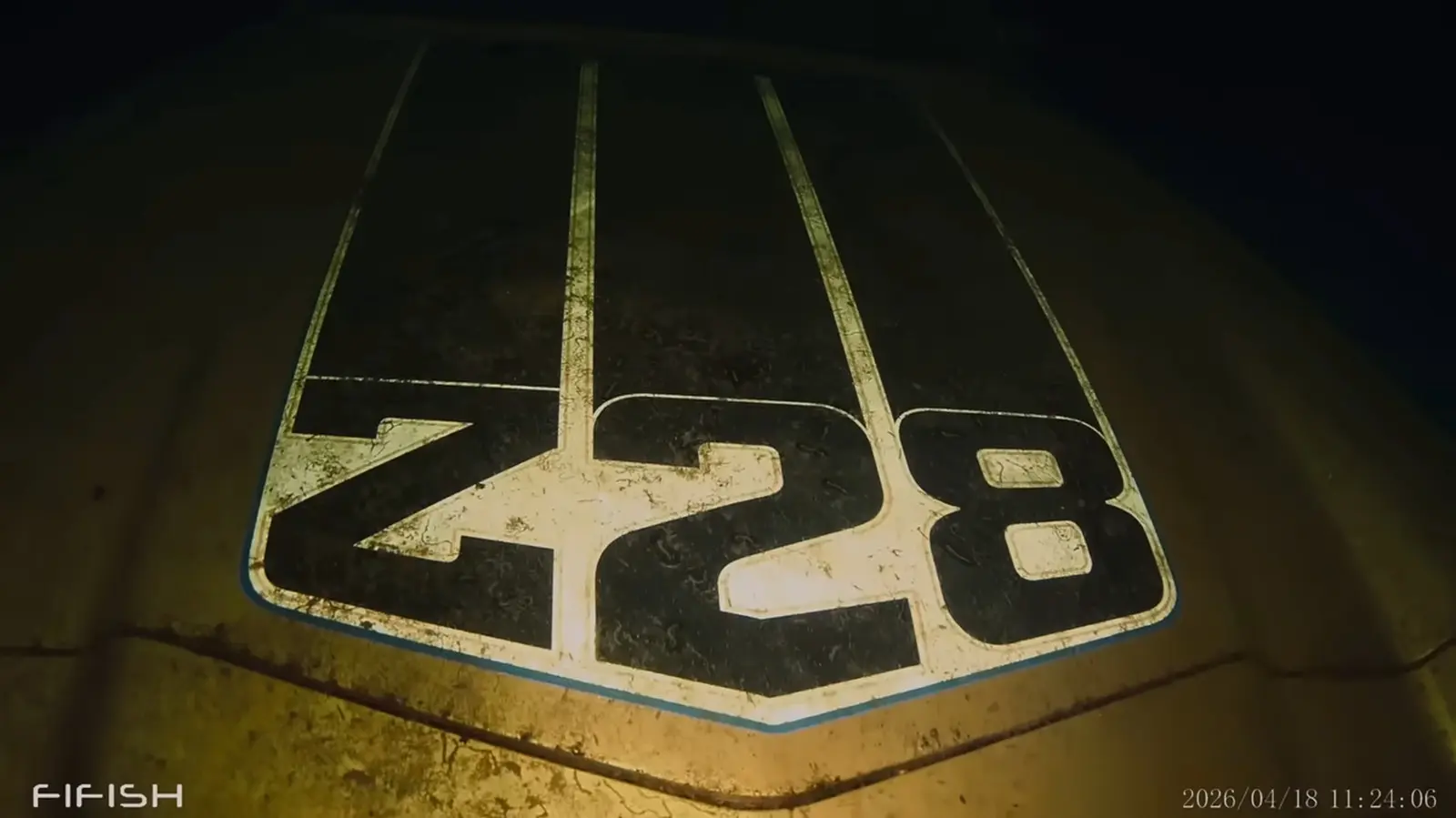
Most people expect to find classic cars like the 1970s Camaro Z28 at drag strips, muscle car shows, or in private collections. The Chevrolet Camaro Z28, first introduced in 1967, became an icon of American performance, especially during the energy crisis years when smaller engines struggled. The 1970-1973 models are considered some of the best-looking, with aggressive styling and powerful V8 options. However, finding one at the bottom of a lake is an entirely different story.
In a truly bizarre twist, a 1975 Camaro Z28 was discovered resting 55 feet below the surface of Sebago Lake in Maine. The discovery was made not by a scuba diver or a fisherman, but by a hobbyist using an underwater drone. Jason Smith, who regularly explores Maine's lakes with his FIFISH v6 drone, posted the footage on Facebook, calling it a "mystery." The post quickly went viral, prompting coverage from national news outlets and sparking curiosity about how the car ended up underwater.
The Cumberland County Sheriff's Office took the case seriously. Investigators used the vehicle identification number (VIN) to confirm the car was a 1975 Camaro Z28. They also looked into possible explanations: Was it stolen and dumped? Did it fall off a ferry or a boat? The ferry theory was ruled out due to a lack of records indicating such an incident. The car had no license plate, further deepening the mystery. As of May 2026, no one knows who owned the car or how it got there.
The Role of the FIFISH v6 Underwater Drone
The device responsible for this discovery is the FIFISH v6, a professional-grade underwater drone manufactured by QYSEA. This ROV (Remotely Operated Vehicle) is designed for underwater exploration, with a 4K camera that captures 12-megapixel still images and video. It also features six 6,000-lumen LED lights, which allowed Smith to illuminate the dark depths of Sebago Lake and clearly see the Camaro's shape. Without such powerful lighting, the car might have remained hidden for years, blending into the lake's bottom sediment.
The FIFISH v6 is more than just a camera platform. It includes measurement tools like a compass ruler to gauge the size of objects, making it easier to estimate the car's dimensions even from a distance. It also has manipulator tools: a robotic arm that can clamp onto objects, a retrieval hook for lifting small items, and even an underwater dozer for moving sediment. For scientific purposes, the drone can be equipped with water and mud samplers. This versatility makes it popular among researchers, salvage operators, and hobbyists like Jason Smith.
Priced at $2,900, the FIFISH v6 is on the higher end of the consumer underwater drone market. Cheaper options exist, such as the PowerVision PowerRay or the Gladius Mini, but they offer lower resolution or fewer accessories. The FIFISH v6 also requires some learning to operate all its features effectively. No license is needed to fly an underwater drone in most U.S. states, but regulations regarding salvage rights and privacy still apply. Smith's discovery highlights how accessible underwater exploration has become with modern ROV technology.
The Mystery of Sebago Lake
Sebago Lake is one of the largest and deepest lakes in Maine, covering over 45 square miles and reaching depths of more than 300 feet. It has a long history of recreational boating, fishing, and even ice racing in winter. However, it has also been the site of numerous drownings and boating accidents. Along with cars, other objects have been found on its bottom, including boats, airplane parts, and oddities like vintage bottles and fishing gear. Smith's usual finds include massive trout and antique bottles, but the Camaro Z28 was by far his most startling discovery.
The Camaro was lying on its roof, partially embedded in the lake bed. The lack of a license plate suggests it was not a legal road car at the time of sinking. Could it have been stolen and dumped to hide evidence? Or perhaps it was used as an artificial reef, though that is unlikely in a freshwater lake. Another possibility is that the car was swept off a boat ramp during a storm, or that it was launched off a dock as a prank. Without more information, the Cumberland County Sheriff's Office has classified the case as an ongoing investigation. They have not ruled out foul play, but no human remains were reported near the vehicle.
The story has fascinated car enthusiasts and mystery lovers alike. Muscle car forums have debated the car's fate, with some suggesting it might have been a stolen car stripped of parts before being submerged. The 1975 Camaro Z28 was not the most powerful year—the engine options were detuned due to emissions regulations—but it remains a desirable collector car. Restoring a car that has been underwater for decades would be extremely difficult due to rust and corrosion.
Broader Implications for Underwater Drones
The discovery also underscores the growing role of underwater drones in both recreational and professional contexts. Archaeologists use them to explore shipwrecks without risking human divers. Law enforcement agencies deploy ROVs to search for evidence in lakes and rivers. Environmental scientists monitor water quality and aquatic life. The FIFISH v6, with its ability to carry various payloads, is well-suited for these tasks.
However, the hobbyist use of such technology raises ethical questions. What happens when someone discovers a valuable artifact or a potential crime scene? In this case, Smith did the right thing by notifying authorities and not disturbing the site. The Camaro remains at the bottom of Sebago Lake, presumably left in place as the investigation continues. Some have called for the car to be recovered and displayed in a museum, but that would require a costly salvage operation.
As underwater drones become cheaper and more capable, we can expect more such discoveries. Lakes, rivers, and oceans hold countless secrets, from lost cargo to submerged vehicles. The FIFISH v6 and its competitors are unlocking those secrets one dive at a time. The Camaro Z28 mystery may eventually be solved, but for now, it serves as a reminder of the untold stories lurking beneath the surface.
Smith continues to explore Maine's waterways with his drone. His Facebook page often features his latest finds, from sunken docks to schools of fish. He has expressed hope that the Camaro's owner or its story will come to light, but he also acknowledges the allure of the unknown. "It's like a time capsule," he said in an interview. "You never know what you'll find down there."
The 1975 Camaro Z28 sits silently at the bottom of Sebago Lake, a piece of automotive history frozen in time. Whether it was stolen, discarded, or lost in an accident, its story is now part of the lake's legend. Thanks to an underwater drone and a curious hobbyist, a mystery that might have stayed hidden forever has surfaced, captivating the world and reminding us that even in the modern age, there are still puzzles to solve.
Source:SlashGear News