

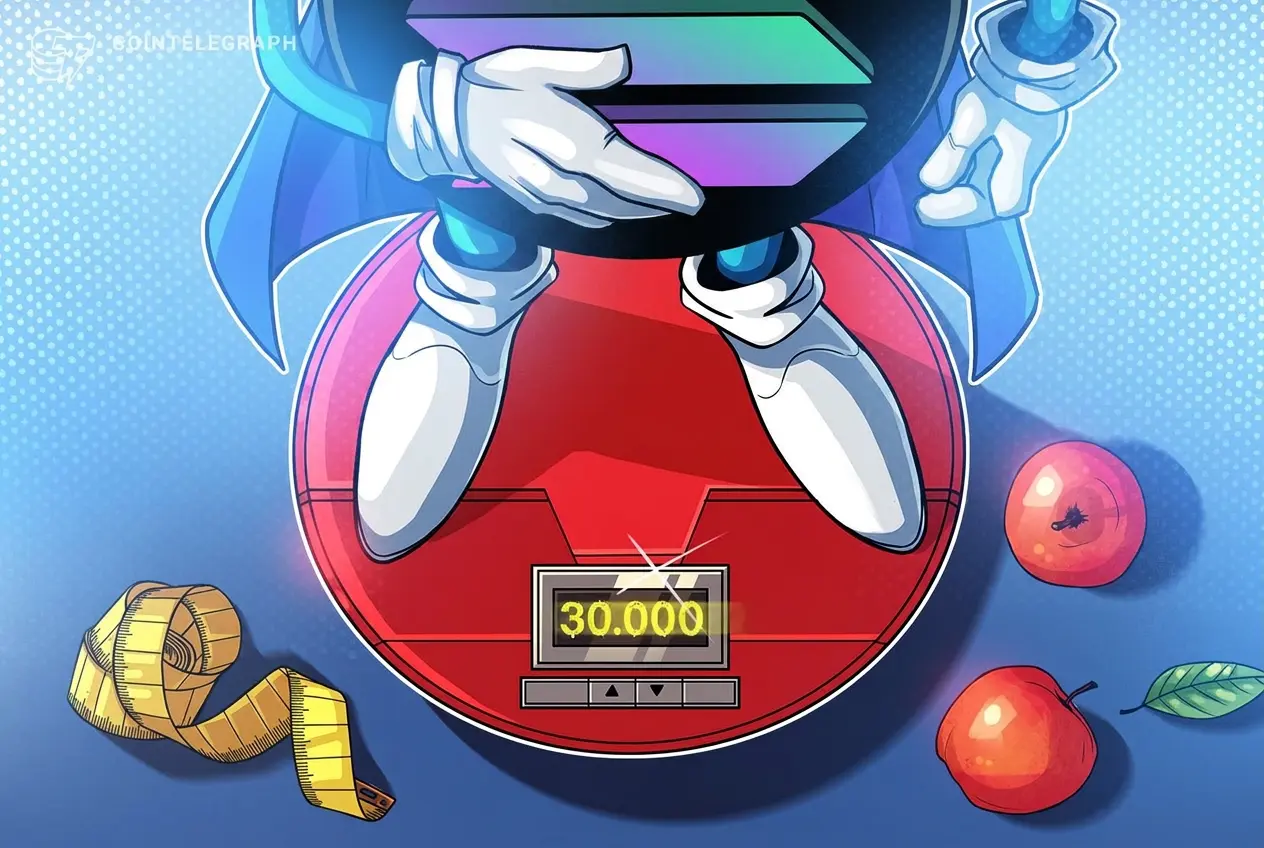
Solana's validator community has approved a significant change to the network's monetary policy, voting to accelerate the reduction of SOL token inflation. The proposal, known as SGP-0002 or “Double Disinflation,” passed with 67% support, marking a major step in Solana's governance evolution and affecting the economic incentives for stakers and token holders alike.
According to finalized voting results, 25.16% of participants voted against the measure, while 7.84% abstained. Overall participation reached 60.7% of eligible stake, reflecting a strong engagement from the network's validators. The proposal doubles Solana's annual disinflation rate from 15% to 30%, meaning the network will burn or reduce its inflation rate twice as fast as previously planned.
What is Solana's Disinflation Mechanism?
Solana's inflation schedule is designed to decrease over time, starting from an initial rate and gradually declining toward a long-term target. The disinflation rate refers to the speed at which the annual inflation rate is reduced. Under the previous schedule, Solana's inflation rate would decline at a rate of 15% per year, eventually reaching a terminal inflation rate of 1.5%. By doubling that rate to 30%, the network will approach this terminal inflation much more quickly.
The change leaves the long-term inflation target unchanged at 1.5%, but it compresses the timeline significantly. According to governance data, Solana is now expected to reach that 1.5% terminal inflation rate in about 2.8 years, compared with roughly 5.7 years under the previous schedule. This accelerated path means that the supply of new SOL entering circulation will be reduced sooner, altering the economics for both stakers and those who simply hold SOL.
Vote Results and Key Participants
The vote was conducted as part of Solana's first binding governance process, which also saw the approval of a proposed Solana Constitution and the rejection of a separate proposal concerning resource and inclusion fees. The binding nature of the process adds weight to the outcome, as it directly affects the network's protocol rules and tokenomics.
Notable divisions emerged among the largest participants. Figment, the largest voter shown in finalized governance data with 17.1 million SOL staked, voted entirely against the measure. In contrast, Helius and Jupiter overwhelmingly backed the proposal, signaling a split within the ecosystem over how quickly to reduce inflation.
Kraken, the US-based cryptocurrency exchange, shifted its position during the vote. Initially voting against SGP-0002 at 12:33 UTC, Kraken's opposition briefly pushed support below the required threshold. By the end of the voting period, more than 90% of its roughly 8.9 million SOL voting stake supported the proposal, indicating a significant reversal.
Impact on SOL Issuance and Staking Rewards
One of the most direct consequences of the approved proposal is a reduction in the amount of SOL issued to validators and delegators. The accelerated disinflation is estimated to result in 18.9 million fewer SOL being issued over the next six years, compared to the previous schedule. This reduction in issuance reduces dilution for existing SOL holders, meaning that their proportional ownership of the total supply is eroded less over time.
However, the move also means lower staking rewards for validators and delegators. Because inflation is declining faster, the total pool of newly minted SOL available for staking rewards will shrink more quickly. Validators who rely on staking rewards as a primary source of income may see their earnings decrease sooner than anticipated, potentially impacting network security if it discourages participation. At the same time, the reduced supply growth could support SOL's price over the long term, potentially offsetting the reduction in staking yields.
Governance Significance
The approval of SGP-0002 marks a milestone in Solana's governance history. The vote was part of a binding governance process, which means the results have direct and enforceable effects on the network. This is a departure from previous non-binding polls and signals a maturation of Solana's decentralized decision-making infrastructure.
The simultaneous approval of a proposed Solana Constitution adds another layer of structure to the network's governance. While the constitution is a separate document, its approval alongside SGP-0002 suggests that validators are willing to embrace formalized rules and processes. The rejection of the resource and inclusion fees proposal indicates that not all changes are accepted, demonstrating that the governance process is selective and responsive to the community's preferences.
Solana ETF Assets Surpass $1 Billion
The governance vote comes at a time when Solana-based investment products are gaining traction in the United States. According to market analysts, Bitwise's Solana ETF recently surpassed $1 billion in assets, becoming the first Solana ETF to reach that milestone. This achievement was highlighted by Bloomberg ETF analyst Eric Balchunas, who noted that US Solana ETFs have attracted roughly $1.7 billion in cumulative net inflows since their launch.
The strong inflows into Solana ETFs contrast with the token's weaker price performance earlier this year. Despite the market volatility, institutional and retail investors have shown continued interest in gaining exposure to SOL through regulated products. The growing ETF market could provide additional demand for SOL, potentially mitigating some of the downward pressure from reduced staking rewards.
Market Context and Future Outlook
The approval of the disinflation proposal comes amid a broader market environment where cryptocurrency networks are evaluating their tokenomics to balance security, adoption, and value accrual. Solana's decision to accelerate its disinflation rate is a notable experiment in supply-side economics, as the network seeks to become more scarce over time while maintaining a sustainable incentive structure for its validators.
Historically, Solana has faced criticism over its high inflation rate and the associated dilution for token holders. By moving more quickly toward a 1.5% terminal inflation rate, the network addresses some of those concerns, potentially making SOL more attractive to long-term investors who value scarcity. However, the reduction in staking rewards could also make the network less appealing to those who provide security, leading to a delicate balance between holder interests and validator incentives.
The decision also highlights the growing importance of on-chain governance in the cryptocurrency space. As networks like Solana implement binding governance mechanisms, the power to shape protocol economics increasingly rests in the hands of validators and other stakeholders. This shift could have ripple effects across the industry, as other networks observe the outcomes and consider similar measures.
For now, the focus will be on how the accelerated disinflation schedule plays out in practice. The network is expected to reach its 1.5% terminal inflation rate in under three years, a much shorter timeframe than originally planned. During that period, the rate of new SOL issuance will decline steadily, and the impact on staking rewards and validator participation will become clearer.
Solana's governance vote represents a significant moment for the network, reflecting both its commitment to decentralized decision-making and its willingness to adjust its monetary policy in response to community concerns. While the full effects of the change may take months or years to materialize, the approval of SGP-0002 sets Solana on a path toward a more deflationary future, at least in terms of token issuance.
As the cryptocurrency market continues to evolve, the interplay between supply dynamics, investor demand, and network security will remain a key theme. Solana's move to accelerate disinflation is one example of how blockchain networks are actively managing these trade-offs, using governance processes to fine-tune their tokenomics. The outcome of this experiment will be closely watched by other projects and market participants alike.
Source:Cointelegraph News