

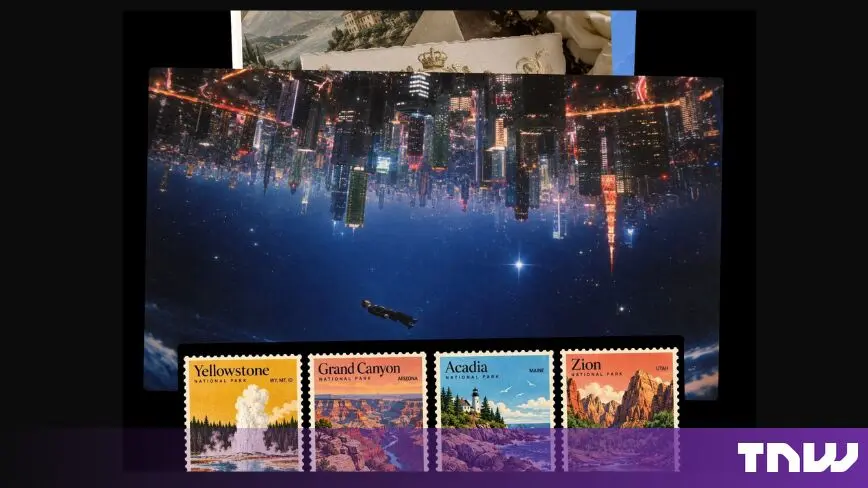
OpenAI has released ChatGPT Images 2.5, the latest advancement of its image generation system, and Adobe has wasted no time integrating it into its Firefly creative platform. The release is more than a model refresh. It introduces two new API models, carries a set of social and workflow-focused interface changes, and arrives with a scale claim that puts the company far beyond the reporting of any of its rivals. According to OpenAI, more than three billion images are now created each week across ChatGPT and the GPT-Image API.
Images 2.5 brings speed and control to developers
The company says the new generation improves on the previous release in several meaningful ways. The default model, GPT-Image-2.5 Flare, is built for speed and general creative work. The second model, called Sunburst, is designed as a slower and more controlled option for professional production environments. OpenAI says the updated family delivers sharper detail, more precise editing, and up to 50% lower latency than Images 2.0. Those differences matter for developers and for end users, but Adobe's involvement may be the more strategic signal. Availability is broad from the start: the new model is rolling out to ChatGPT, ChatGPT Work, and Codex users on every tier, across desktop, mobile and web.
Adobe is a launch partner
Adobe confirmed that the new GPT-Image-2.5 models are now available inside Firefly, making it one of the first major third-party products to carry the technology. The announcement frames Firefly as an environment where leading models can be combined with Adobe's own creative tools rather than a closed system that depends exclusively on Adobe's original models. The approach is not a retreat, though it can be read that way. Adobe has large commercial partnerships and a deeply embedded creative toolset. It is choosing to become the neutral layer where users can bring different models and work with them in a familiar environment.
Matt Chotin, a senior director of product at Adobe, described Firefly's purpose as bringing leading artificial intelligence models together with Adobe's own applications. That language reflects a broader movement in creative software. Companies are less interested in claiming that their proprietary model is the only one customers need, and more interested in becoming the place where model choice is actually made. Firefly is being positioned as a conversational interface over a complete set of creative workflows. Selecting a model is now part of that value proposition.
The relationship runs both ways
Integration is not a one-way street. Adobe already has a presence inside OpenAI's products, with more than 70 Adobe tools available within ChatGPT. That means the two companies are simultaneously customers and distribution partners. OpenAI receives extended reach into professional workflows by placing its models inside Adobe's ecosystem. Adobe receives more relevance inside ChatGPT by showing up where users are already generating ideas and images. At the same time, neither company can be entirely sure that it owns the exact moment when a creative task begins. For several years, the core contest in creative software has been about the starting point. Whoever controls that starting point has a chance to capture the rest of the workflow before a file ever opens in another company's application.
OpenAI appears to understand this dynamic clearly. The company has repeatedly added features designed to keep users inside ChatGPT, and the newest release continues that pattern.
Prompts become shareable objects
The most visible new product feature is prompt sharing, and it is also the most strategic. When a user shares an image created in ChatGPT, that image can now carry the prompt that produced it. Another person can take that exact prompt, run it again, adapt it with their own photos, and create a new image that follows the same style. OpenAI offers a viral 1980s headshot prompt as the example of how the feature could spread. The feature is framed as a convenience, and it certainly is useful for creators who want to be transparent about their process. But it also works as a distribution mechanic. A prompt becomes a template that can circulate endlessly on social platforms. Every time someone clicks and runs that template, they are pulled back into ChatGPT. The loop remains inside OpenAI's product rather than moving to an outside canvas.
New interface features that support everyday work
Several other additions point in the same direction. Sketch allows a user to draw directly in ChatGPT and use that sketch as a reference for a generated image. Templates offer starting formats for common creative deliverables, including posters and merchandise. Comments can now be made directly on an image, which turns single generations into collaborative objects. These are not fundamental improvements to the model's ability to render pixels. They are interface choices. They make the product more useful for collaboration, iteration, and discovery. In the competitive landscape of image generation, that kind of interface work is now just as important as the model research itself. A tool can have excellent models and still lose if the surrounding experience pulls users somewhere else.
Three billion images per week
The scale figure deserves attention. OpenAI says more than 3 billion images are created weekly across ChatGPT Images and the GPT-Image models in the API. That number comes from OpenAI and has not been independently audited. It should not be treated as a verified data point, but even if the real number is somewhat lower, the figure is still enormous. It represents an extraordinary amount of synthetic imagery flowing into daily life, marketing campaigns, product mock-ups, personal projects, and news pages every day. At that volume, the company has also committed itself to a serious provenance effort. It says it applies C2PA metadata and invisible watermarking, supports prompt and image checks, and has published a system card for the release. Building provenance mechanisms for billions of images is no small engineering feat.
Provenance remains incomplete
Those safeguards are necessary but not sufficient. Metadata can be stripped by social media platforms, by screenshot tools, by re-encodes, and by countless other routine actions. Invisible watermarks vary in robustness and are not always detectable after heavy modification. Regulators are still grappling with the legal meaning of AI-generated content. In Brazil, officials have been working to define what qualifies as a deepfake in the context of the coming election. The question is not whether a label is attached at the moment of generation, but whether that label can survive the path from creation to distribution. Notably, prompt sharing may work against provenance goals in at least one respect. When a prompt travels along with an image, it makes it easier for the same distinctive look to be reproduced by many different people. A distinctive artistic style can move from one account to another through the recipe rather than just through the output.
Commercial work and the competitive response
The reference-based editing improvements may be the most commercially important part of the release. Putting a real person, a product, or a specific location into a new setting is exactly what advertising, ecommerce, and social media teams need. These workflows often start with a photograph and require an adaptation, which is a different demand from producing an image from a blank canvas. OpenAI has focused on making those image edits more precise. Several companies listed in OpenAI's announcement have chosen to build on the API rather than compete with the interface. Higgsfield is building tools on top of the underlying pipeline, while Manus reports that Flare runs two to four times faster than the previous model in its own tests. Speed is a critical factor when an API powers real-time creation inside another product.
Other companies remain intent on building their own destination. Freepik, a long-running design platform, has rebranded as Magnific and says it has become a profitable AI creative platform with $230 million in recurring revenue. It chose to build its own integrated experience rather than become a front end for someone else. That decision keeps the negotiation about control open. Where a creative workflow begins, and what layer of the stack the customer actually sees, will determine which companies become indispensable and which are eventually replaced.
What to watch
The most important signals may not be in the model quality numbers at all. Watch whether Adobe continues to name its model suppliers. A studio that presents itself as an aggregator is powerful while it has real choices. It becomes vulnerable if a single supplier becomes so technically strong that switching costs are too high. Watch for published statistics about prompt reuse as well. If OpenAI ever shares data about how often shared prompts are copied and run, it will be clear whether the product is achieving its intended viral effect. In the meantime, Adobe has been building its own answer across Firefly, Gen