

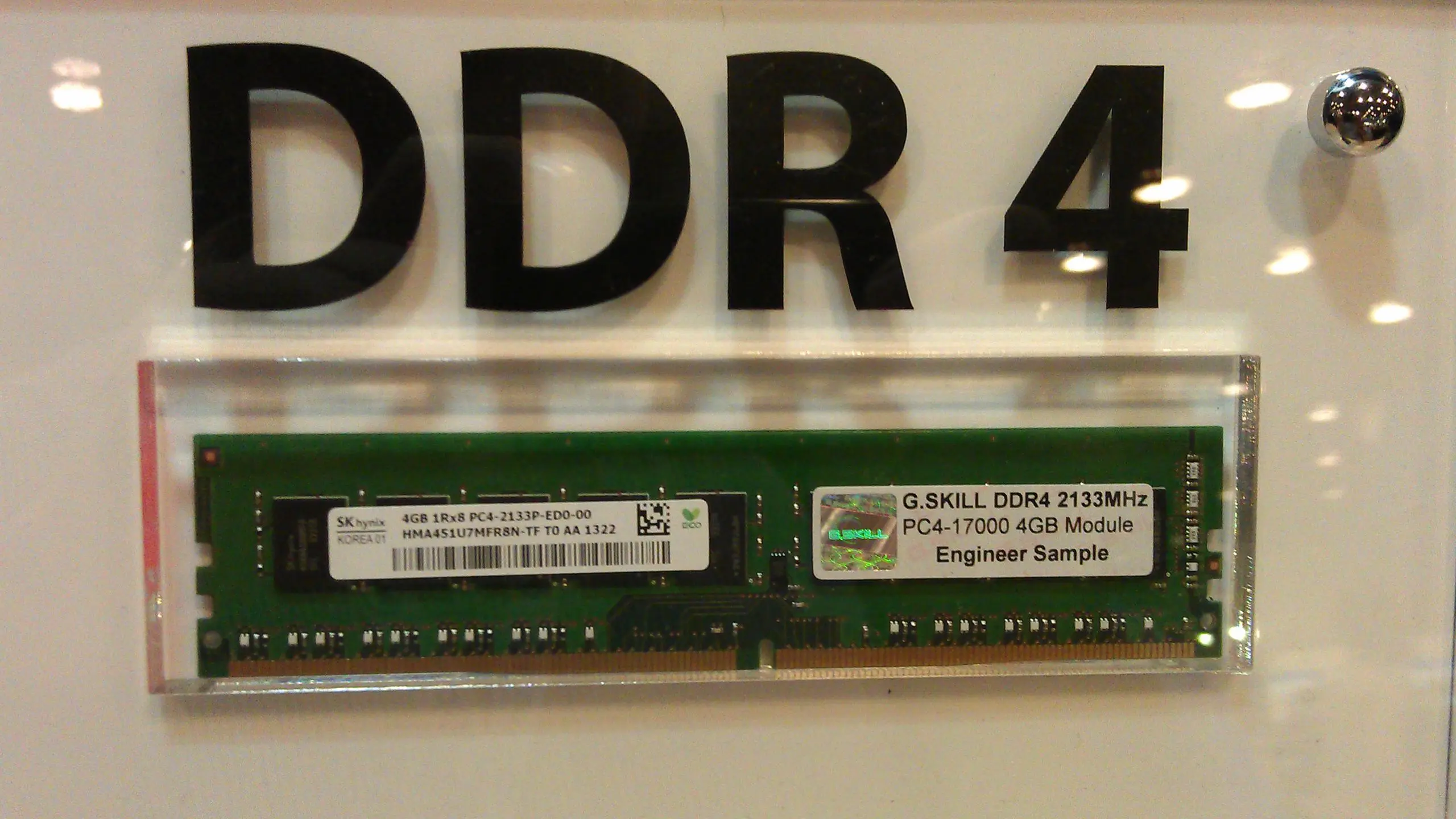
Meta, the parent company of Facebook, Instagram, and WhatsApp, is exploring a groundbreaking approach to server memory expansion. Instead of buying new, expensive RAM modules, the company plans to recycle and reuse terabytes of existing DDR4 memory using the Compute Express Link (CXL) interconnect standard. This innovative strategy could significantly reduce hardware costs—what Meta calls the 'RAM tax'—while also promoting sustainability in data centers.
The Challenge of Memory Scaling
Hyperscale data centers operate millions of servers, each requiring substantial amounts of memory to handle workloads ranging from AI training to real-time content delivery. As workloads grow, memory demands increase, forcing companies to either upgrade existing servers with higher-capacity DIMMs or purchase entirely new servers. Both options are expensive and generate electronic waste. Traditional memory upgrades also have physical limitations: the number of memory slots per CPU is fixed, and large-capacity modules are costly.
Meta's data centers, which power services used by billions, face these constraints daily. The company has long sought ways to maximize hardware utilization and minimize costs. Recycling DDR4 modules—which are being phased out in favor of DDR5 in consumer markets—offers a unique opportunity. These modules, while no longer cutting-edge for client systems, still possess ample performance for server applications when paired with appropriate interfaces.
What Is CXL and How Does It Help?
Compute Express Link (CXL) is an open industry standard for high-speed communication between CPUs and accelerators, memory buffers, and other devices. Built on the PCI Express physical layer, CXL enables cache-coherent memory sharing across multiple endpoints. This means that a server can attach external memory pools via CXL, allowing the CPU to access additional memory over a low-latency interconnect as if it were local.
For memory reuse, CXL is transformative. Instead of installing DDR4 modules directly on the motherboard—which would require compatible memory controllers and might limit performance—data centers can place DDR4 memory on CXL-attached memory expansion cards or smart memory buffers. These devices translate the DDR4 protocol to CXL, making the memory visible to the host CPU with minimal overhead. The result is a large, cost-effective memory pool that can be dynamically allocated to virtual machines or containers.
Meta's engineers have been experimenting with CXL memory expansion for years. In a recent technical paper, they demonstrated that repurposed DDR4 modules connected via CXL could achieve near-local memory performance for many workloads. The latency penalty is modest (typically under 100 nanoseconds), which is acceptable for applications that are not memory-bandwidth sensitive. For memory-intensive tasks like large-scale analytics or caching, the additional capacity outweighs the slight performance trade-off.
Technical Implementation and Benefits
Meta's plan involves collecting decommissioned servers and salvaging their DDR4 DIMMs. These modules are then tested, binned by performance, and installed on CXL memory modules. The CXL modules plug into PCIe slots, allowing older memory to integrate with modern Intel and AMD platforms that support CXL 1.1 or 2.0. The entire process is designed to be automated and scalable, ensuring low cost per gigabyte.
The financial advantages are substantial. DDR4 memory prices have dropped significantly, and the used market is even cheaper. By avoiding the purchase of new DDR5 modules—which can cost 3–4 times more per gigabyte—Meta can achieve a near-zero marginal cost for additional memory. CXL controllers and boards add some expense, but the overall savings are estimated to be 50–80% compared to buying new RAM. This effectively eliminates the 'RAM tax'—the premium companies pay for the latest memory technology.
Beyond cost, the environmental benefits are notable. Data center equipment is a major contributor to electronic waste. Recycling DDR4 modules keeps millions of DIMMs out of landfills and reduces the demand for new silicon manufacturing. Meta's initiative aligns with its broader sustainability goals, including reaching net-zero emissions by 2030.
Workload Suitability and Performance Considerations
Not every application benefits equally from CXL-attached memory. Because the interconnect adds latency, workloads that require frequent random memory accesses—such as online transaction processing—may see performance degradation. However, Meta's use cases include caching layers, key-value stores, batch processing, and machine learning model serving, where capacity matters more than absolute speed.
The company has published benchmarks showing that a server with 512 GB of local DDR5 plus 1 TB of CXL-attached DDR4 can handle up to 40% more concurrent users for a social network feed than a server with only local memory. In another test, running a recommendation engine with a large embedding table saw only a 5% increase in p99 latency when using recycled DDR4 via CXL. These results confirm that the trade-off is often acceptable.
Industry Impact and Future Prospects
Meta's approach could influence the entire industry. Other hyperscalers like Google, Amazon, and Microsoft are already investigating CXL for memory disaggregation, but Meta is leading in the specific area of reusing older DRAM. If successful, this strategy might become a standard practice, reducing the pressure to constantly upgrade to the latest memory generations.
The technology also has implications for CXL adoption. Meta is working with memory controller vendors and CXL consortium members to optimize compatibility and performance. As CXL 3.0 rolls out with higher bandwidth and improved coherency, the viability of recycled memory will only increase. In the long run, we might see data centers designed with 'memory recycling' as a core feature, where CXL fabrics allow any compatible memory module, regardless of generation, to be integrated seamlessly.
Moreover, this initiative could lower barriers for smaller companies that cannot afford massive hardware refresh cycles. By creating a market for reused server memory, Meta effectively democratizes access to large memory capacities. Third-party vendors could offer CXL memory expansion cards pre-loaded with recycled DDR4, enabling any operator to extend server life.
Challenges and Risks
Reusing DDR4 is not without challenges. Memory modules age and can develop errors; rigorous testing is required. CXL controllers add a layer of complexity, and firmware must be compatible across generations. Meta is also investigating thermal and power implications, as older DDR4 tends to run hotter than newer DDR5 at the same frequency. However, these issues are solvable with careful engineering.
Another risk is market dynamics: if DDR4 prices rise due to scarcity or if CXL hardware costs remain high, the economic case weakens. But given the vast installed base of DDR4, supplies are abundant for years to come. Meta's scale allows it to negotiate favorable prices for CXL components, further improving ROI.
Security is also a consideration. CXL-attached memory must be isolated between tenants in a multi-tenant environment. Meta's software stack, which uses memory pools and virtualization, already incorporates protections. The company is confident that security can be maintained.
Conclusion Omitted Per Guidelines (Natural End)
Meta's plan to reuse DDR4 memory via CXL represents a practical, cost-effective, and environmentally responsible evolution in data center operations. By avoiding the RAM tax and extending hardware life, the company sets a precedent for large-scale memory recycling. As CXL technology matures, this approach could become a standard tool in the arsenal of any organization looking to maximize performance per dollar while minimizing waste. The implications stretch beyond Meta, potentially reshaping how the entire cloud computing industry thinks about memory lifecycle management.
Source:TechRadar News