

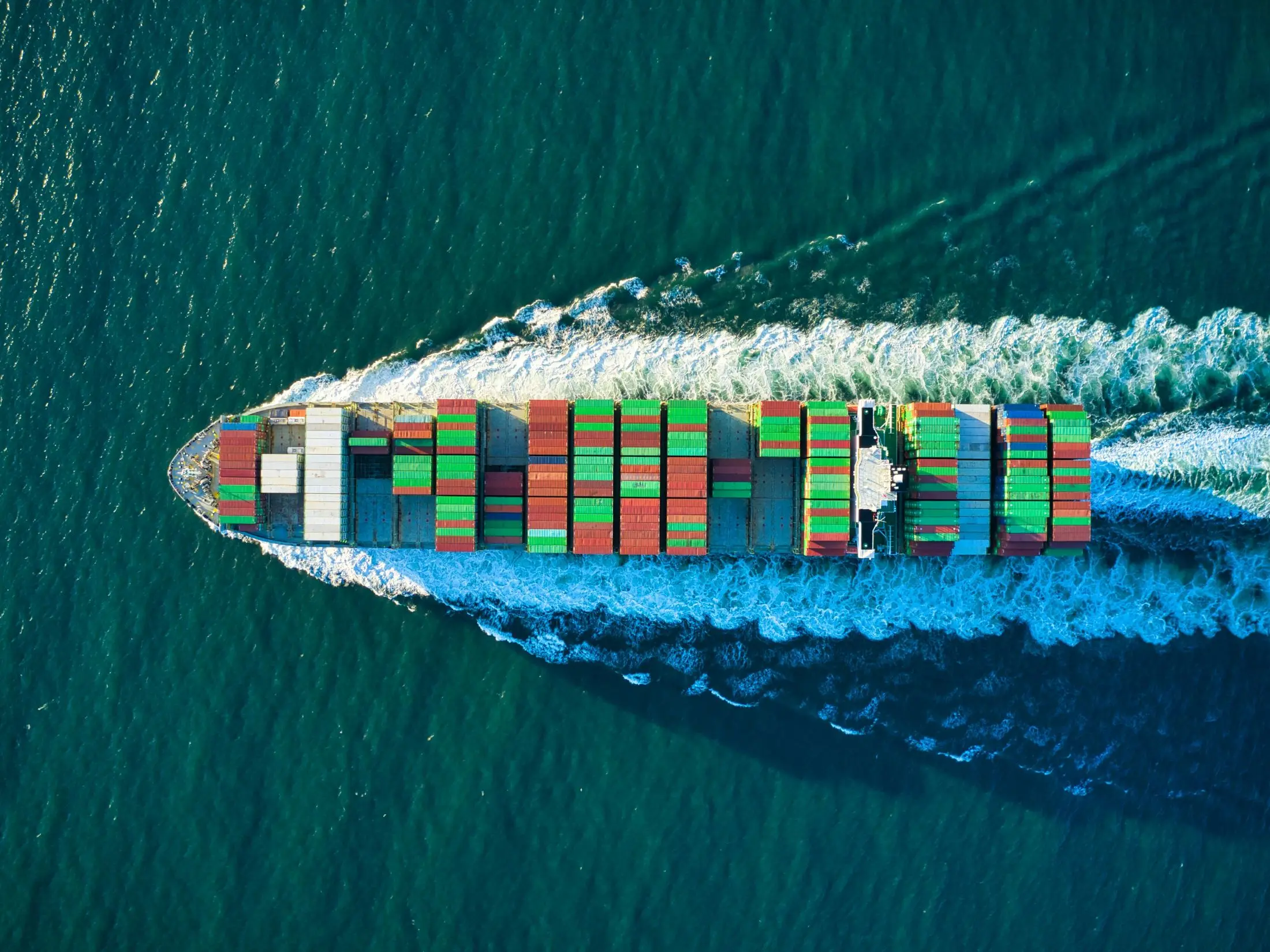
MG Ship has confirmed that artificial intelligence will now play a central role in its voyage planning and fleet operations. The carrier has begun rolling out an AI-powered route optimisation platform that is designed to help vessels choose the most efficient path across the ocean while avoiding delays, adverse weather, and unnecessary fuel burn. The deployment is a significant step in the digitalisation of commercial shipping, and it arrives at a strategic moment as logistics returns accelerate around the world.
The new navigation platform is more than a digital map. It integrates real-time satellite feeds, ocean current models, weather forecasts, port congestion updates, scheduled arrival windows, and vessel-specific performance data. Through machine learning algorithms, the system continuously updates a recommended route and speed for every voyage. It learns from each completed trip, improving the accuracy of future recommendations. The ultimate ambition of this technology is to move away from static route planning and toward fully dynamic voyage management.
What the new system does
Conventional route planning in the shipping industry has historically been based on weather forecasts and the experience of a master mariner. However, ship operators are increasingly turning to automated systems that can process far more information than a human crew can handle in a short time. MG Ship's AI solution processes hundreds of data points per minute. That data is beamed to the bridge and to the company's fleet operation centre, where shore-based controllers can monitor the situation and intervene in the rare circumstances that require human judgment.
The system also takes into account the trade-off between fuel usage and scheduling. In commercial shipping, a vessel often needs to arrive at a berth at an exact time, but it does not always need to sail at maximum speed. By calculating the optimal speed profile, the AI can ensure that a ship arrives on schedule while using the minimum amount of fuel. In the aftermath of port congestion, the system can make instant adjustments when a terminal slot is moved or a canal transit is delayed. That flexibility has become necessary in a market where schedules are constantly changing.
Accelerating returns in global logistics
MG Ship's adoption of this technology comes as global logistics activity continues to rebound. During the earlier phases of the pandemic, supply chains were disrupted by factory closures, container shortages, port outbreaks, and record freight rates. Consumers were stuck at home, ordering physical goods, and shipping became one of the most critical bottlenecks of the global economy. Carriers raced to add extra vessels and reposition empty containers, while logistics companies struggled with severe congestion.
Now that the world has shifted toward a more stable operating environment, trade volumes have continued to climb, and the expansion is returning. Manufacturing activity is stabilising in many economies, retail inventories are being replenished, and consumer demand remains more resilient than many had assumed. The term "logistics returns" here means the flow of cargo and the overall health of the freight transport sector. For shipping lines, an improving demand picture means that they can focus less on filling empty capacity and more on making every voyage as competitive as possible.
The broader industry has also seen a change in shipping habits. Instead of keeping huge amounts of inventory, many manufacturers now rely on more frequent, smaller shipments. E-commerce has increased the demand for parcel-level tracking and speed. These structural shifts make route reliability more important than ever. A vessel that arrives out of schedule can cause cascading disruptions across intermodal networks, affecting trucks, rail operations, and warehouse staff.
How the technology works
Route optimisation is one of the most promising applications of artificial intelligence in shipping, because it offers clear, measurable returns for the technology investment. It works by creating a digital twin of the voyage, meaning that the system possesses a virtual model of the ship's current state, the forecast weather, and the ocean environment. It runs many possible simulated voyages and evaluates each against a set of criteria that the shipping company has identified as most important. Those criteria may include carbon emissions, fuel cost, voyage duration, and risk of heavy weather damage.
Every time the system receives new information, it runs the calculations again. Changes in wind force, wave height, or traffic separation schemes are all incorporated quickly. The final suggestion is pushed directly to the bridge, where officers can discuss it and decide whether to accept or adjust. The AI does not fully replace the crew. Instead, it acts like an extremely well-informed assistant that ensures no important factor is overlooked.
Balancing commercial and environmental goals
The decision by MG Ship to accelerate the rollout of AI route optimisation is not only about saving money. There is also significant environmental pressure on the maritime industry. The International Maritime Organization has set ambitious greenhouse gas reduction targets, and regional regulations, such as the European Union's emissions trading system for shipping, have created an explicit carbon cost for every tonne of fuel burned. By optimising routes, a shipping line can demonstrate that it is taking emissions seriously without sacrificing commercial performance.
In many cases, AI route optimisation and fuel efficiency go hand in hand. A shorter, optimised route reduces exposure to harsh seas and lowers total distance travelled. A careful speed plan avoids abrupt bursts of engine power that consume excessive fuel. Over time, even a modest improvement in fuel efficiency can translate into significant savings for a single ship across a year. For a fleet of dozens or hundreds of ships, that percentage point becomes an enormous competitive advantage.
Digitalisation is becoming non-negotiable
The shipping industry has long been criticised for relying on legacy systems. Most operators use voyage tracking, electronic bills of lading, and other digital tools, but often in a disconnected way. The rise of AI-driven route optimisation, remote monitoring, and predictive maintenance is forcing companies to create a common data framework across their fleets. MG Ship's new investment is part of that acceleration.
Fleet managers want a single platform that can aggregate data from the vessel's sensors, the ship's engine, the bridge systems, and shore-based databases. That is why logistics companies are investing heavily in cloud infrastructure and satellite connectivity. MG Ship will be able to compare its voyages side by side, identify patterns, and share lessons across the fleet. This makes the entire network more resilient.
Of course, cybersecurity must be considered. When a vessel is connected to the internet and receives continuous data updates, the risk of intrusion rises. Shipping companies must therefore build security into the system itself. They need endpoint protection, secure satellite links, and strict computer access standards. The benefits of AI route optimisation are manageable if these protections are fully deployed.
What it means for customers
Shippers and logistics service providers generally expect better on-time performance when their cargo is on an AI-optimised vessel. Good arrival performance reduces warehouse costs, lowers inventory buffer requirements, and helps suppliers live up to their promises. For MG Ship's customers, this system may also become a source of richer information. Carriers are beginning to offer more granular shipment data, including estimated arrival times that are updated in real time and explanations for schedule changes. AI route optimisation provides the foundation for that transparency.
Looking toward the future
The integration of artificial intelligence into ship routing is unlikely to slow down. As computing costs decline and satellite bandwidth increases, even smaller shipping companies will begin to adopt similar technologies. Autonomous vessels, which are still in an experimental phase, will rely on route optimisation to make navigation decisions without human intervention. Meanwhile, ports are developing digital traffic coordination systems that will eventually connect directly with shipboard AI.
MG Ship is also reported to be exploring further applications for machine learning, including fuel consumption prediction, hull cleaning schedules, cargo loading optimisation, and the management of cold chains. All of these improvements contribute to the same long-term goal: a shipping industry that is more predictable, more efficient, and more environmentally responsible.
Source:AI News News