

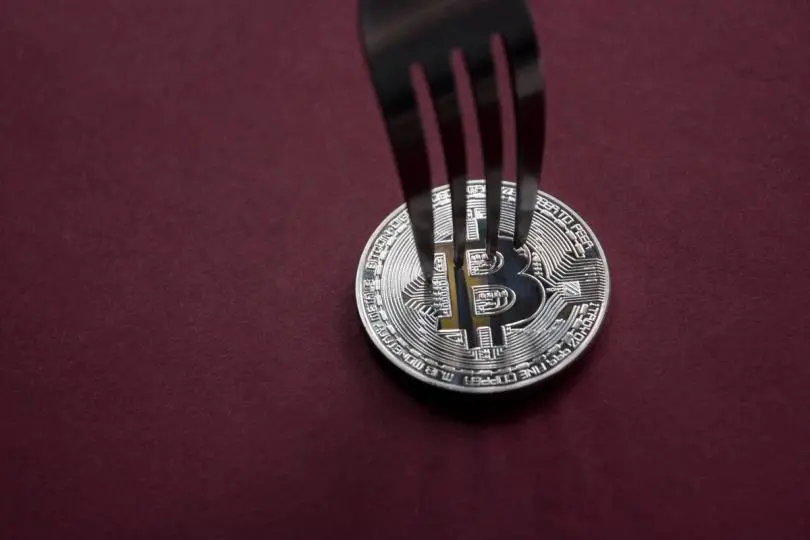
Bitcoin BIP-110 Fork Deadline Approaches with Negligible Miner Backing
The Bitcoin community is watching the clock as the deadline for the BIP-110 soft fork proposal approaches in early August. Despite months of debate, miner support remains below 1%, signaling that the proposal is unlikely to achieve the consensus needed for a network-wide upgrade. BIP-110, formally titled "OP_RETURN Data Carrying Restrictions," would impose a one-year moratorium on embedding arbitrary data—such as images, text, or metadata—into Bitcoin transactions, primarily targeting the use of OP_RETURN outputs and other data-heavy techniques that have proliferated since the advent of Ordinals and inscriptions.
What Is BIP-110 and Why Does It Matter?
Bitcoin Improvement Proposals (BIPs) are the standard mechanism for introducing changes to the Bitcoin protocol. BIP-110 was submitted by a group of developers who argue that the blockchain is being abused for non-financial purposes, clogging block space and driving up fees for ordinary peer-to-peer transactions. The proposal specifically limits the amount of arbitrary data that can be included in a transaction to a negligible size—effectively banning large inscriptions—for a trial period of one year. Supporters believe this will restore Bitcoin's original vision as a purely monetary network, as outlined in Satoshi Nakamoto's white paper.
However, the proposal has sparked intense controversy. Critics point out that OP_RETURN outputs have been used for legitimate purposes such as timestamping, asset issuance (e.g., colored coins), and even simple data anchoring for decades. Moreover, transaction fees already act as a market-based check on spam; miners prioritize high-fee transactions regardless of content. Opponents view BIP-110 as an authoritarian move that overrides Bitcoin's permissionless nature, potentially setting a dangerous precedent for future content-based censorship.
Miner Support Stalls at Below 1%
For a soft fork to activate under Bitcoin's current signaling rules, a threshold of miner support (typically 95% of hashing power) is required within a defined retarget period. As of mid-July 2026, only a tiny fraction of miners have signaled readiness for BIP-110, with public data from major mining pools showing support stuck at less than 1% for weeks. This near-total indifference reflects a broader industry sentiment that the proposal is both unnecessary and risky. Mining pools such as Foundry USA, Antpool, and ViaBTC have either explicitly opposed the change or remained silent, indicating that they see no economic incentive to limit data-heavy transactions.
The lack of miner enthusiasm is not surprising. In recent years, Ordinals and BRC-20 tokens have generated substantial fee revenue for miners, especially during periods of high activity. BIP-110 would eliminate that revenue stream entirely, potentially reducing miner income in the short term. Even if the proposal aims to reduce network congestion, miners are unlikely to support a change that directly cuts their earnings without a clear offsetting benefit.
Prominent Critics Speak Out
Two of the most influential figures in the Bitcoin ecosystem have publicly opposed BIP-110. Michael Saylor, co-founder of MicroStrategy and a major Bitcoin holder, characterized the proposal as an attempt to "turn a spam dispute into a consensus risk that is far greater than the spam itself." He warned that imposing arbitrary restrictions on valid, fee-paying transactions undermines the core principle of permissionless access. Adam Back, CEO of Blockstream and co-inventor of Hashcash (which inspired Bitcoin's proof-of-work), echoed these concerns, arguing that the proposal conflates legitimate use with malicious spam and could fracture the community.
Saylor and Back's commentary highlights a deeper philosophical divide within the Bitcoin ecosystem. On one side are the "purists" who view Bitcoin solely as a payment system and want to strip away any non-monetary applications. On the other are "maximalists" who welcome experimentation, such as Ordinals, as a way to drive adoption, increase network effects, and provide additional utility. This tension has been growing since the 2023 Ordinals boom, which saw a surge in NFT-like inscriptions on Bitcoin, triggering debates about block space allocation that continue to this day.
Historical Context: Previous Data-Limitation Debates
The issue of non-financial data on Bitcoin is not new. As early as 2014, developers discussed the potential for blockchain spam and introduced OP_RETURN as a standardized way to carry small amounts of data (initially 40 bytes, later increased to 80 bytes via BIP-342). Prior to that, users embedded data using the coinbase field or multiple addresses, which was inefficient and bloated the UTXO set. The 2019 introduction of Encode Club and later the BTC Stamps protocol further tested the boundaries.
The most notable prior attempt to restrict data was BIP-9 (segwit activation) which, while not directly about data, enabled the SegWit upgrade that indirectly reduced the cost of transaction data. More recently, BIP-119 (CTV) and BIP-118 (SIGHASH_ANYPREVOUT) have sought to improve transaction efficiency, but none have attempted a blanket prohibition on types of data content. BIP-110 is therefore unique in its explicit censorship intent, which has alarmed civil libertarians within the community.
The Likely Outcome: A Minority Fork
Given the current signaling and vocal opposition, analysts predict that BIP-110 will fail to achieve the required 95% threshold by the deadline. Instead, a small group of miners and node operators may choose to enforce the restrictions on their own blockchain, creating a minority fork (sometimes called a "spinoff"). Such forks have occurred before—for instance, Bitcoin Cash split from Bitcoin over block size disagreements in 2017, and Bitcoin SV further diverged in 2018. However, unlike those cases, BIP-110's changes are purely restrictive and offer no new features, making adoption even less likely.
If a minority fork does emerge, it will likely have minimal economic significance. The majority of exchanges, wallets, and infrastructure providers will follow the main chain where the majority of hashing power resides. The forked chain may attract a small number of ideologically motivated users, but without broad support, its value will quickly approach zero. This outcome would effectively validate the critics' warnings: BIP-110 is not a consensus upgrade but a divisive proposal that could damage community cohesion without solving actual problems.
Broader Implications for Bitcoin Governance
The BIP-110 episode underscores ongoing challenges in Bitcoin's governance model. Decisions are made through rough consensus, but the process can be gamed or stalled. The proposal also highlights how external forces—such as the rise of Ordinals, institutional adoption, and regulatory pressure—shape internal debates. Some see the low miner support as a healthy sign of decentralization: miners are acting in their rational self-interest, rejecting a change that lacks broad appeal. Others worry that the failure of BIP-110 will embolden those who want to push even more radical restrictions in the future.
Meanwhile, the data on Bitcoin blockchain continues to grow. With or without BIP-110, users are embedding everything from artwork to political messages into transactions. The market's response has been mixed: while some celebrate the creative use of the blockchain, others decry the wasted space. What is clear is that any attempt to forcibly remove such data requires near-unanimous agreement, which BIP-110 does not have. The community will likely return to alternative solutions, such as shifting data to second-layer protocols like Lightning, or relying on off-chain timestamping services.
Source:Coindesk News