

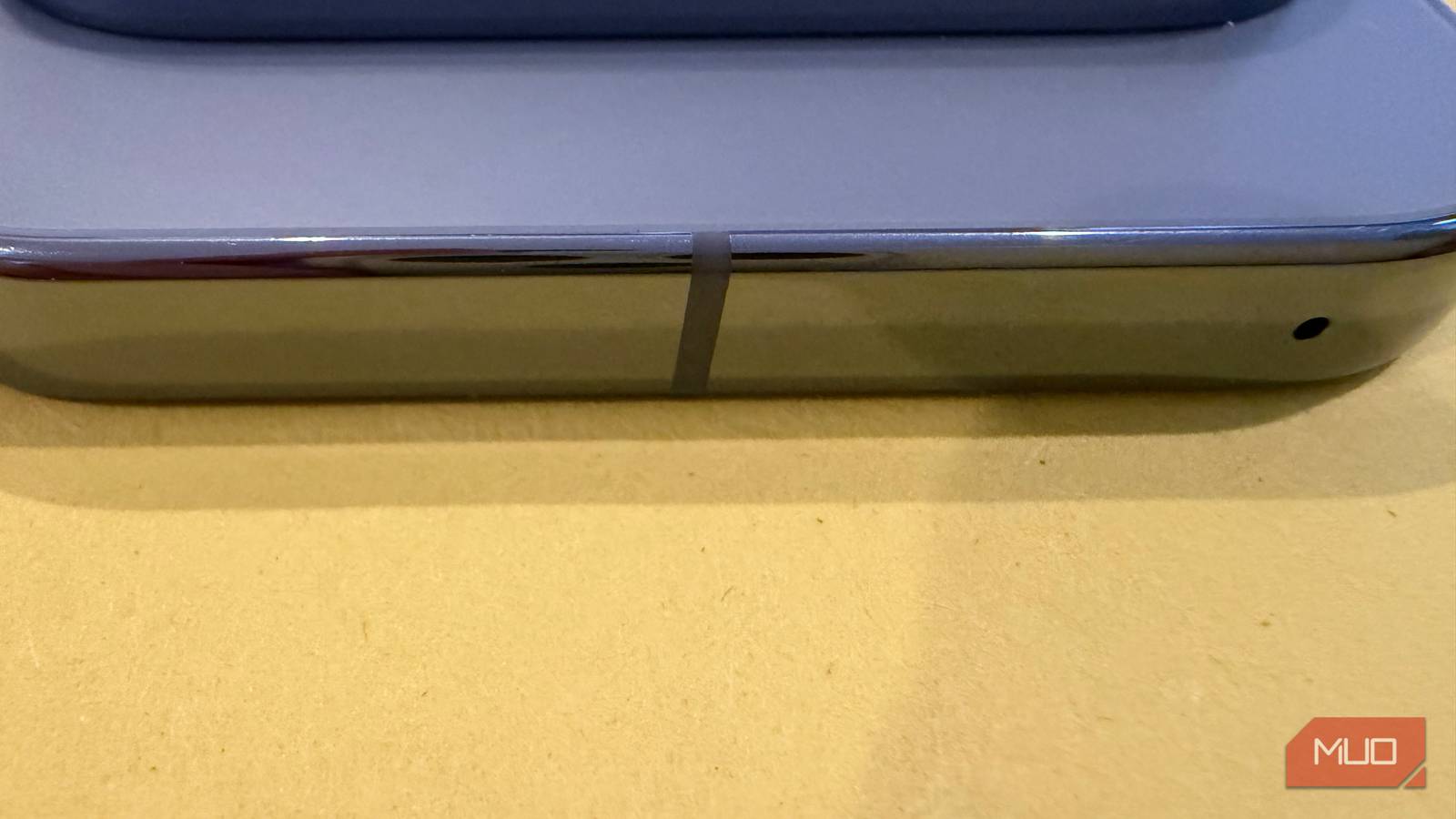
Have you ever looked at your smartphone and noticed thin plastic lines running along the edges, or a small oval cutout near the frame? They might seem like a random design quirk, but these features are the result of a fundamental engineering challenge that every phone manufacturer has faced since the shift to metal unibody construction. These lines are not decorative—they are a necessary compromise to keep your phone connected to the world.
The Problem Metal Creates: The Faraday Cage Effect
Before phones became sleek metal slabs, most models were made entirely of plastic. Plastic is lightweight, durable, and crucially does not interfere with radio waves. In the early 2010s, however, manufacturers began transitioning to metal unibody designs to offer a more premium feel, better heat dissipation, and greater structural rigidity. But metal presents a major obstacle: it acts as a Faraday cage—an enclosure that blocks electromagnetic fields. A phone encased in metal would be unable to transmit or receive cellular, Wi-Fi, Bluetooth, or GPS signals, effectively turning it into a brick.
The Evolution of Phone Materials
The first popular metal phone was the HTC One M7 in 2013, which used a solid aluminum unibody. To let signals out, HTC placed plastic strips on the back of the device—those awkward-looking lines that broke up the metal surface. Later designs refined this approach, moving the antenna bands to the edges of the phone, allowing the back panel to remain clean and uninterrupted. Today, many phones use a "glass sandwich" design with a metal frame, where the glass back and front allow signals to pass through while the metal edges provide rigidity and a premium feel.
How Antenna Lines Solve the Wireless Problem
These plastic or composite lines act as windows for radio waves. The metal parts of the phone are divided into separate antenna sections, with the plastic gaps providing non-conductive spaces where electromagnetic waves can exit. This technique, known as "antenna banding" or "slot antenna design," allows the phone to maintain multiple bands for cellular, Wi-Fi, Bluetooth, and GPS. Engineers carefully tune the length and placement of these gaps to match specific radio frequencies. Without them, your phone would be completely disconnected from the network.
The mmWave 5G Cutout
Some newer phones include a larger oval cutout, often on the side of the device, that resembles a fingerprint sensor. This is a mmWave 5G antenna window. Millimeter-wave (mmWave) is a high-frequency 5G technology that promises extremely fast speeds but has very short range and poor penetration through obstacles. The cutout is designed to house a specialised antenna module that can handle these high-frequency signals. However, mmWave networks remain rare and battery-intensive, so most phones primarily rely on low and mid-band 5G (which can pass through standard antenna bands). The presence of this cutout is a testament to the ongoing struggle between signal performance and phone aesthetics.
The Modern Glass Sandwich: A Balanced Solution
Most flagship smartphones today—like the Samsung Galaxy series, iPhones, and Google Pixels—use a glass back and front bonded to a metal frame. This design offers the best of both worlds: the glass panels allow wireless signals to enter and exit freely, while the metal frame provides the strength needed to keep the phone thin and rigid. Wireless charging also becomes possible because glass does not block inductive charging fields. The metal edges still require antenna bands, but they are now much smaller and integrated seamlessly into the side rails, making them less noticeable than the large plastic strips on early metal phones.
Why Not Use Glass Everywhere?
Some might wonder why phone makers don't just use an all-glass design. The answer lies in durability. Glass is brittle and can crack under impact, especially on corners. A metal frame adds structural integrity and protects the vulnerable glass panels. Moreover, metal is an excellent heat sink, helping to dissipate the heat generated by powerful processors and fast-charging batteries. Plastic frames, while good for signal, lack the premium feel and heat management capabilities needed by high-performance devices. The current hybrid approach is the result of years of refinement to balance thermal performance, signal strength, durability, and aesthetics.
A Deeper Look at Antenna Design
Antenna design in modern smartphones is incredibly complex. Each phone contains multiple antennas for different bands: low-band (600-700 MHz), mid-band (1.7-2.5 GHz), and high-band (mmWave at 24-39 GHz). The plastic lines are not just simple gaps—they are carefully shaped slots that act as antenna radiators. Engineers use computer simulations to model how electromagnetic waves interact with the metal chassis, then adjust the slot geometry to achieve optimal performance. The position of these lines also affects the phone's SAR (Specific Absorption Rate) compliance, ensuring that radio emissions remain safe for users.
In some designs, manufacturers use non-conductive coatings or polymer inserts instead of discrete plastic bands. For example, Apple's recent iPhone models use a composite material that blends seamlessly with the metal frame. Samsung Galaxy devices often feature narrow antenna lines that are nearly invisible when viewed from the front. Despite these advancements, the underlying principle remains the same: every metal part of a phone must be broken up by non-conductive gaps to allow signals to escape.
Interestingly, the push toward metal-free designs is also influencing future smartphones. Some upcoming concepts use ceramic backs or entirely new materials like liquid metal alloys that can be made non-conductive. But for now, the plastic lines on your phone are a quiet testament to the engineering challenges that lurk beneath the surface of every sleek device you hold.
Source:MakeUseOf News