

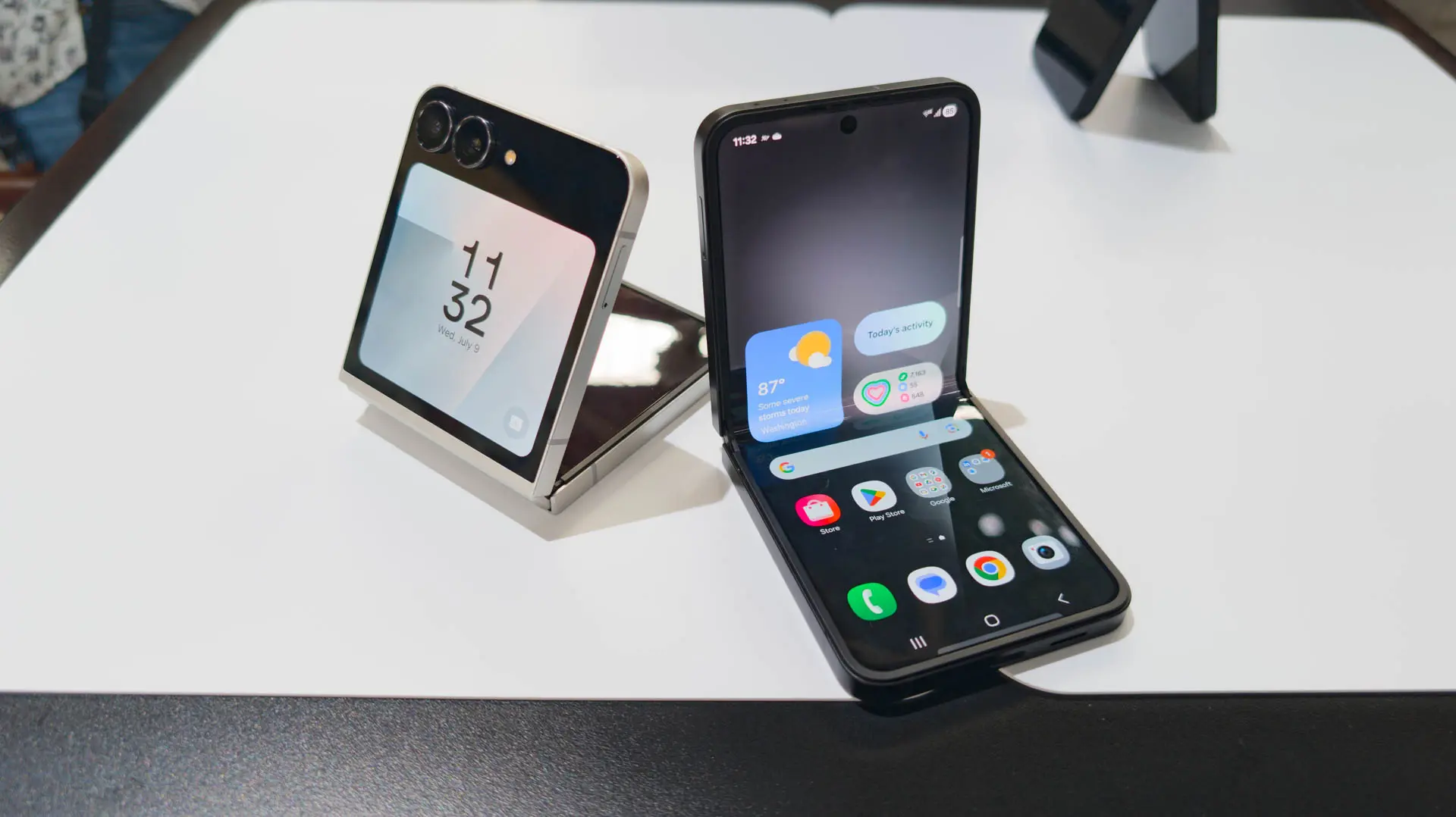
Samsung is no stranger to pushing the boundaries of mobile technology. From rollable screens to phones that transform into tablets, the company has consistently explored ways to reshape how we interact with our devices. Its latest venture, revealed through a newly filed patent, showcases a concept reminiscent of the Galaxy Z Flip but with a crucial twist: it can fold both inward and outward.
The patent, filed with the United States Patent and Trademark Office (USPTO), describes a clamshell-style phone that resembles the Galaxy Z Flip but incorporates a curved screen near the hinge. This curvature is key to enabling the dual-folding mechanism. When folded inward, the display is protected, but the curved edges—similar to the Edge UX found on phones like the Galaxy S7 Edge—can still show notifications, time, weather, or other glanceable information. When folded outward, the screen becomes a single, uninterrupted panel, offering a bezel-less viewing experience for media consumption, gaming, or multitasking.
This design solves a long-standing challenge in the foldable phone market: how to provide both protection and a large screen without compromise. Current foldables either fold inward (like the Galaxy Z Fold series) or outward (like the Huawei Mate Xs). Samsung's patent aims to combine the best of both worlds. In inward mode, the device is compact and the display is safe from scratches and drops. In outward mode, users get the full immersive screen without a bulky second display or notch.
The patent also details engineering solutions to prevent the display from self-destructing when bent in opposite directions. The curved hinge design helps distribute stress evenly, reducing the risk of creases or damage. This is a significant technical hurdle, as flexible displays are still relatively fragile. Samsung has been a leader in foldable glass technology (Ultra Thin Glass), but bending it both ways adds complexity. The patent suggests that the curvature near the hinge acts as a buffer, allowing the screen to flex without cracking.
Samsung's history with foldable phones began in 2019 with the Galaxy Fold, which faced numerous issues but paved the way for improvements. Since then, the company has released several generations of Fold and Flip models, refining durability, hinge mechanisms, and software. The idea of a two-way folding phone could be the next evolution, though it may not reach production soon.
Another interesting aspect is how the user interface would adapt. When the phone is folded inward, the Edge UX could display widgets, shortcuts, or even a touch-based interaction area without fully opening the device. This harks back to the Galaxy S7 Edge's curved screen features, which allowed quick access to apps, people, and information. For a foldable, this could be a unique selling point, offering functionality while the phone is closed. When folded outward, the entire screen becomes a canvas for apps that adapt to the larger, seamless display.
Some may question the practicality of carrying a phone that folds outward, as the screen is exposed. However, Samsung's patent suggests that users might prefer this configuration for certain activities, such as watching videos or taking selfies, where the full screen is beneficial. The patent also mentions the possibility of a protective case or coating to mitigate damage. Nonetheless, the idea of carrying an exposed foldable screen in a pocket might raise concerns about durability.
Beyond the consumer perspective, this patent highlights the intense competition in the foldable market. Companies like Oppo, Xiaomi, and Motorola have launched their own foldables, each with unique designs. Samsung's dual-folding concept could set it apart, but it remains to be seen if the engineering challenges can be overcome at scale. The patent does not guarantee a commercial product, but it signals that Samsung is investing in R&D for future form factors.
In the broader context, foldable phones are still a niche, but they are growing. According to industry analysis, global foldable shipments are expected to rise significantly in the coming years. Innovations like inward-outward folding could accelerate adoption by offering more versatility. For now, we can only speculate whether Samsung will turn this patent into a real device. The company has a history of filing many concept patents that never materialize, but also a track record of surprising the market with working prototypes.
If such a phone were to launch, it would likely target tech enthusiasts who want the latest in design and functionality. It could also appeal to professionals who need a compact device that can transform into a mini tablet. The software integration would be crucial, as Android would need to handle seamless transitions between fold states—a challenge Google and Samsung have been working on with Android 12L and later versions.
In summary, this patent represents another bold step in Samsung's exploration of foldable technology. By combining inward and outward folding, the company aims to maximize screen real estate while maintaining portability. While it may take years to see a commercial version, the idea is certainly intriguing. For now, we can only watch as Samsung continues to innovate in the space of flexible displays, always keeping an eye toward the future of mobile computing.
Source:Android Authority News