

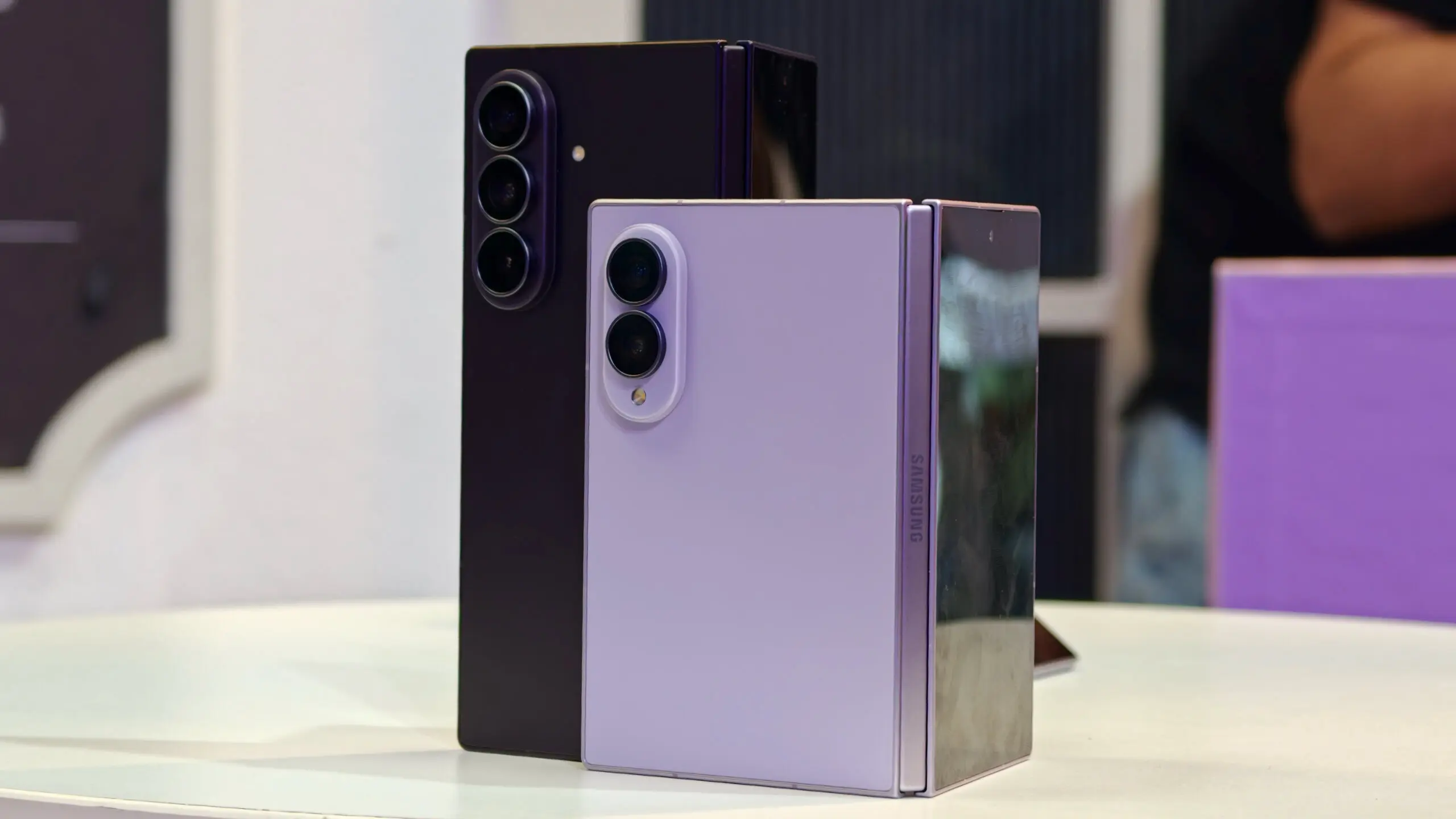
Samsung’s Galaxy Z Fold 8 series has made a strong early impression, and one of the most praised features is the near-invisible crease on the inner display. Foldable displays have long struggled with a visible line or bump in the middle, but Samsung Display says it has made a major breakthrough with what it calls “Flex Titanium.” By rethinking the structure of the foldable OLED panel, Samsung has managed to increase rigidity, reduce thickness, and improve the overall viewing experience.
While previous Galaxy Z Fold models already offered a reasonably refined folding experience, the Z Fold 8 series takes a significant step forward. Samsung Display’s new technical explanation reveals that the improvements come from replacing the conventional plastic film with a titanium alloy film and adding a reinforced titanium plate beneath the display. This dual-layer titanium structure, according to the company, works together to provide much stronger support under repeated folding and unfolding.
The Flex Titanium Breakthrough
Foldable OLED displays are inherently complex because they must be flexible enough to bend millions of times while still maintaining a smooth surface. Traditional foldables have used a plastic film to cover the display, but plastic can deform over time and contributes to the noticeable crease. Samsung’s new approach uses a titanium alloy film that is only about one-third the thickness of a human hair. Despite being so thin, it is said to be roughly 20 times stiffer than the conventional plastic film. That dramatic increase in stiffness helps the display resist the physical stress that occurs at the folding point.
The second part of the Flex Titanium structure is a reinforced titanium plate placed underneath the display. This plate acts as a support layer, providing a solid foundation for the flexible panel. Samsung says the plate also features smaller gaps in the folding area. These smaller gaps allow the adhesive layer applied above to be denser and more uniform. In practical terms, this means impact and stress can be dispersed more effectively across the folding zone. The result is a display that not only looks smoother but also feels more durable when you fold and unfold the phone repeatedly.
This structural change also reduces the overall display thickness by 12 percent. While 12 percent may not sound enormous, every fraction of a millimeter counts in a device that is already designed to be as thin and pocketable as possible. The Galaxy Z Fold 8 series has been widely praised for its improved form factor, and this thinner display assembly is a major reason why. Samsung has effectively proven that you don’t need to choose between durability and slimness in a foldable phone.
How the Crease Becomes Barely Visible
For years, the crease has been the most visible weakness of foldable phones. Even on expensive foldables, the display often shows a slight depression or line in the middle when viewed from an angle. Samsung’s new Flex Titanium structure tackles this issue from multiple angles. First, the stiffer titanium alloy film resists deformation, meaning the display is less likely to develop a permanent fold mark. Second, the reinforced titanium plate and optimized adhesive layer help distribute the mechanical stress that normally concentrates at the hinge. Instead of bending sharply at a single point, the display bends gradually across the folding area, making the crease much harder to see.
It is worth noting that Samsung is not alone in pursuing a crease-free foldable display. Some competitors have launched foldables with almost invisible creases by using different hinge designs or ultra-thin glass. However, Samsung’s solution stands out because it focuses on the internal panel structure rather than just the hinge. By making the display itself more robust, Samsung is addressing the root cause of the crease, not just masking it. This approach could lead to better long-term durability as well, since a stiffer display is less likely to crack or permanently deform under heavy use.
Display Resolution and Efficiency Improvements
The Flex Titanium structure is not the only upgrade in the Galaxy Z Fold 8 series display. Samsung Display has also improved the OLED panel in several key areas. The resolution of the inner display has been increased from 368 pixels per inch (ppi) on older models to 422 ppi, which now matches the cover display on the Galaxy Z Fold 8 Ultra. This is a 15 percent improvement in pixel density, resulting in sharper text, crisper images, and a more immersive viewing experience. For users who frequently use the inner display for reading, watching videos, or playing games, the difference is immediately noticeable.
Samsung also says the new foldable panel is 10 percent more power efficient. This efficiency gain is achieved through a data line mapping technology optimized for the Diamond Pixel RGB sub-pixel arrangement. In simple terms, the display’s wiring is designed to deliver power more intelligently to each sub-pixel, reducing wasted energy. Since foldable phones have larger displays that consume a lot of battery, this improvement can help extend overall battery life. Combined with the thicker battery and more efficient chipset on the Galaxy Z Fold 8, users can expect solid all-day endurance.
In addition, the OLED panel uses newer materials that Samsung says deliver better color accuracy, brightness, and overall picture quality. While the company did not release exact brightness numbers, the combination of newer materials and optimized pixel mapping suggests the Z Fold 8 display is among the best in the foldable market.
A Look at Samsung’s Foldable Evolution
Samsung has been refining foldable displays since the original Galaxy Fold was released in 2019. That first device was a bold experiment, but it suffered from display durability issues and a very visible crease. Over the years, Samsung has improved the hinge mechanism, introduced ultra-thin glass, and redesigned the display layers. Each generation has brought incremental improvements, but the Z Fold 8 series represents the first major structural leap since the switch to ultra-thin glass.
The new Flex Titanium structure is a natural evolution of Samsung’s engineering philosophy. By using premium materials like titanium, Samsung is pushing foldables closer to the durability standards of traditional smartphones. Titanium is already used in high-end smartwatches and some premium phones for its excellent strength-to-weight ratio. Applying it to the foldable display is a smart move, as it allows Samsung to make the display stiffer without adding significant weight.
Samsung’s investment in foldable display technology is not just about the Z Fold 8. The company believes that foldables represent the future of the smartphone, and it continues to explore new form factors, including clamshell designs and rollable displays. The Flex Titanium technology could eventually find its way into other products, such as foldable tablets or laptops. For now, though, it is exclusive to the Galaxy Z Fold 8 and Galaxy Z Fold 8 Ultra.
Seven Key Improvements at a Glance
Samsung Display summarized the main advances in the Galaxy Z Fold 8 series with seven points. These are worth recapping for anyone who wants to understand what makes the new foldable display special:
- Flex Titanium for better rigidity.
- Thinner foldable design.
- Optimized gaps for better support across the folding zone.
- Better adhesive layer for better impact and stress dispersion.
- Newer OLED materials.
- Higher pixel density for the foldable display.
- Better efficiency through data-line mapping optimizations.
Each of these improvements is designed to address the weaknesses of earlier foldable displays. The dual-layer titanium structure is the centerpiece, but the smaller gaps, improved adhesive, and new OLED materials all contribute to the overall experience. Together, they make the Z Fold 8 display stronger, thinner, sharper, and more reliable than any previous Samsung foldable.
It is also important to note that these changes are not just cosmetic. A display that is less prone to creasing is also less prone to damage. The stiffer titanium alloy film and reinforced plate provide better protection against drops and impacts, which is a common concern for foldable phone owners. By improving the internal structure, Samsung is making the Galaxy Z Fold 8 a more practical daily driver, not just a futuristic gadget.
While some competitors may offer a slightly less visible crease on their foldables, Samsung’s approach is arguably more comprehensive. Instead of relying solely on hinge design, Samsung has redesigned the display panel itself. This could have long-term implications for the entire foldable industry, as other manufacturers may adopt similar materials and structural techniques.
Samsung has also hinted that this is only the beginning. The company continues to invest heavily in foldable OLED research, and future models may bring even more advanced materials and construction methods. If Samsung can maintain this pace of innovation, foldables may soon match or even surpass traditional smartphones in durability while offering the unique benefits of a flexible screen.
For now, the Galaxy Z Fold 8 series is a clear demonstration of how far foldable display technology has come. The barely visible crease is not a trick or a gimmick; it is the result of meticulous engineering and a willingness to use exotic materials like titanium. Samsung’s latest flagship foldables prove that the foldable form factor has matured significantly, and they set a new standard for what we should expect from future devices.
Source:Android Authority News