

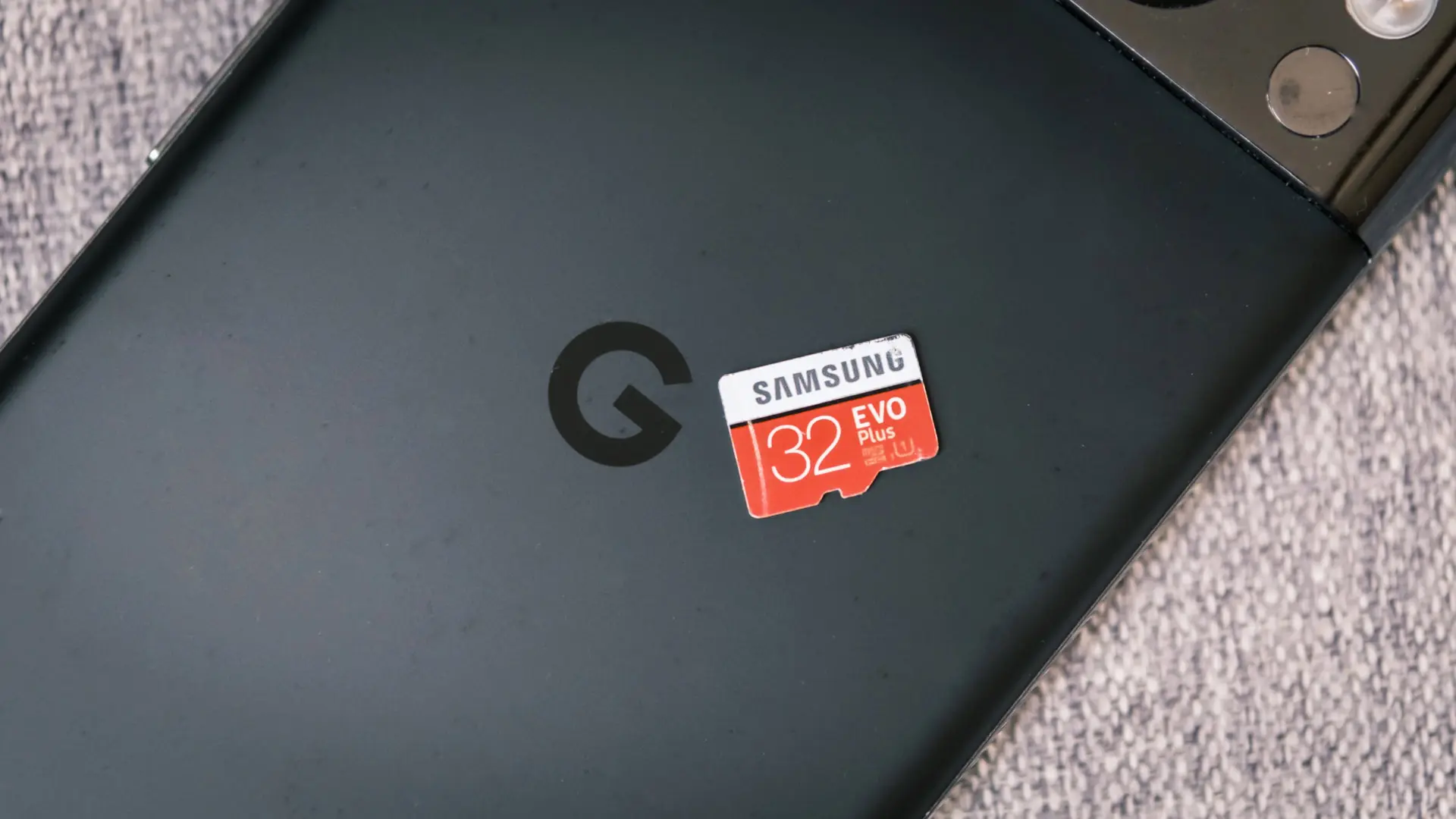
We've seen plenty of novel smartphone ideas this year, from the Galaxy S26 Ultra's Privacy Screen to the upcoming Pixel 11 Pro's "HiLight" notification LEDs. But there's one thing thousands of consumers still want that few manufacturers are still providing: the microSD card slot. Once a standard feature on virtually every Android phone, the ability to expand storage via removable memory cards has become increasingly rare, especially at the flagship level. Yet, a new poll shows that the feature is far from dead in the minds of consumers. In fact, the demand for its return is overwhelming.
Why do we want microSD cards back?
Smartphone storage has grown rapidly in recent years. Base models now come with 128GB or even 256GB of internal storage, and high-end phones offer up to 1TB. So why are people still longing for a physical slot? The answer is not just about capacity; it's about flexibility, cost, data safety, and control.
The microSD card slot wasn't always a niche feature. It was once as common as the headphone jack. Most Android phones from Samsung, LG, HTC, and Sony featured expandable storage, and users were able to pop in a cheap 32GB or 64GB card to supplement the internal storage. It was a simple and effective way to keep files close at hand without paying premium prices for higher-tier models.
Over time, however, manufacturers started removing the slot. Some argued that it compromised waterproofing, others said it took up too much space, and many wanted to push users toward pricier configurations. The removal of the microSD slot often coincided with the removal of the headphone jack, and both decisions were met with vocal backlash. But while audio jacks have made a modest comeback in some devices, microSD slots have remained largely unavailable on flagship phones.
What we learned from the poll
We decided to ask our readers whether they'd rather have expandable storage or if they're fine with paying extra for higher internal storage tiers. The response was anything but ambiguous. Of the more than 8,100 people who voted, a stunning 82% said they want the microSD card slot to return. That is a massive majority, especially for a poll on a technology-focused site where many early adopters might be expected to embrace the latest trends.
Even more striking is how few readers are against the idea. Just 149 voters, or 1.8% of the respondents, said they would rather pay for more onboard storage. Meanwhile, 82 voters, accounting for 1% of the vote, said they don't care about microSD card slots. In between, 15% of voters expressed support for a hybrid approach: more built-in storage options and a microSD slot.
The data safety argument
Among the many comments left on our original article, one of the most common reasons offered for wanting the return of microSD cards was data safety. A reader identified as stevefh wrote: "The number one reason why I want SD cards back is data safety. If your phone craps out then you can just pull the SD card out and put it in another phone or dump the data to a PC." That sentiment was echoed by many others. The ability to physically remove storage from a dead or damaged device provides a level of security that internal storage cannot match.
Another reader, midlandscotterz, highlighted how microSD cards are a safer way to store data, particularly if the phone develops a fault or dies. They have also kept the SD card function across upgrades and moved to a 1TB card for video recording and photos. The point about avoiding cloud storage is also important. While services like Google Photos and Dropbox are convenient, they rely on an internet connection and, more importantly, on privacy and data security that some users simply do not trust. With a microSD card, there is no risk of a cloud hack or a subscription fee.
Why not just buy a bigger phone?
Smartphone manufacturers often respond to the loss of expandable storage by reminding consumers that they can simply purchase a model with more internal storage. That approach works, but it has a significant downside: price. Upgrading from 128GB to 512GB on a flagship phone can cost hundreds of dollars. A 512GB microSD card, by comparison, can be purchased for a fraction of that price. And for budget-conscious buyers, being able to start with a modestly priced base model and add a cheap memory card later is a huge advantage.
There is also the issue of longevity. Many people keep their phones for several years, and their storage needs grow over time. A phone with a microSD slot can evolve with its owner. You can swap a smaller card for a larger one, or use multiple cards for different purposes, such as one for photos, one for music, and one for work files. That level of flexibility is impossible with fixed internal storage.
The hardware arguments against microSD
Manufacturers have not removed microSD slots without reason. In many cases, the slot conflicts with thin designs and waterproofing. A microSD card tray is another opening on the chassis, another place where water can potentially enter. Engineering a watertight tray is possible, but it adds complexity and cost. Given that many flagship phones now carry IP68 ratings, the omission of expandable storage is often a design compromise.
There are also speed concerns. MicroSD cards have historically been slower than internal NAND flash storage. High-end cards can achieve respectable read and write speeds, but they still lag behind the UFS 4.0 storage found in modern smartphones. This can be an issue for tasks like recording 4K video or loading large game files. That said, for many everyday uses, the speed difference is not noticeable. And with improvements in microSD card technology, the gap is narrowing.
Another reader's take: Battery concerns
Interestingly, the poll also attracted a subset of users who were less concerned about storage and more focused on another missing feature: user-replaceable batteries. A reader going by johnnydrama850 wrote: "Who cares about the storage….let's talk about batteries. It really pisses me off that you can no longer replace batteries and they lose their capacity after a year and a half. Who wants to pay $1,300 every two years because the battery will no longer hold a charge." While not directly related to microSD cards, this comment underscores a broader sentiment: consumers are tired of being forced to pay for upgrades they don't feel they need.
The state of expandable storage in 2026
Today, very few flagship phones offer microSD support. Some mid-range and budget devices still include the slot, and a few niche brands like Sony continue to champion it. The Samsung Galaxy S26 Ultra, for example, does not have a microSD slot, nor do most Google Pixel devices. The OnePlus 13 series also abandoned the feature. There was a time when the Galaxy S20 series had microSD support, but Samsung removed it starting with the Galaxy S21. Many users have not forgotten that, and they remain unhappy about it.
The shift has led to a strange situation. On one hand, internal storage capacities have expanded enormously. On the other hand, users are paying more than ever for the privilege of having that storage. A 1TB phone is still a luxury item, while a 1TB microSD card is relatively affordable. For many users, the choice is obvious.
The cloud doesn't solve everything
Cloud storage is often offered as a solution for those who run out of space. And it can be a good one, provided you have a strong internet connection and are comfortable relying on a third-party service. But cloud storage has its own costs and limitations. Subscription fees can add up over time. Synchronization can drain battery life. Privacy advocates worry about sensitive data ending up on remote servers. And in some parts of the world, data caps and slow connections make uploading large files impractical.
With a microSD card, none of that matters. You have immediate, permanently accessible storage that doesn't require a network connection. You can move files to a laptop or desktop in seconds by simply removing the card. You can archive months of photos and videos without worrying about hitting a limit. It is a simple, proven solution that continues to resonate with a large segment of the smartphone-using public.
What would a microSD return look like?
If manufacturers decided to bring back microSD support, they would not need to resurrect the old-style user-accessible card slot. They could integrate it into a SIM tray, as many phones did in the past. The technical challenges are well understood, and the market demand is clearly there. A phone that offers expandable storage could differentiate itself in an increasingly crowded market.
Of course, not everyone is on board. Some power users have already invested heavily in cloud storage or have learned to live with the limitations of fixed internal memory. But for the vast majority of consumers, as this poll shows, the microSD card remains a highly valued feature.
Where do you stand on this debate? Do you want to see the broad return of microSD card slots on flagship phones? Are you happy with the current status quo? Let's discuss in the comments below.
Source:Android Authority News