

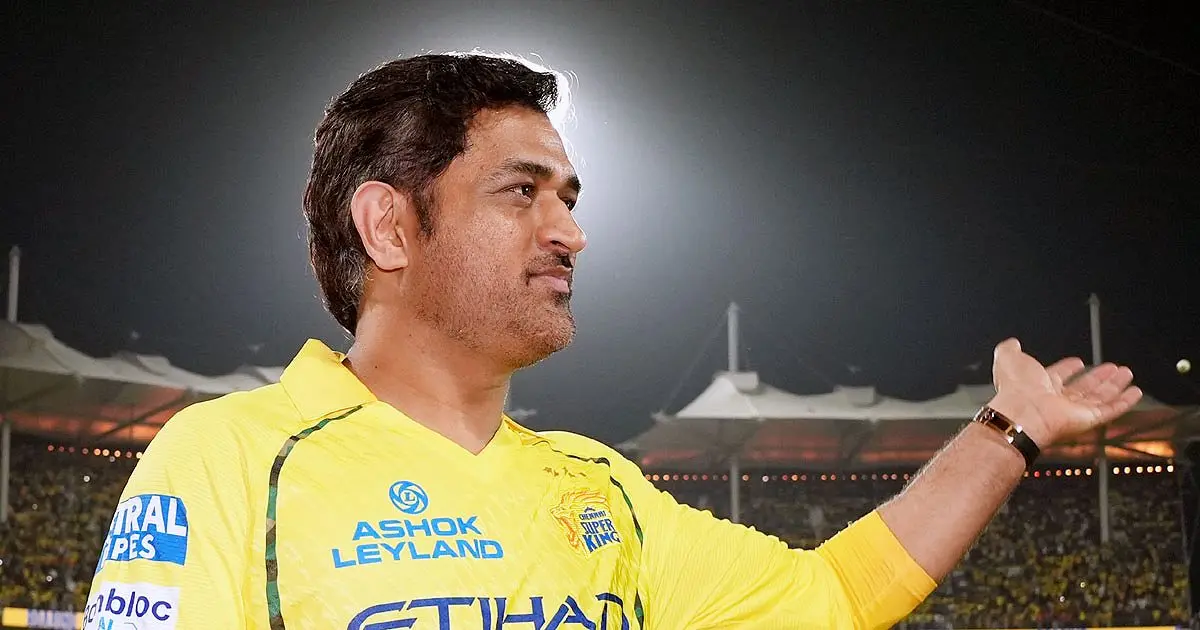
Ravichandran Ashwin, one of India's most accomplished spinners and a former key player for Chennai Super Kings (CSK), has ignited a crucial conversation about the franchise's future by proposing that Mahendra Singh Dhoni be considered the ideal successor to outgoing head coach Stephen Fleming. Ashwin's remarks come at a pivotal moment for CSK, as the team prepares to enter a new era after one of the most successful coaching tenures in Indian Premier League history.
Fleming and CSK mutually agreed to part ways after 17 years, during which the New Zealander transformed from a player in the inaugural IPL season in 2008 to the team's head coach from 2009. Under his leadership, CSK won five IPL titles and two Champions League T20 trophies, reaching the playoffs 12 times and the final 10 times. This partnership with Dhoni, who captained the side for most of that period, became legendary in franchise cricket. Ashwin, who played eight seasons for CSK from 2008 to 2015, highlighted the unique synergy between Fleming and Dhoni, emphasizing that Fleming understood exactly what motivated Dhoni, while Dhoni valued Fleming as a dependable lieutenant. This mutual respect and understanding were key to CSK's sustained success.
Ashwin believes that CSK has reached a stage where a fresh direction is needed, and he sees Dhoni as the natural choice to lead that change. 'If Dhoni is willing to do that, there is no better person that Chennai Super Kings can go after,' Ashwin told ESPNcricinfo. He added that if Dhoni is not interested, the franchise must find a coach who can operate independently and take full accountability for decisions. However, Ashwin also acknowledged a fundamental challenge for any incoming coach: Dhoni remains a towering figure within the CSK dressing room. Despite stepping down as captain in 2022, his influence on team selection, strategy, and decision-making is still profound. 'Mahendra Singh Dhoni is a huge name, and he's still very much a part of the discussion when you're talking about a squad that will be picked to play,' Ashwin noted. This dynamic creates uncertainty for any new coach, who must navigate Dhoni's legacy while establishing their own authority.
The timing of Ashwin's suggestion is noteworthy. CSK had a relatively underwhelming 2025 season, failing to reach the playoffs for only the third time in their history. Speculation about Fleming's future had been circulating for months, and the decision to part ways, while mutual, signals a desire for change. Dhoni, now 43, remains active as a player and continues to lead the team on the field when fit. His potential transition into a coaching role would mirror trends seen in other franchises, where legendary players have moved into backroom positions after retirement. For instance, Shane Warne mentored Rajasthan Royals, and Anil Kumble and Tom Moody have held coaching roles. But Dhoni's case is unique because he is still playing and his authority within CSK is unmatched. Ashwin's proposal essentially suggests that the franchise should leverage Dhoni's unparalleled knowledge of the team and its culture rather than bringing in an outsider who might struggle to fill Fleming's shoes.
Ashwin's own history with CSK adds weight to his comments. He was a key player for the franchise during its early years, contributing to two IPL titles (2010, 2011) and the Champions League victories. He later moved to Kings XI Punjab and then to Rajasthan Royals, but he has always spoken fondly of his time at CSK. His relationship with Dhoni and Fleming gives him a unique perspective on the internal dynamics. In his recent podcast and interviews, Ashwin has often discussed the importance of cultural continuity in franchise sports. For CSK, that culture was built around Dhoni's calm leadership and Fleming's strategic acumen. Replacing both in a short span could be destabilizing, which is why Ashwin argues that promoting from within—specifically to Dhoni—would ensure stability.
The broader context of the IPL coaching market also matters. Several franchises have recently overhauled their coaching staff. Mumbai Indians appointed a new head coach for the 2025 season, while Royal Challengers Bengaluru also made changes. CSK's decision to let go of Fleming after 17 years suggests they believe a new voice is needed. However, the question of who that voice should be has now become a hot topic. Ashwin's endorsement of Dhoni may influence the franchise's decision-making, especially given Dhoni's deep ties to the ownership group. CSK's management has always prioritized loyalty and long-term relationships, as seen in their retention of core players over the years. If Dhoni expresses interest in coaching, it would be surprising if the franchise looked elsewhere.
Critics might argue that Dhoni's lack of formal coaching experience could be a drawback. While he has captained CSK and India to numerous titles, coaching requires a different skill set, including game planning, training management, and developing younger players. Dhoni has never been a head coach at any level. However, his experience as a mentor for the Indian team during the 2011 World Cup and his role in guiding CSK's young talents suggest he has the temperament and tactical acumen for the job. Ashwin himself pointed out that Dhoni already plays a significant role in discussions about squad composition and match strategy. Formalizing that role could actually reduce confusion and ensure everyone knows who is in charge.
The word from the CSK camp so far has been non-committal. Fleming, in his farewell statement, thanked the franchise and fans for 17 wonderful years, but did not mention his successor. Dhoni, known for his reluctance to discuss the future, has also remained silent. Meanwhile, several top coaching candidates, including former Australian player Mike Hussey and ex-CSK batter Suresh Raina, have been linked to the position. But Ashwin's intervention puts Dhoni front and center in the conversation. It also raises a deeper question: Can CSK thrive without Dhoni in some leadership capacity? For years, the team's identity has been inseparable from both Dhoni and Fleming. With Fleming leaving, Dhoni's role becomes even more critical. If he does not take the coaching job, the franchise must find a way to retain his insights and influence while allowing a new coach to build their own relationship with the players.
Ashwin's suggestion is not just about one person; it is about preserving a winning ecosystem. CSK's success has been built on stability, data-driven decisions, and a family-like atmosphere. The Dhoni-Fleming partnership was the cornerstone. As the franchise turns the page, Ashwin's words serve as a reminder that the best solutions often lie within. Whether Dhoni will embrace a full-time coaching role remains to be seen, but one thing is clear: CSK's next chapter will be shaped by how they manage the transition from a legendary captain-coach duo to a new structure. Ashwin, ever the thinker, has thrown his weight behind the most obvious choice. Now, the ball is in CSK's court.
Source:Rediff News