

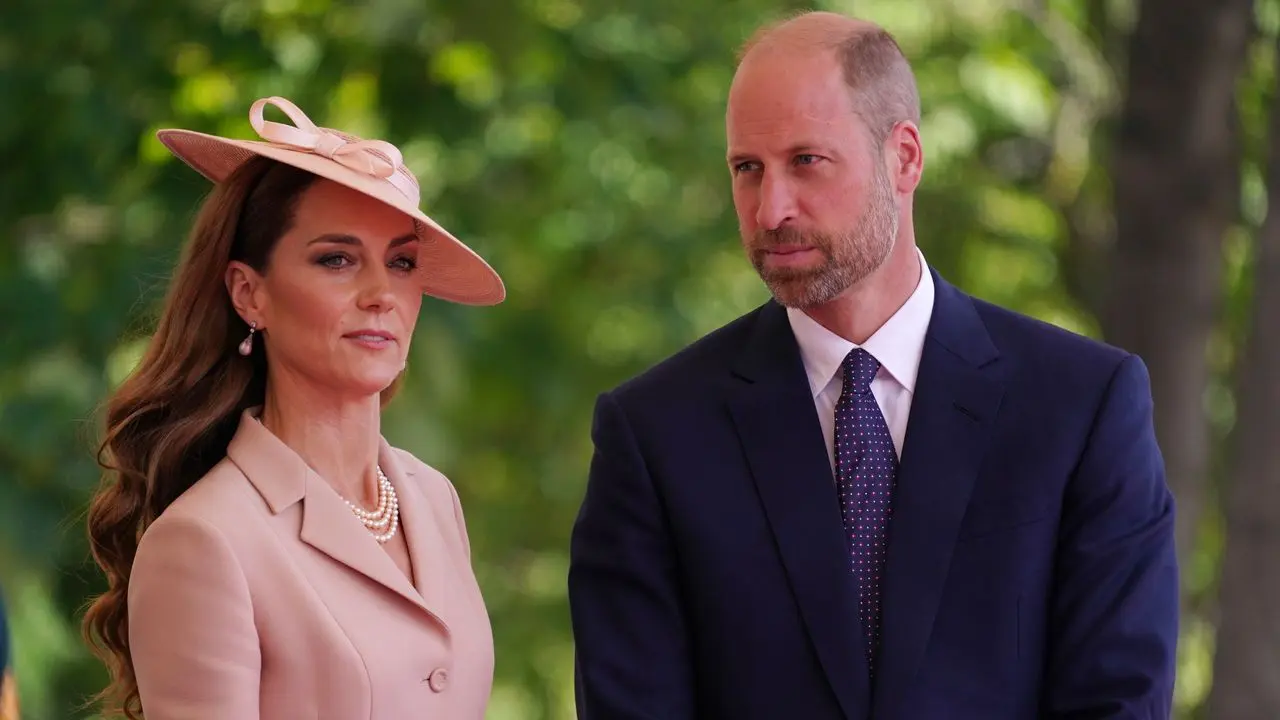
The Prince and Princess of Wales are about to enter a new chapter in their family's public life. Starting in September, Prince George, the eldest son of Prince William and Kate Middleton, will begin his studies at Eton College, one of the most prestigious schools in the United Kingdom. For the royal family, this milestone is not just about education—it also brings the challenge of navigating heightened media scrutiny as the young prince steps into a more visible phase of his life. To safeguard their children's privacy, William and Kate are reportedly considering a strategy that served them well during the early days of their own relationship: an informal "Gentleman's Agreement" with the press.
This approach, which harkens back to their university years at St. Andrews, would establish a tacit understanding with British media outlets to limit intrusion into the private lives of their children and future partners. The goal is to offer Prince George, Princess Charlotte, and Prince Louis a semblance of normalcy as they grow up in the public eye. The idea has gained traction thanks to insights from Simon Vigar, a former broadcaster and author who specializes in royal affairs. According to Vigar, replicating the media truce of the early 2000s could be key to protecting the Wales children as they navigate the pressures of adolescence and young adulthood.
A Royal Truce with the Press
The original "Gentleman's Agreement" emerged during a period when Prince William and Prince Harry were pursuing their education at the University of St. Andrews and other institutions. At the time, the palace and British media reached an informal understanding: as long as the young princes were studying, their privacy would be respected. This unwritten pact allowed William and Harry to attend classes, socialize, and experience university life without the constant shuttering of cameras or relentless questions from journalists. For William, this agreement proved particularly valuable when he met Kate Middleton in 2001. The two began as close friends, and their relationship gradually deepened over the following year. Yet, despite their growing connection, they were able to keep their romance largely out of the public eye for nearly two years, thanks in no small part to the confidentiality arrangement.
The media truce was not merely a courtesy; it was a carefully negotiated recognition that certain boundaries needed to be respected. In an era before social media's ubiquity, the reach of traditional outlets could be contained through dialogue and cooperation. Editors agreed to hold back on publishing candid photographs or speculative stories about the royal students' private lives, allowing William and Kate to forge a bond away from the intense scrutiny that typically surrounds the monarchy. This period of relative peace gave the couple the chance to grow together, culminating in a relationship that would eventually lead to marriage in 2011.
Now, with Prince George preparing to attend Eton—the same school attended by both his father and grandfather—William and Kate are looking to revive a similar arrangement. The modern context, however, is complicated by the digital media landscape. Social media platforms, online gossip sites, and freelance photographers operating outside traditional agreements make it harder to enforce unwritten rules. Yet, according to royal insiders, the principle remains the same: a public acknowledgment that the children deserve a private space to learn, make mistakes, and form their own identities.
A New Chapter at Eton
Prince George's enrollment at Eton has been widely anticipated. The historic school, located just a short distance from Windsor Castle, has educated numerous British prime ministers, writers, and members of the royal family, including Prince William and Prince Harry. For George, who turned 13 on July 22, beginning at Eton marks a significant rite of passage. It will be his first time as a full-time boarding student, stepping out of the protective bubble of Kensington Palace and into a more independent environment. The move has stirred considerable interest, not only among royal watchers but also in the British press, which has already begun speculating about his schedule, friendships, and potential romantic interests in the years to come.
Given this level of attention, the Waleses are determined to prevent their children from becoming tabloid fodder. Their strategy, as described by those close to the family, involves a proactive approach to media engagement. Rather than seeking to ban journalists entirely, they aim to establish clear boundaries. The "Gentleman's Agreement" would likely include commitments from major news organizations to avoid paparazzi shots of the children during school hours, participation in school events, or private outings with friends. In exchange, the palace might offer occasional official photographs or provide family updates to the press, ensuring that public interest is satisfied without compromising the children's safety or freedom.
The choice of Eton itself carries symbolic weight. It is a school with a reputation for emphasizing discipline, tradition, and academic excellence, but it has also evolved to address the challenges of the digital age. Eton's leadership is experienced in managing the presence of high-profile students, having hosted Prince William and Harry in the past. The school has strict protocols in place to prevent media intrusion on campus, and its staff are trained to handle the unique needs of pupils who, like Prince George, come from families of significant public interest. This institutional support will be invaluable to the Waleses as they seek to implement their vision of a protected upbringing.
Revisiting the St. Andrews Playbook
The decision to resurrect the "Gentleman's Agreement" reflects a broader pattern in how William and Kate have approached their public roles. Throughout their marriage, they have consistently prioritized the wellbeing of their children, often shielding them from the more aggressive aspects of media culture. From carefully managed photo releases on birthdays to selecting schools that offer a degree of seclusion, the couple has shown a willingness to invest time and effort in maintaining a boundary between their family life and their official duties. The St. Andrews experience demonstrated that such boundaries are not only possible but also beneficial, allowing relationships to develop naturally rather than under the glare of cameras.
Simon Vigar, who has analyzed royal media relations for decades, notes that the original agreement was instrumental in allowing William and Kate to have a "normal" university experience. "They were able to get to know each other as people, not as public figures," Vigar has observed. "Without that cover, their relationship might have been subject to intense scrutiny at an early stage, which could have derailed it before it had a chance to flourish." Vigar's analysis suggests that the Waleses are mindful of the same risks for their own children. Prince George, Princess Charlotte, and Prince Louis are growing up in an era where smartphones and social media make it easy for any moment to be captured and shared globally. A modern "Gentleman's Agreement" would need to account for this reality, perhaps by engaging directly with social media platforms or encouraging fans/consumers to avoid sharing unauthorized images.
Protecting the Future of All Three Wales Children
While much of the current attention is focused on Prince George, the Waleses are equally concerned about the future of Princess Charlotte, who is 11, and Prince Louis, who is 8. Although both are younger, they will soon enter their own phases of adolescence, where friendships, romantic interests, and social lives will become matters of personal importance. William and Kate are determined that their children—whether they grow up to be senior royals or choose more private careers—should have the right to make mistakes and learn from them without public judgment. The "Gentleman's Agreement," if successful for George, would likely set a precedent that extends to his siblings. In the words of one royal expert, "What works for George will be applied to Charlotte and Louis." This forward-thinking approach suggests that the monarchy is adapting to the changing expectations of privacy, recognizing that children today require more protection than previous generations might have received.
The matter of future partners is also on the Waleses' radar. Just as Kate herself benefited from the university-era truce, the family wants to ensure that anyone who becomes romantically involved with their children will not be subjected to the kind of intrusive coverage that has sometimes plagued royal relationships in the past. By establishing a strong precedent now, William and Kate hope to spare their children's future partners the stress of constant scrutiny. This could involve clear requests to the press to respect certain boundaries, as well as legal measures if necessary. The couple is said to be closely monitoring how media outlets react to informal arrangements, with the option of a more formal contract or enforceable privacy notices on the table if needed.
The Broader Royal Press Relations
The Waleses' considerations come at a time when the royal family's relationship with the media is more strained than ever. Following the death of Princess Diana, who famously battled paparazzi and tabloid speculation, public sympathy has shifted toward a more protective stance. The Duke and Duchess of Sussex have been vocal critics of the British tabloid press, citing harassment and invasion of privacy as reasons for their departure from royal duties. Prince Harry's ongoing legal battles with newspaper publishers have further highlighted the toxic dynamics that can arise when the media's thirst for royal news clashes with individual rights. In this context, William and Kate's push for a "Gentleman's Agreement" can be seen as a calm, diplomatic counterpoint to the confrontations pursued by Harry and Meghan. Rather than waging war with the press, the Waleses appear to favor persuasion and mutual respect, a strategy that has often proven effective in the British media landscape.
Yet, the feasibility of such an agreement in the 2020s remains an open question. The decline of print journalism, the rise of digital outlets, and the global nature of the internet mean that no single code of conduct can fully control the flow of information. Photographers in other countries may not feel bound by agreements made with UK outlets. Paparazzi images can be sold overseas and then republished online, making it difficult to contain. To address this, William and Kate reportedly plan to work with international organizations and press regulators to enforce a standard of decency. They may also rely on the public's goodwill, encouraging people to respect the children's privacy by not engaging with unauthorized images. In many ways, this would be a modern extension of the original "Gentleman's Agreement," which relied as much on the honorable behavior of editors as on formal rules.
As Prince George begins his journey at Eton, the world will be watching. But the Waleses are determined to ensure that their son's school years are defined by academic growth, friendship, and personal development, not by media headlines. If their "Gentleman's Agreement" comes to fruition, it could reshape how the royal family manages its relationship with the press for generations to come. The lessons from St. Andrews are clear: mutual respect can create space for joy, love, and authenticity. William and Kate are betting that the same approach will give their children the foundation they need to flourish, both as royals and as individuals.
Source:Vanity Fair News