

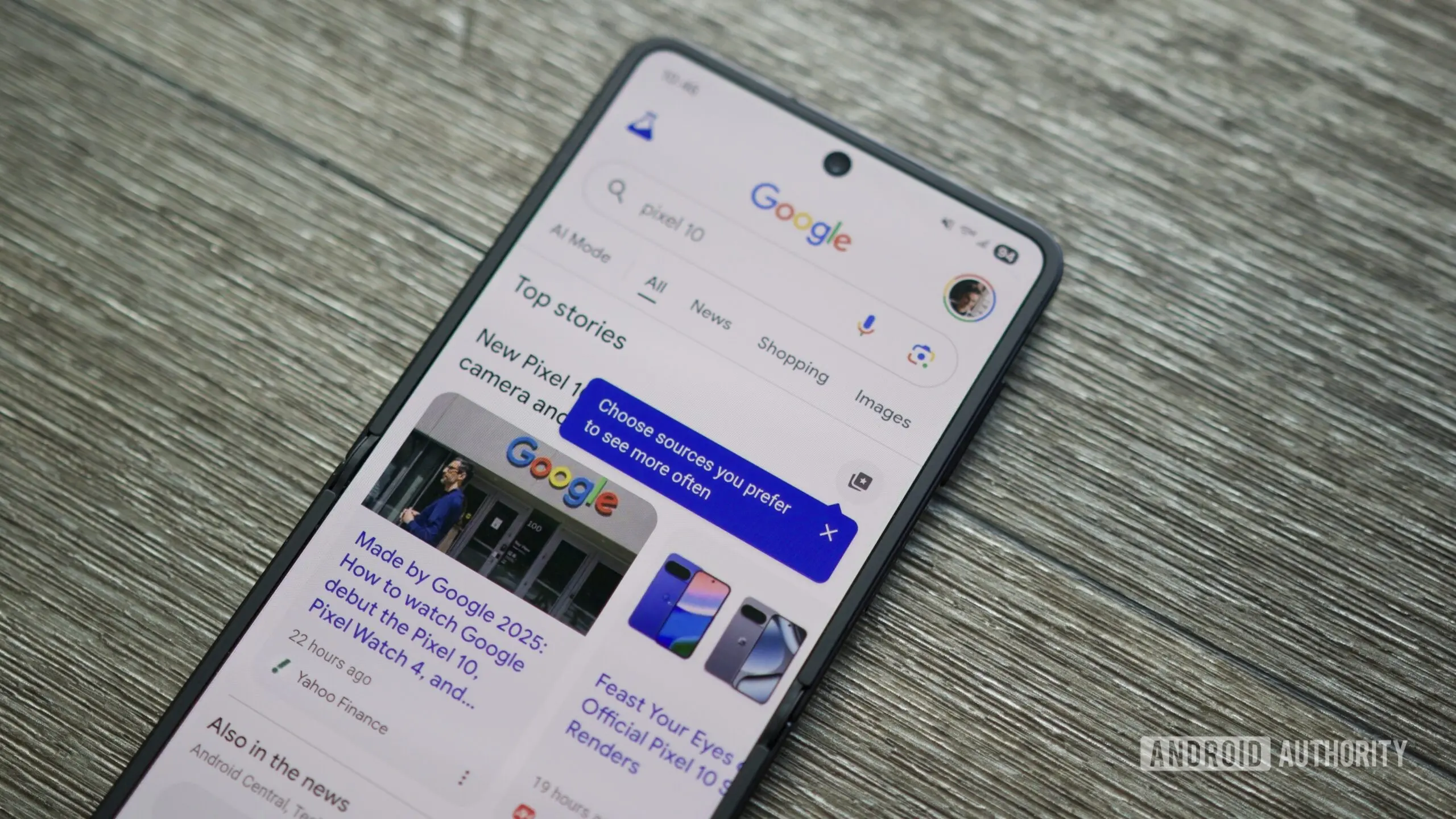
A solo game developer has shared a puzzling story in which Google’s AI Search apparently revealed an unreleased character from their upcoming game. The developer, who works under the name Klub Kofta Studio, says the information was so obscure that it could not have come from public speculation or fan theories. Instead, the only known digital record of the character’s name reportedly existed in a private Google Docs file.
The curious case of Vantage Tripod
The developer behind Operation Octo, a tower defense game, told the story on Reddit. According to the post, a player was asking Google’s AI Search “silly” questions about the game to get a laugh. To the player’s surprise, one of the AI’s responses contained a highly specific character name that had apparently never been shared publicly: “Vantage Tripod.”
The developer said they had intentionally kept that character hidden from all public communications. It was not mentioned in patch notes, press materials, or even in the game files. As far as the developer knew, the name existed only in a private Google Docs file that they had used for planning. The developer admitted they had no idea how Google’s AI could have retrieved it.
“My game is not big enough for there to be much noise out there to confuse Google’s AI,” the developer wrote. “I guess that’s why it managed to give actual, scarily real leaks on my game.” The developer emphasized that they had never told anyone about the character publicly and that the name was not present in any of the game’s shipped files. The only place they knew it existed was in that private document.
Google’s response
In response to the viral Reddit thread, a Google representative issued a statement to a gaming news outlet. The statement firmly denied that Google scans private Workspace content to train its foundational AI models, including Gemini. The representative also said that links to publicly shared docs may be indexed if someone posted them somewhere public, where they could be seen by search engine crawlers.
Google further noted that users are in full control of their sharing settings for Drive content, such as Docs, and directed users to help resources. The company did not provide a specific explanation for how the developer’s private document could have influenced an AI Search response. It also did not confirm whether the document had ever been shared through a link or made visible to any third party.
The broader AI Search problem
This is not the first time Google’s AI Search has made headlines for unexpected behavior. Earlier incidents included AI Overviews recommending bizarre and sometimes dangerous advice, such as telling users to add glue to pizza. Those errors were widely mocked and raised concerns about relying on generative AI for factual information.
But the Operation Octo case is different. Instead of hallucinating false information, the AI appears to have surfaced a piece of accurate, private data that the developer had not intentionally published. That raises a deeper question: how do AI search systems obtain information that is supposedly locked away in private accounts?
Possible explanations
One obvious possibility is that the private Google Docs file was shared with someone else, at least temporarily. A developer might have given a link to a playtester, a friend, or a contractor, and that person could have posted it somewhere public. Google’s statement acknowledges that public links can be indexed by search engine crawlers. Even if the document was shared only privately, a recipient could have copied its contents into a forum, a Discord server, or a public spreadsheet.
Another possibility is that the AI was not actually drawing from the private document at all. Large language models are trained on enormous datasets scraped from the public internet. If a tiny reference to “Vantage Tripod” appeared on a website that neither the developer nor the player knew about, the AI could have picked it up from there. The developer admitted they had no idea what might be floating around online about the game, and small indie projects sometimes attract quietly obsessed fans who create wikis, fan art, or data-mined content.
It is also possible that the AI inferred the name from context. For example, if the developer had discussed similar names, coding notes, or design documents in public spaces, the AI might have combined those fragments into a plausible guess. However, the developer insisted that the name was not in game files and had never been publicized. That makes simple inference less likely, though not impossible.
Privacy concerns for Google Workspace users
The incident has reignited long-running privacy concerns about Google Workspace. Many users assume that private documents stored in Drive or Docs are completely inaccessible to Google’s AI systems. Google has repeatedly said it does not use private Workspace content to train its AI models. But this case suggests either that the document was not as private as the developer thought, or that Google’s AI has a path to information that the company does not fully understand.
Security researchers have previously noted that Google Docs can be exposed in several ways. A user might accidentally set a share link to “anyone with the link” without realizing it. A link embedded in an old email or chat message could become public if the conversation is shared. Search engines might discover files that were publicly indexed years ago and then removed. Google’s own support pages warn that files shared using certain link settings can appear in search results.
There is also the matter of Google’s AI training data. Although Google says it does not use private Workspace content to train foundational models, that does not mean its AI Search feature cannot access live indexing of public content. If a document was ever public even for a few hours, a crawler might have captured it. The developer may not remember sharing the document, but someone else with access could have done it.
Impact on indie developers
For indie game developers, the story is a reminder that secrets are hard to keep in the digital age. Developers often use private documents to plan reveals, trailers, and plot twists. If a supposedly private file can somehow leak through an AI search, that could undermine carefully orchestrated marketing campaigns.
The developer behind Operation Octo has said they are mostly confused rather than angry. They speculated that because their game is so small, there is little online speculation to confuse the AI. That might explain why the AI produced a specific name instead of inventing something vague. In a larger game franchise, the AI would likely have dozens of conflicting fan theories to draw from, making a precise leak less probable.
However, the fact that the AI found the name at all is troubling. Even if the document had been shared with someone, the developer had no idea that information would surface through Google Search. The incident shows that generative AI systems can combine indexing, web scraping, and language generation in ways that are difficult to trace.
The viral Reddit effect
Since the Reddit post went viral, the situation has changed. Google’s AI Search now has many sources to pull from when asked about Operation Octo or “Vantage Tripod.” The Reddit thread itself is public, and news coverage has repeated the character’s name. That means the information is no longer obscure or private.
The developer has inadvertently made the leak worse by posting about it. Any future AI response about the game will likely reference the Reddit thread, the news articles, and the many discussions that followed. Even if Google were to somehow remove the original source, the information is now scattered across the internet.
This creates an interesting feedback loop. AI search systems learn from public content. Once a piece of information becomes public, even in the context of “this was supposed to be secret,” the AI can confidently repeat it. The developer’s attempt to understand the leak may have permanently cemented the leaked character name in AI training data.
What this means for AI trust
The episode adds another layer to the ongoing discussion about trust in AI-powered search. Google has positioned AI Overviews as a helpful assistant that summarizes information from across the web. But when the AI produces a secret that no one remembers sharing, it challenges the assumption that AI only uses public, accessible data.
Google’s denial about scanning private Workspace files is clear. The company also explains that public links can be indexed. But the developer’s story suggests that there may be a gap between how users understand privacy settings and how data actually moves through the web. A user might think a document is private because they never copied the link, yet someone with access might have re-shared it elsewhere.
For now, the exact source of the “Vantage Tripod” leak remains unknown. The developer has no explanation, and Google has not offered a detailed account. The viral nature of the post means that the character name will likely appear in future AI responses, but the mystery of how the AI first learned it is unlikely to be resolved.
As AI search becomes more capable, incidents like this will probably become more common. Generative AI can draw connections across vast amounts of data, including obscure forum posts, deleted pages, cached files, and shared document links. Even if companies are sincere about not using private data, the boundary between public and private is far blurrier than many people assume. The story of Operation Octo serves as a cautionary tale for developers, writers, and anyone who stores sensitive plans in cloud documents.
Source:Android Authority News