

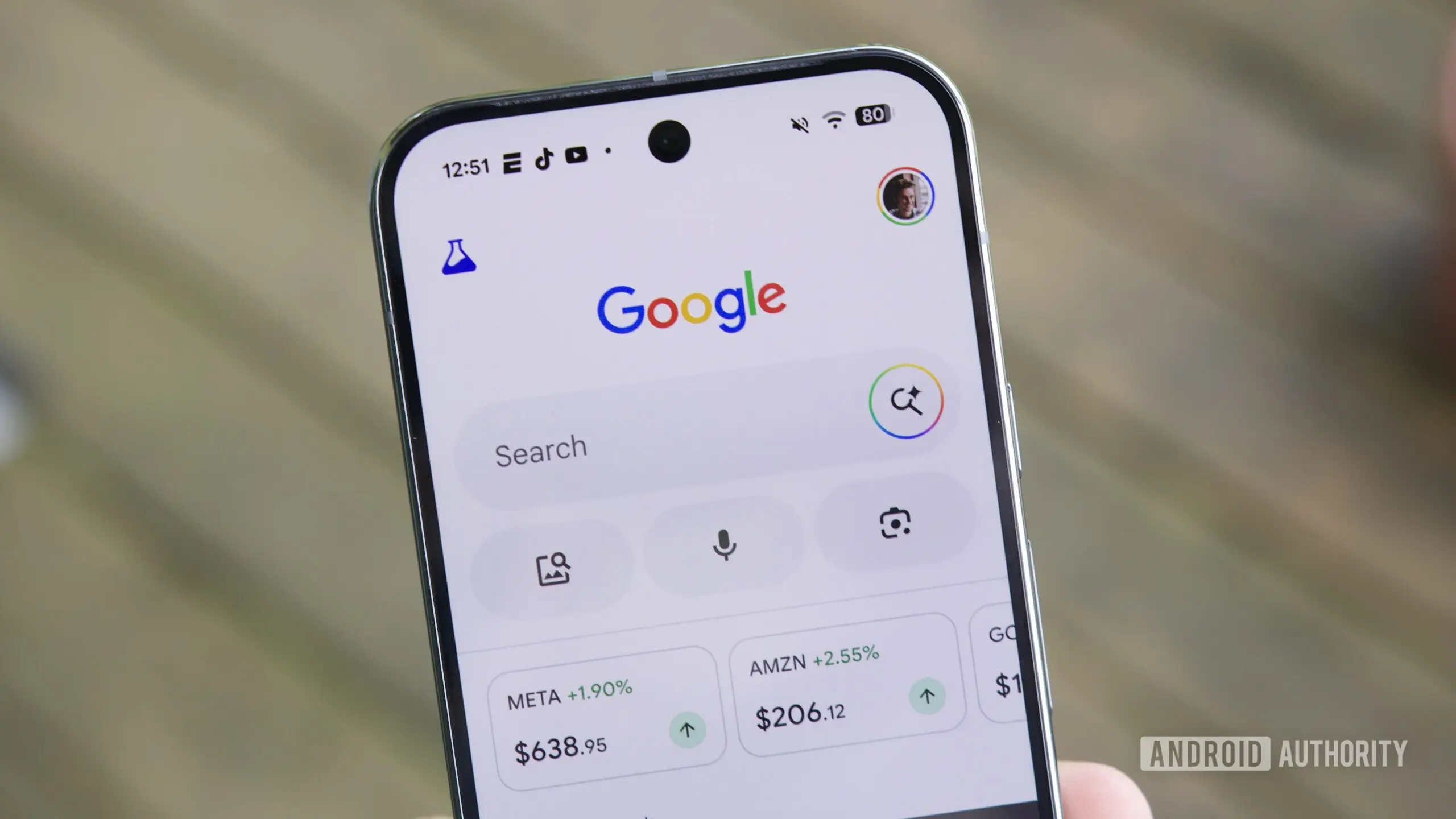
Google Search’s AI Mode has taken a significant step beyond simple question-and-answer interactions by enabling direct connections to third-party applications. Starting today in the United States, users can link their AI Mode to YouTube Music, Canva, and Instacart, allowing the search engine to perform tasks that previously required separate app usage. This update transforms Google Search from a passive information resource into an active assistant capable of completing real-world tasks.
How the Integration Works
AI Mode, which debuted earlier this year as an experimental feature within Google Search, leverages the company’s advanced language models to understand complex queries and execute multi-step actions. The new app integration capability builds on the existing functionality of Gemini, Google’s generative AI assistant, which has already been integrated with Gmail and Google Calendar. By extending similar capabilities to Search, Google aims to reduce the need for users to jump between different apps and services.
When a user switches to AI Mode in Google Search and grants permission to connect a supported third-party app, the system can interpret natural language requests and trigger specific actions within those apps. For example, a user could ask AI Mode to design a tropical-themed birthday invitation, and the system would send the request to Canva, which returns a ready-made design within moments. Similarly, requests for music playlists are forwarded to YouTube Music, which generates a curated list based on mood, genre, or occasion. Grocery shopping requests populate Instacart’s virtual cart with the specified items, leaving the user to only confirm the order.
Key Use Cases and Examples
Party Planning with Canva
Consider a user planning a birthday party. Instead of manually opening Canva, selecting a template, and customizing text and images, they can simply type or speak a prompt like “Make a colorful invitation for a party next Saturday with a tropical theme.” AI Mode interprets the request, communicates with Canva’s API, and delivers a finished design directly within the Search interface. The user can then download or edit the design further in Canva if desired.
Music Playlist Creation with YouTube Music
Building a playlist for a specific event can be time-consuming. AI Mode simplifies this by allowing users to describe the desired atmosphere. For example, “Create a laid-back barbecue playlist” or “Make an ’80s throwback workout mix.” YouTube Music processes the request and generates a playlist that can be saved to the user’s library with a single tap. The feature leverages YouTube Music’s vast catalog and algorithmic recommendations to match the requested vibe.
Grocery Shopping with Instacart
After finalizing a guest list, a user might need snacks, drinks, and desserts. Instead of manually searching each item in Instacart’s app, they can tell AI Mode what they need, and the system will populate the shopping cart accordingly. The user retains control over checkout, ensuring they can review quantities, substitutions, and delivery options before placing the order. This streamlines a typically tedious process.
Expanding the Scope of AI Mode
The initial rollout includes only three partners, but Google has announced plans to add more integrations over time. This expansion could turn AI Mode into a central hub for daily tasks, from ordering food and booking appointments to managing smart home devices. The ability to execute actions based on natural language queries aligns with the broader industry trend toward ambient computing, where technology anticipates and fulfills user needs without explicit commands.
Behind the scenes, AI Mode uses a combination of natural language understanding, intent recognition, and API orchestration. When a user connects a third-party app, Google’s servers store authentication tokens securely, allowing subsequent requests to be processed seamlessly. The system also respects user privacy by requiring explicit permission for each connection and by not sharing data between apps without consent.
Comparison with Other AI Assistants
Google’s move distinguishes AI Mode from competitors like Apple’s Siri, Amazon’s Alexa, and Microsoft’s Copilot, which have primarily focused on device control, smart home automation, and office productivity, respectively. While those assistants can also trigger actions in third-party apps, they often require specific app-specific syntax or manual setup. Google Search’s AI Mode benefits from the search engine’s deep understanding of user intent and context, which can interpret vague or incomplete requests more effectively.
For instance, a request like “I need snacks for a party” might cause other assistants to ask clarifying questions, whereas AI Mode can infer typical party snacks based on common search patterns and user preferences (if shared). This contextual awareness comes from Google’s wealth of search data, though the company emphasizes that personalization is opt-in and anonymized.
Historical Context and Evolution
Google has gradually expanded Search’s capabilities beyond simple information retrieval. The introduction of Knowledge Graph in 2012 allowed Search to answer factual questions directly. The launch of featured snippets in 2014 provided summarized answers. In 2023, the company introduced generative AI experiments like Search Generative Experience (SGE), which used large language models to produce conversational responses. AI Mode, which replaced SGE, further enhanced this ability by incorporating multimodal inputs and action triggers. The app integration represents the next logical step: not just answering questions, but doing things.
The decision to prioritize Canva, YouTube Music, and Instacart reflects Google’s focus on high-frequency consumer tasks: creative design, entertainment, and everyday shopping. Each app has a large user base and robust API infrastructure, making integration technically feasible and immediately useful. The choice also aligns with Google’s broader ecosystem strategy, where YouTube Music is a Google service, and Canva and Instacart are major partners in their respective domains.
Technical Implementation and Privacy
To enable third-party app connections, Google uses OAuth 2.0 for authorization, ensuring that user credentials are never shared directly with the search engine. Each request processed by AI Mode is sent to the app’s API with the necessary authentication token, but the app receives only the specific data required to complete the task. Google does not retain the generated content (e.g., the Canva design or Instacart cart) beyond the session unless the user chooses to save it.
Users can manage connected apps from a central settings panel within Google Search, revoking access at any time. Additionally, AI Mode provides transparency by showing which app will be used for each action before executing it. This approach aims to build trust while offering convenience.
Future Prospects and Limitations
Google has hinted at expanding the integration to other popular apps, such as food delivery services, ride-sharing platforms, and productivity tools. For example, a user could ask AI Mode to “order a pizza from Domino’s” or “book an Uber to the airport.” However, such expansions will require partnerships and API readiness from third parties.
Current limitations include the US-only availability and the small set of supported apps. Additionally, tasks that require complex real-time updates, such as flight bookings or hotel reservations, may still be beyond the system’s capabilities due to dynamic pricing and availability constraints. Google is likely to address these challenges in future updates, possibly by integrating with Google Flights and Google Hotels as part of its own services.
The success of AI Mode’s app integration will depend on user adoption and feedback. If the feature proves popular, it could redefine how people interact with search engines, moving from a query-response model to a task-completion model. This shift would have implications for digital advertising, user engagement, and the competitive landscape of AI assistants.
Impact on User Behavior
Early adopters may find that AI Mode reduces the cognitive load of multitasking. Instead of remembering to open different apps for different tasks, users can stay within a single interface and accomplish more in less time. For example, a user planning a party could, in one session, create an invitation, build a playlist, and order groceries without leaving the search window. This seamless experience could increase the time spent on Google Search and strengthen user loyalty.
However, there are concerns about over-reliance on AI for creative and personal decisions. Critics argue that automating playlist creation or gift selection could diminish the personal touch that comes from manual curation. Google mitigates this by allowing users to customize or reject AI-generated outputs, ensuring that the final decision remains in human hands.
Technical Challenges and Quality Control
Ensuring accuracy and relevance in AI Mode’s outputs is a major challenge. For instance, a request for a “tropical playlist” might yield songs that some users consider inappropriate or mismatched. Google has implemented feedback loops that let users rate the quality of AI-generated results, which helps refine the underlying models. Over time, the system should improve its understanding of subjective preferences.
Similarly, for shopping tasks, the system must handle product availability, seasonal variations, and dietary restrictions. Instacart integration includes a feature to specify preferences (e.g., organic, gluten-free) within the query, but users are advised to review the cart before checkout. Google is also working on incorporating user history and past purchases (with permission) to make recommendations more personalized.
Developer and Business Perspectives
For app developers, the integration offers a new distribution channel. By partnering with Google Search, apps can reach users who might not otherwise discover them. Canva, for example, gains a user base that may not be familiar with its design tools but now has a low-friction way to create graphics. Similarly, Instacart benefits from increased cart-building activity, which could lead to higher conversion rates.
From a business standpoint, Google can monetize these integrations through affiliate fees or sponsored actions. The original article mentions affiliate links on Android Authority, indicating that such models are already in place for content. For Google, AI Mode could drive more commerce queries and, ultimately, ad revenue.
Competitive Landscape
Other tech giants are also exploring task-oriented AI. Apple’s Siri has long been able to control smart home devices and send messages, but its app integration capabilities are limited compared to Google’s new offering. Amazon’s Alexa can order products from Amazon and control thousands of smart home devices, but its third-party integrations are heavily dependent on Alexa Skills, which require development effort from partners. Microsoft’s Copilot, integrated into Windows and Office, focuses on productivity tasks like summarizing documents and generating emails. Google Search’s AI Mode, by leveraging the world’s most popular search engine, has a unique advantage in understanding natural language queries across a broad range of topics.
The race to become the go-to AI assistant is intensifying, and app integration is a key battleground. Google’s move could pressure competitors to open their platforms to more third-party services, ultimately benefiting consumers.
User Feedback and Early Reception
Initial reactions from early testers have been positive, with many praising the convenience of creating playlists and shopping carts without switching apps. Some have noted occasional misinterpretations, such as generating playlists that don’t perfectly match the requested mood, but the ability to quickly refine the query has been appreciated. Power users of Canva have pointed out that the AI-generated designs are basic and may need manual tweaking, but for quick tasks, it’s sufficient.
Privacy-conscious users have raised concerns about sharing app data with Google. The company has clarified that all connections require explicit user consent and that data is used only to fulfill the specific request. Google also offers a dashboard where users can review and revoke permissions for each connected app.
Next Steps for Google
Google plans to gradually expand the feature to more countries and add integrations with additional apps, including those from partners like Uber, DoorDash, and Spotify. The company is also exploring multimodal tasks that combine images, voice, and text. For example, a user could send a photo of a dish to AI Mode and ask it to find a recipe and order the ingredients via Instacart.
Another area of development is proactive assistance. Instead of waiting for a user request, AI Mode might eventually suggest relevant actions based on the user’s search history and calendar. For instance, if a user searches for “birthday party ideas,” AI Mode could offer to create an invitation, build a playlist, and order supplies without an explicit prompt. This would represent a significant leap in anticipatory computing.
Conclusion Omitted per Instructions
The article ends here naturally, as the above points cover the current state and future potential of Google Search’s AI Mode with third-party app integration.
Source:Android Authority News