

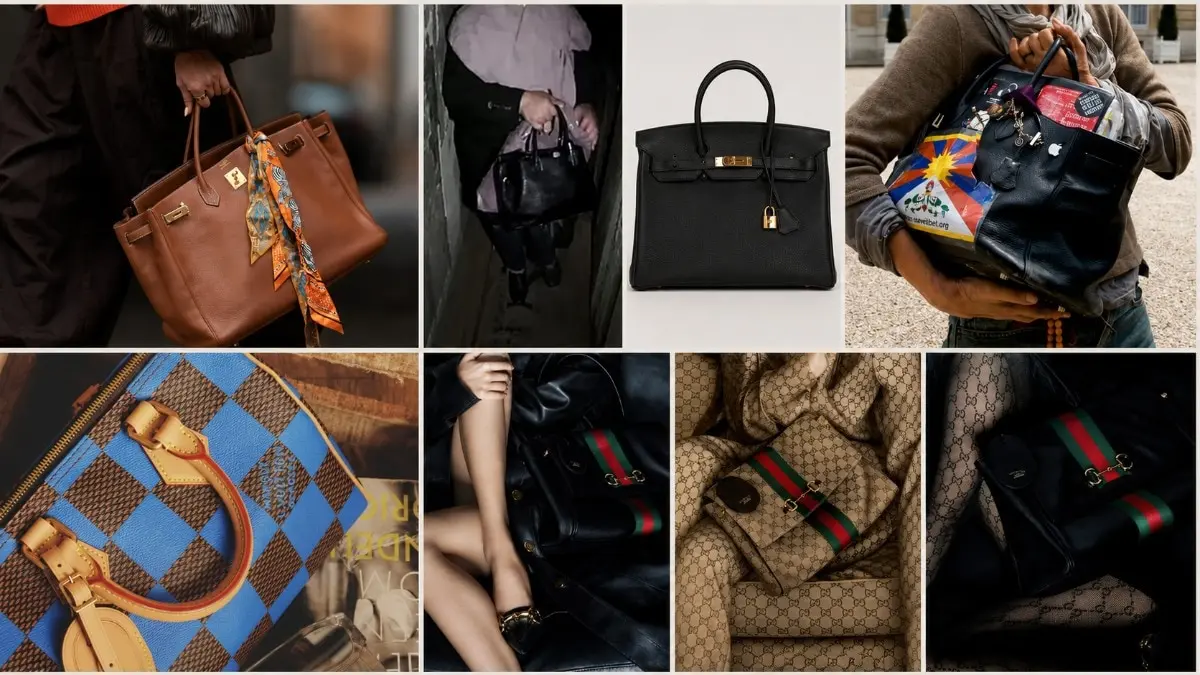
Before a ball is kicked at the FIFA World Cup, another contest is already playing out. At airports, on tarmacs, and outside team hotels, some of football’s biggest stars are arriving with Hermès Birkins, Chanel totes, Louis Vuitton Keepalls, and rare collector pieces worth thousands of pounds. The journey to the tournament has unexpectedly become a global menswear runway, where every airport arrival is photographed and every bag can become a fashion moment.
The old footballer travel uniform—a tracksuit, headphones, and perhaps a small wash bag—is disappearing. In its place are enormous Hermès Haut à Courroies bags, vivid Chanel creations, colourful Louis Vuitton holdalls, and some of the rarest luxury accessories money can buy. Erling Haaland arrived with an ultra-rare Hermès “Endless Road” HAC 50. Cristiano Ronaldo kept things classic with Gucci. Marcus Thuram carried an oversized jade-green Chanel x Pharrell flap bag. Neymar went bright with a canary-yellow Louis Vuitton Keepall, while David Alaba turned up with a rare Hermès Multi-Pocket HAC 50 valued at close to £37,000. The result is a tournament where the arrivals are increasingly becoming a spectacle of their own.
Football’s Airport Arrivals: The New Front Row
The trend is not entirely new. David Beckham has long travelled with an enviable collection of Louis Vuitton bags, and footballers have always used watches, trainers, and tailoring to signal personal style. But the scale has changed. This World Cup has seen players across national teams carrying pieces once more closely associated with fashion collectors, celebrities, and auction houses. Hermès, Chanel, Louis Vuitton, Bottega Veneta, Gucci, Dior, and Burberry have all appeared in the hands of footballers on their way to the tournament.
Unlike a traditional runway, there is no stylistic uniform. Some players have gone loud; others have opted for quiet luxury. Some are carrying bags almost as large as their torsos; others have picked compact pouches. But together, they point to a bigger shift: the luxury handbag is no longer an unusual sight in elite men’s sport. This transformation reflects a broader cultural acceptance of fashion-forward masculinity, where male athletes are increasingly embracing accessories that were once stereotyped as feminine.
Erling Haaland: The Collector-Level Hermès Icon
If one player has become the face of football’s luxury-bag moment, it is Erling Haaland. The Norwegian striker arrived with the Hermès Haut à Courroies 50 “Endless Road”, a rare piece decorated with a landscape of geometric mountains and winding roads crafted through intricate leather marquetry. This bag is not just a travel accessory; it is a piece of art, featuring over 20 different leathers inlaid by hand. The “Endless Road” HAC 50 is so rare that it rarely appears in public, making Haaland’s choice a bold statement of status and taste.
But Haaland’s collection extends far beyond this single piece. He has been seen with moss-coloured canvas HACs, a black-and-orange checkerboard version, and several other Hermès pieces. At one point, he was even spotted carrying his girlfriend Isabel Haugseng Johansen’s Birkin 25 inside his own HAC 50. His airport appearances have become must-see events for fashion enthusiasts, with social media users analysing every detail of his luggage. Haaland’s influence reflects a generation of footballers who grew up in an era of luxury branding and social media, where personal style is as important as athletic performance.
Chanel, Gucci, and Louis Vuitton: A Dressing Room of High Fashion
Haaland may be the headline collector, but the World Cup runway extends deep into football’s biggest dressing rooms. Cristiano Ronaldo arrived with Gucci’s calfskin leather duffle, predominantly black and finished with the house’s archival Web stripe. The bag is a classic choice, reflecting Ronaldo’s preference for timeless elegance over trend-driven pieces. Marcus Thuram made a considerably louder entrance with a jade-green Chanel x Pharrell XXL flap bag from the fashion house’s 2019 capsule collection. Made from lambskin and finished with diamond quilting and graffiti-inspired details, it was one of the most distinctive bags seen at the tournament.
Neymar Jr carried a £5,400 canary-yellow Louis Vuitton Keepall Bandoulière with a dinosaur charm attached, while Kylian Mbappé chose the more compact £1,200 Dior A5 Triangle Pouch. Lamine Yamal went a step further, pairing a £6,690 Chanel Shopping Bag with a matching textured jacket, turning his airport appearance into a coordinated fashion statement. Even defenders like Virgil van Dijk and David Alaba have joined the trend, with van Dijk spotted carrying a putty-grey Hermès HAC 40 and Alaba positioning his black multi-pocket HAC on a Rimowa suitcase.
The Hermès HAC: Football’s Unofficial Uniform
Perhaps the clearest sign of change is the sheer number of footballers carrying Hermès. David Alaba arrived with a black HAC 50 Multi-Pocket perched on a Rimowa suitcase. Ollie Watkins chose a sandy-beige HAC 50 reportedly worth close to £40,000. Virgil van Dijk has been seen with a putty-grey version, while Lionel Messi owns a cargo-style HAC 40. Rayan Cherki carried an oversized Hermès Maxi Kelly 42, and Ousmane Dembélé opted for a black Togo leather HAC 50. These are no longer isolated appearances. The Hermès HAC has emerged as something close to football’s unofficial luxury travel uniform.
To understand the appeal, one must look at the history of the HAC. Hermès introduced the Haut à Courroies in the late 19th century as a bag designed to carry equestrian equipment like saddles and bridles. Its sturdy construction, generous proportions, and minimal branding made it a favourite among riders and later among travellers. The bag was never intended to be gendered; it was a functional piece for transporting gear. Only later did Hermès begin producing handbags specifically marketed to women, such as the Birkin and Kelly. The HAC’s resurgence among male footballers reclaims its original unisex, utilitarian roots.
A Bigger Shift in Men’s Fashion
The bags have also reopened an old debate about who is supposedly allowed to carry what. Some social media users questioned Haaland’s masculinity for carrying handbags, while others celebrated the striker’s willingness to wear whatever he liked. These reactions highlight a lingering cultural anxiety around men and luxury accessories, but they also underscore the progress that has been made. Footballers like Haaland, who often travel with Hermès pieces, are normalising the idea that men can enjoy fashion without compromising their athletic identity.
There is also a historical irony in treating the Hermès HAC as an inherently feminine object. As mentioned, the bag was created for equestrian use, long before Hermès produced goods specifically for women. Similarly, Louis Vuitton’s Keepall was originally designed in 1930 for men travelling with light luggage. Today, these bags are often associated with women’s fashion, but their origins are deeply masculine. The return of these bags in the hands of footballers reconnects them with their original purpose while pushing the boundaries of modern style.
The shift is also being driven by the increasing intersection of sport and luxury fashion. Brands like Louis Vuitton, Dior, and Gucci have signed sponsorship deals with football clubs and players, turning athletes into brand ambassadors. This mutual relationship means players are often gifted or encouraged to wear specific items, creating a feedback loop of influence. Social media amplifies this effect: every airport photograph is analysed, reposted, and discussed by millions of fans worldwide.
The World Cup’s New Sideshow
Football remains the main event, of course. Goals, rivalries, and trophies will determine how the tournament is remembered. But before players reach the pitch, their arrivals are now producing a spectacle of their own. The airport has become the catwalk. The team bus is the backstage entrance. And in the hands of Haaland, Ronaldo, Mbappé, Neymar, and their peers, the humble footballer travel bag has evolved into something considerably more extravagant.
At this World Cup, it is no longer just about who has the best squad. There is also the question of who brought the best bag. While some dismiss this as superficial, the trend reflects deeper changes in how male athletes express themselves. In an era where personal branding is essential, every detail matters—from the watch on the wrist to the bag on the shoulder. The players who embrace this are not just athletes; they are style icons, shaping the way millions of fans perceive fashion.
The impact extends beyond the tournament. As footballers continue to carry high-end bags, the demand for these items grows among their followers. Hermès, Chanel, and Louis Vuitton see spikes in interest whenever a specific model is spotted at an airport. This creates a cycle of visibility and desire that benefits both the players and the brands. For the fashion houses, having a World Cup star carry their product is worth thousands of traditional advertisements.
In the end, the World Cup arrivals demonstrate that sport and fashion are no longer separate worlds. They are intertwined, with footballers acting as cultural ambassadors who define trends and challenge norms. Whether it is Haaland’s rare Hermès or Ronaldo’s classic Gucci, these bags tell a story of success, taste, and the courage to stand out—even before the match begins.
Source:Business Today News