

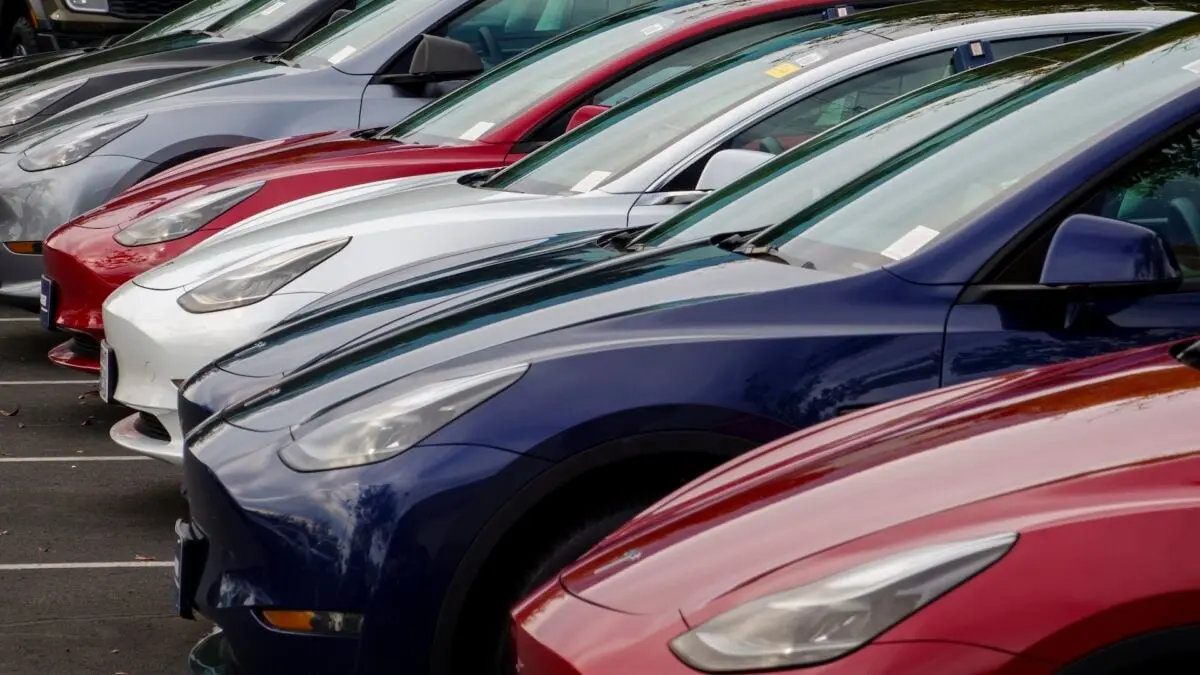
Tesla's European Recovery
After a steep decline in 2025, Tesla is staging a notable comeback in Europe. The company announced Thursday it plans to hire 1,000 new workers at its Gigafactory near Berlin as part of an aggressive push to increase production to 7,500 vehicles per week by October. This follows a previous round of 1,000 hires announced just months ago, when Tesla targeted 6,000 vehicles per week by the end of June.
According to Electrek, these production targets would bring the German factory’s annualized capacity to approximately 390,000 electric vehicles, still short of the 500,000 vehicles per year Tesla originally envisioned when the facility opened in 2022. Yet the ramp-up signals renewed confidence in European demand, which had been battered by a combination of political controversies and trade tensions.
Hiring and Production Ramp-Up
Tesla’s Gigafactory Berlin-Brandenburg has been a cornerstone of the company’s European strategy since its opening. The plant initially faced regulatory hurdles and production delays, but eventually reached a run rate of around 5,000 vehicles per week by early 2025. The recent hiring spree represents a significant acceleration. Employees will work on assembly lines, battery production, and logistics to support higher output.
CEO Elon Musk has emphasized efficiency improvements at the factory, including increased automation and streamlined supply chains. The company also benefits from German government incentives for zero-emission vehicles, which were expanded in late 2025 to counter sluggish EV adoption. Rising fuel costs across Europe further bolster Tesla’s appeal, as running costs for electric vehicles become more competitive compared to internal combustion engine cars.
Political Context and Sales Rebound
Tesla’s sales in Europe nosedived in 2025 following a series of political missteps by Musk. His conservative political activism, direct involvement with the Department of Government Efficiency (DOGE), and personal ties to President Donald Trump alienated many European buyers. At the time, Trump threatened to take over Greenland and imposed tariffs on European goods, straining transatlantic relations. Musk also promoted far-right and anti-immigrant movements, including Germany’s Alternative für Deutschland (AfD) party, and was accused of inciting violence with posts related to anti-immigrant demonstrations in Belfast.
However, data from the European Automobile Manufacturers’ Association shows Tesla registrations in Europe rose 57 percent to more than 118,000 vehicles from January through May 2026, compared with the same period last year. This rebound suggests that consumer sentiment can shift quickly when economic factors align favorably. Government incentives in Germany, France, and other countries now offer up to €10,000 for EV purchases, narrowing the price gap with conventional vehicles.
The recovery also reflects a broader trend: European buyers are prioritizing value and technology over political considerations. Tesla’s Supercharger network, over-the-air updates, and strong brand recognition remain powerful draws. Rivals like Volkswagen’s ID. series, BMW’s i4, and Stellantis’s electric models have made progress, but Tesla still holds a significant market share in the premium EV segment.
European Tech Sovereignty Efforts
The rebound comes at a time when European leaders have intensified calls for digital and technological independence from the United States. French President Emmanuel Macron told the Munich Security Conference in February that Europe must become a “geopolitical power” in defense, technology, and de-risking from big powers. France has already replaced American video conferencing platforms like Microsoft Teams and Zoom with the domestic solution Visio, and signed a deal for its armed forces to use Mistral’s AI models.
In June 2026, the European Commission unveiled a “tech sovereignty package” aimed at strengthening the bloc’s digital autonomy, focusing on semiconductors, artificial intelligence, cloud computing, and open-source software. The Commission also proposed regulating Amazon Web Services and Microsoft Azure as “gatekeepers” under the Digital Markets Act, which would impose stricter compliance requirements on these American giants.
Yet the electric vehicle sector remains a weak link in this strategy. While Europe boasts established automakers like Volkswagen, BMW, and Stellantis, and has access to Chinese competitors like BYD with advanced batteries and charging speeds, Tesla continues to dominate the premium end of the market. The company’s ability to scale production rapidly and maintain a strong brand gives it an edge that local and Chinese rivals have yet to fully replicate.
In Germany, the government’s decision to extend EV purchase subsidies until 2027 has provided a shot in the arm for Tesla and other manufacturers. The subsidies, combined with lower fuel costs for electricity relative to gasoline, are expected to keep demand buoyant. Some analysts predict that Tesla’s market share in Europe could return to its 2024 levels by the end of the year, despite ongoing geopolitical tensions.
However, European policymakers face a dilemma. Encouraging EV adoption is critical for meeting climate goals, but relying on American companies like Tesla undermines the push for strategic autonomy. The EU’s own battery supply chain initiatives and investments in gigafactories by Northvolt and others are still years away from achieving scale. In the meantime, Tesla’s Berlin factory will continue to churn out vehicles that are assembled in Europe but controlled from Silicon Valley.
“Europe has the technology and the talent to build world-class EVs,” said a senior industry analyst interviewed by the Financial Times. “But turning that potential into market reality requires sustained investment and consumer trust. Tesla has shown that if you offer a compelling product, political blowback tends to fade.”
The company did not respond to requests for comment on its hiring plans or future production targets. But its actions speak louder than words: adding 2,000 jobs in less than six months signals a long-term bet on European demand. Whether that bet pays off depends on how quickly European and Chinese competitors can close the gap, and whether Musk can avoid further political controversies.
For now, European customers seem willing to look past the drama. Tesla showrooms in Berlin, Paris, and London are reporting increased foot traffic, and delivery times for the Model Y and Model 3 have stretched to several weeks in some markets. The war on American big tech may have its fiercest battles elsewhere, but in the EV arena, Tesla has won an early skirmish.
Source:Gizmodo News