

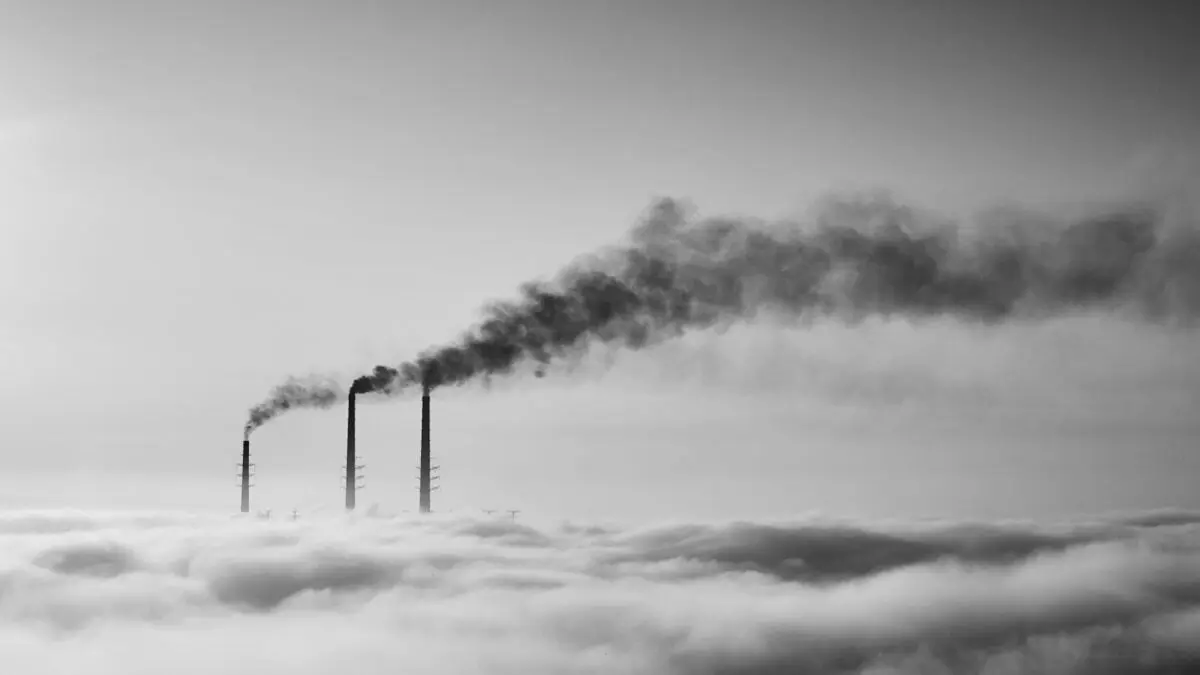
It has become a familiar refrain in Silicon Valley: the rise of artificial intelligence will be as transformative as the Industrial Revolution. Proponents argue that intelligent machines will boost productivity beyond anything seen since the steam engine and help solve humanity’s grandest challenges. But that rosy picture often glosses over the dark side of the historical parallel. The Industrial Revolution, while generating unprecedented material wealth, also sowed the seeds of modern problems: stark wealth inequality, industrialized warfare, and environmental degradation, to name a few.
Now, a coalition of high-profile economists and AI experts are warning that society must learn from that history—or face dire consequences. In an open letter published on Monday, titled unambiguously “We Must Act Now,” nearly two hundred signatories—including former Google CEO Eric Schmidt, Anthropic cofounder Jack Clark, OpenAI cofounder Wojciech Zaremba, and Turing Award winner Yoshua Bengio—call for immediate action to mitigate the risks of an AI-driven transformation that could dwarf the Industrial Revolution in both magnitude and speed.
Radical Change, Quickly
The letter is starkly concise, fewer than one hundred words, but its message is clear: “AI may become radically more powerful over the next 10 years. This could drive an unprecedented transformation of our economy, larger than the Industrial Revolution, but unfolding over a vastly shorter time frame.” While the Industrial Revolution unfolded over decades, giving societies time to adapt to factory labor, urbanization, and new social structures, the AI revolution may compress those adjustments into just a few years. The signatories argue that this acceleration leaves no buffer for policymakers, workers, or communities to respond.
This sense of urgency is rooted in the technology’s potential for recursive self-improvement—where AI systems train themselves to become more advanced, potentially escaping human oversight. Such a scenario could lead to decision-making processes so opaque that humans cannot understand or reverse them, reshaping economies, political systems, and information ecosystems beyond control. The letter follows a spate of similar warnings from international bodies and religious leaders, all underscoring the need for proactive governance.
A Chorus of Caution
The open letter is the latest in a series of high-profile calls for restraint. Last week, the United Nations Secretary General urged a global ban on autonomous weapons—so-called “killer robots.” In June, a coalition of cybersecurity agencies, including the U.S. National Security Agency, warned that AI would “fundamentally transform” cybersecurity not over years, but within months. And from the Vatican, Pope Leo XIV’s encyclical Magnifa Humanitas, published in May, cautioned that unchecked AI could spawn social alienation, political division, and environmental exploitation.
Within Silicon Valley and tech policy circles, the language of urgency has become increasingly common. Recursive self-improvement—once a theoretical concept—is now seen as an imminent risk. Both Anthropic and OpenAI have publicly called for a global committee to oversee advanced AI development, with the power to forcibly slow it down if needed. Recent breakthroughs in AI’s ability to detect vulnerabilities in even the most secure software have sent shockwaves through the public and private sectors, prompting even the Trump administration—historically hands-off on AI regulation—to implement checks and balances on new model deployments. For instance, OpenAI launched its GPT-5.6 model only after receiving what it described as a federal “green light,” although government officials denied granting such approval.
The economic implications are profound. Economists point to potential job displacement on a scale far exceeding previous automation waves, as AI not only replaces routine manual and cognitive tasks but also augments creative and strategic roles. The letter’s signatories emphasize that without swift intervention, the benefits of AI may be concentrated among a small elite, exacerbating existing inequalities. Meanwhile, the technology’s environmental footprint—from massive data centers to energy-intensive training models—could strain global climate goals.
Historical Lessons and Future Risks
The Industrial Revolution analogy is instructive. The steam engine, the spinning jenny, and the factory system multiplied human productivity but also created child labor, slum housing, and air pollution that took generations to address. Similarly, AI promises to solve problems in medicine, climate science, and energy, but its rapid deployment could unleash unintended consequences faster than society can manage. The letter calls for a “global pause” in the development of the most advanced AI systems, echoing earlier petitions from the Future of Life Institute and others.
Yet critics argue that such calls are alarmist and could stifle innovation. They point to the potential of AI to cure diseases, optimize supply chains, and reduce carbon emissions. But the signatories, many of whom are leading AI researchers, insist that the risks are too great to ignore. They urge policymakers to establish robust regulatory frameworks, invest in workforce retraining, and fund research into AI alignment and safety. Without these measures, they warn, the AI boom could repeat the worst aspects of the Industrial Revolution—only at breakneck speed.
As the debate intensifies, one thing is clear: the window for action is narrowing. The open letter serves as a stark reminder that while technological progress can bring abundance, it can also bring upheaval. The task ahead is to harness AI’s potential while safeguarding against its perils—a challenge that will define the coming decade.
Source:Gizmodo News