

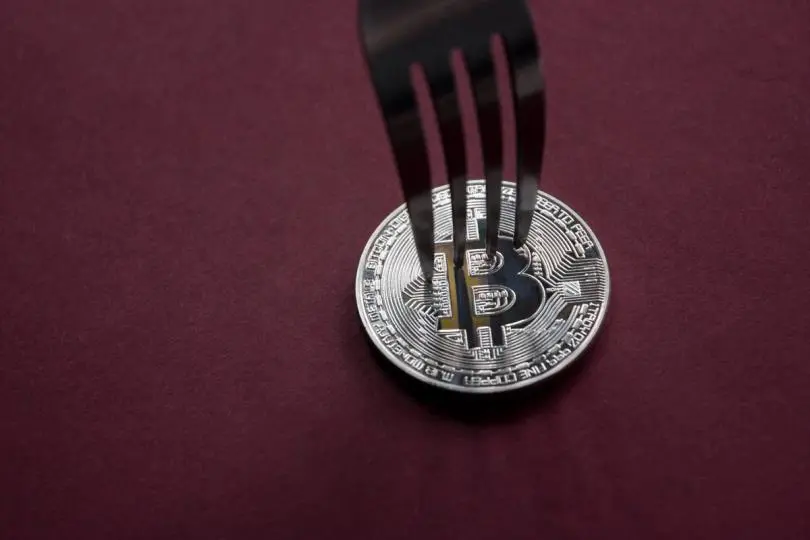
A controversial proposal known as BIP 110, which would temporarily restrict non-financial data on the Bitcoin blockchain, faces an early August deadline with miner support still below 1%. The measure would tighten limits on OP_RETURN and other data-carrying methods for one year, a move backers say would refocus Bitcoin on payments but critics argue improperly censors valid, fee-paying transactions.
Background of BIP 110
BIP 110 is a Bitcoin Improvement Proposal that seeks to cap the amount of arbitrary data that can be embedded in Bitcoin transactions. Specifically, it would reduce the maximum allowed size of OP_RETURN outputs from 80 bytes to 40 bytes and limit the number of such outputs per transaction. The proposal also targets other data-carrying techniques, such as using multi-signature scripts or false public keys to store data. Proponents argue that the growing use of Bitcoin for non-financial purposes—like timestamping, token issuance, and even storing small files—clogs the blockchain and drives up fees for ordinary users.
The debate over non-financial data on Bitcoin is not new. OP_RETURN was introduced in 2014 with a 40-byte limit, later expanded to 80 bytes in 2016 to accommodate projects like Omni Layer and Counterparty, which use the Bitcoin blockchain to issue tokens. Over time, Ordinals and BRC-20 tokens, which inscribe data directly into witness data, have surged in popularity, sparking concerns about blockchain bloat. BIP 110 is seen as a direct response to this trend, aiming to curb what some call ‘spam’ transactions.
Miner Support and Opposition
Despite the proposal’s clear intent, miner support has remained negligible. According to data from various mining pools, less than 1% of the hashrate has signaled for BIP 110. This lack of support is striking given that miners are the ones who would ultimately enforce the new rules. The deadline for activation is early August; if support does not reach the required threshold, the proposal will fail.
Major figures in the Bitcoin ecosystem have publicly opposed BIP 110. Michael Saylor, CEO of MicroStrategy and a prominent Bitcoin advocate, argued that turning a spam dispute into a consensus fight could create a bigger risk than the spam itself. Adam Back, CEO of Blockstream and co-inventor of the Hashcash proof-of-work system, echoed similar sentiments, warning that such a controversial change could lead to a chain split and undermine confidence in Bitcoin. Other critics include developers and economists who believe that any censorship of fee-paying transactions, even those carrying arbitrary data, goes against Bitcoin’s permissionless ethos.
Proponents, however, insist that BIP 110 is a temporary emergency measure to preserve Bitcoin’s original vision as a peer-to-peer electronic cash system. They point to the increasing number of non-financial transactions, which now account for a significant share of block space, as evidence that action is needed. They argue that the one-year cap would buy time for the community to develop more sustainable solutions, such as layer-2 protocols or dedicated data blockchains.
Historical Context: Bitcoin Scaling Debates
The controversy surrounding BIP 110 is reminiscent of earlier scaling debates that have shaped Bitcoin’s history. The Blocksize War of 2015–2017 saw intense disagreements over whether to increase the block size limit to accommodate more transactions. That conflict ultimately led to the creation of Bitcoin Cash, which increased block size to 8 MB. Later, SegWit (Segregated Witness) was activated in 2017 as a soft fork, which not only fixed transaction malleability but also effectively increased block capacity by separating signature data.
More recently, the rise of Ordinals and inscriptions has reignited debates about Bitcoin’s purpose. Some community members view these applications as valuable innovations that bring new users and use cases to Bitcoin. Others see them as an abuse of scarce block space, pushing up fees for regular users. BIP 110 is the most formalized attempt to date to address this issue through consensus rules, but its low support suggests the majority of stakeholders prefer a different approach.
Technical Details and Implications
OP_RETURN is a Bitcoin script opcode that allows users to attach up to 80 bytes of arbitrary data to a transaction, marking the output as provably unspendable. This feature is widely used for token protocols, notarization services, and metadata storage. BIP 110 would reduce this limit back to 40 bytes and also restrict alternative methods of embedding data, such as using pay-to-script-hash (P2SH) with false public keys or exploiting the witness data of SegWit transactions.
If activated, the change would apply only to new blocks mined after activation. Transactions that violate the new rules would be considered invalid by nodes running the updated software. However, because miner support is so low, the plan would likely create a minority fork: a small group of miners would continue to mine blocks following BIP 110 rules, while the majority of hashpower would remain on the original chain. This could lead to a scenario where two competing Bitcoin chains exist, much like after the SegWit activation, though with far less support.
Node adoption is also critical. For a soft fork to be successful, the majority of economic nodes (exchanges, wallets, services) must upgrade. So far, node adoption of BIP 110 is estimated at around 2–3%, far below the 95% threshold typically needed for a smooth activation. This reality makes a network-wide change highly unlikely.
Alternative Solutions and Future Outlook
Instead of imposing hard limits through a consensus change, many in the Bitcoin community advocate for market-based solutions. Higher fees naturally deter low-value spam, and layer-2 protocols like the Lightning Network can handle thousands of transactions per second off-chain, relegating on-chain transactions to settlement. Additionally, projects like Taproot Assets (formerly Taro) aim to issue tokens on Bitcoin without cluttering the base layer by using Merkle tree structures.
Another proposal gaining traction is ‘DOG Mode’—a playful reference to the DOG token—which suggests using fee-burning or auction-based mechanisms to allocate block space. This approach would not require a consensus change and would preserve Bitcoin’s neutrality. As the August deadline approaches without significant miner support, BIP 110 appears destined to become a footnote in Bitcoin’s scaling saga, rather than a transformative upgrade. The episode, however, highlights the ongoing tension between preserving Bitcoin’s original vision and accommodating new use cases that drive adoption.
Source:Coindesk News