

Artificial intelligence companies have long positioned themselves as pioneers, forging ahead with powerful models while warning that society must prepare for the consequences. But a new report from Politico suggests that these same companies are now realizing they need something they once opposed: clear, consistent rules from the government. The Trump administration’s recent crackdown on Anthropic’s Fable 5 model has sent shockwaves through the industry, prompting executives to acknowledge that being told what is not okay is actually essential for their long-term survival.
Dean Ball, recently hired at OpenAI to a position called “Head of Strategic Futures,” captured the sentiment in Politico’s story: “[T]here are things the administration is doing that I’m not so much of a fan of, in terms of the abruptness and the opacity and the strictness, but the more fundamental point is that I’m glad they’ve arrived to the conclusion that they have — to take this stuff seriously.” This statement reflects a broader shift among AI leaders who once fought tooth and nail against any government oversight.
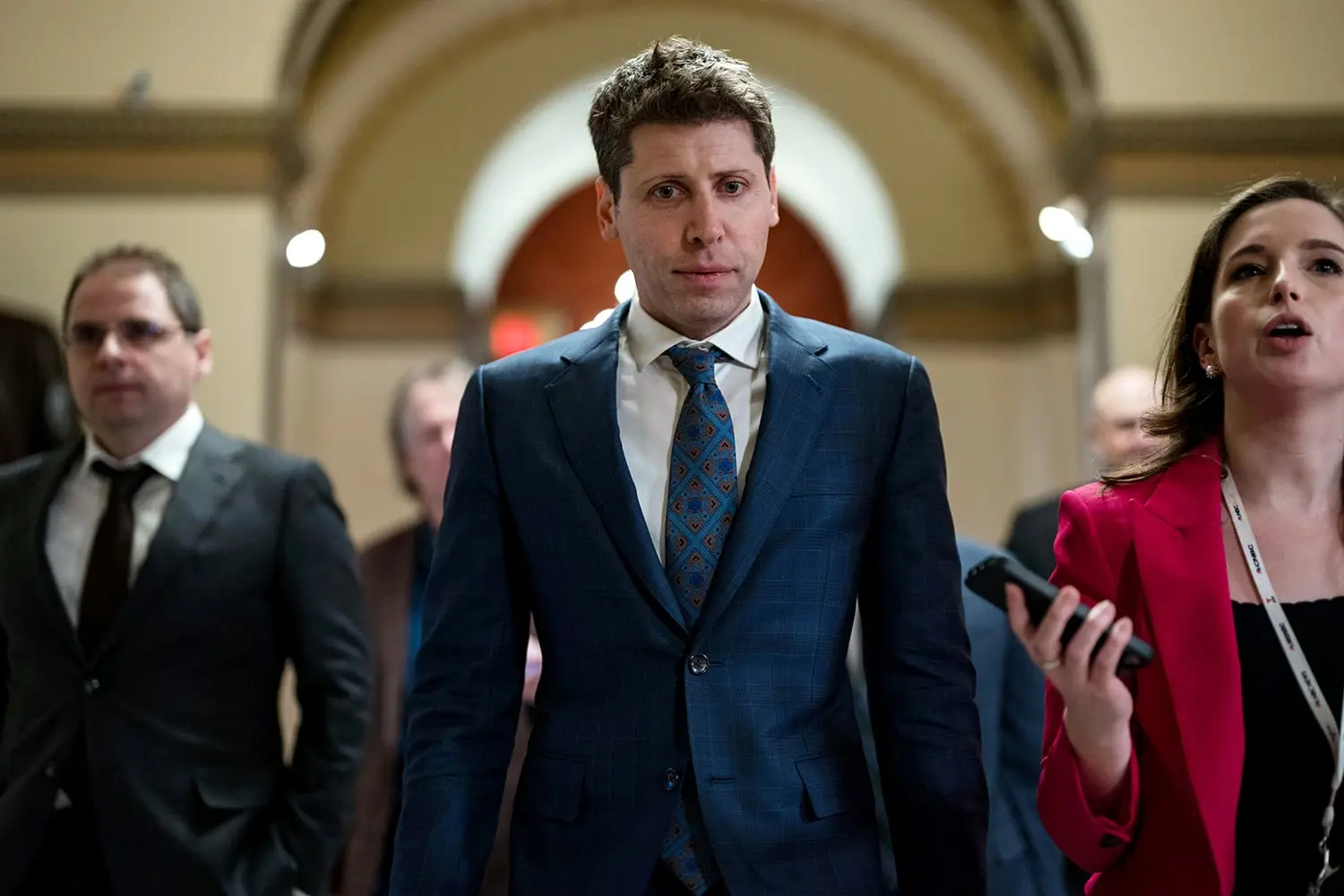
The history of AI regulation in the United States has been marked by a tug-of-war between innovation and safety. In 2023, OpenAI CEO Sam Altman went before Congress and famously said, “I think if this technology goes wrong, it can go quite wrong. And we want to be vocal about that.” He added, “We want to work with the government to prevent that from happening.” At the time, many skeptics viewed Altman’s testimony as a preemptive move to shape regulation in favor of large incumbents. Now, that warning sounds almost prophetic.
Similarly, Anthropic CEO Dario Amodei wrote an essay titled “The Adolescence of Technology,” in which he argued that humanity’s ability to navigate the coming upheaval “will depend on our character and our determination as a species, our spirit and our soul.” He warned that “the years in front of us will be impossibly hard, asking more of us than we think we can give.” These statements were widely interpreted as a marketing tactic to position AI companies as responsible actors. But in light of recent events, they have taken on a more urgent tone.
The Trump administration initially signaled that it had no intention of regulating AI. In his famous Paris speech in February 2025, Vice President JD Vance declared that regulation “would not only unfairly benefit incumbents in the space, it would mean paralyzing one of the most promising technologies we have seen in generations.” This hands-off approach pleased the tech industry, which had spent billions on developing frontier models. But it also created a vacuum that the administration would later fill with arbitrary enforcement.
The first major sign of a shift came when the Trump administration designated Anthropic as a supply chain risk. However, the rationale had little to do with safety or ethics. Instead, it was driven by a desire to control the most powerful AI tools before foreign adversaries could get them. The administration wanted to be the sole arbiter of how much “lethality” these models could wield, turning AI into a geopolitical weapon.
This approach culminated in the abrupt halt of Anthropic’s Fable 5 model. The administration effectively imposed a moratorium on new releases, citing national security concerns. “The administration’s current actions have resulted in an almost complete moratorium on new releases,” Saif Khan, a former Biden administration tech advisor, told Politico. “And that’s going to start seriously impacting companies’ bottom lines.”
OpenAI, Anthropic’s main competitor, is also feeling the heat. When it released its GPT 5.6 series, it made the models available to a small group of VIP customers while promising to work with the administration on a “repeatable process for future model releases.” But behind the scenes, the company is frustrated. In a blog post, OpenAI stated, “We don’t believe this kind of government access process should become the long-term default.” An anonymous policy advisor for frontier AI companies described the situation as “walking on eggshells.”
The uncertainty is not just a domestic issue. As cybersecurity experts quickly pointed out after the Fable ban, rival labs in China can seize upon the disorder by pushing ahead with their own AI development while U.S. labs are bogged down trying to figure out what is and isn’t allowed. This gives Beijing a strategic advantage in the global AI race, precisely the outcome the administration wanted to avoid.
Public opinion adds another layer of complexity. According to a survey conducted by Anthropic itself, only 15% of Americans trust AI companies to make decisions about how AI is developed and used. Seven in ten oppose data centers in their area, and most want development to slow down. Perhaps most tellingly, 87% of respondents believe it is either “very likely” or “somewhat likely” that foreign governments will use AI to attack the United States within the next 20 years.
These fears are not unfounded. AI models have already been used to generate disinformation, create deepfakes, and automate cyberattacks. The technology is advancing faster than the legal and regulatory frameworks designed to govern it. The Trump administration’s executive order in early June 2026 asked—but did not require—AI companies to submit their models for federal vetting. However, without actual laws passed by Congress, the boundaries of acceptable AI behavior remain unclear. What is and isn’t okay currently depends on whether Donald Trump is pleased with what he sees.
The underlying problem is that the U.S. regulation plan has circumvented the need for legislation. The administration’s actions have been reactive and opaque, creating a climate of uncertainty that stifles innovation without providing clear guardrails. Dean Ball’s comment about being “glad they’ve arrived to the conclusion” underscores the irony: the AI industry wanted a framework, but what it got was a moving target.
For now, the future of AI in America hangs in the balance. The president has paused the metaphorical dental procedure—the rapid rollout of powerful models without oversight—but has indicated that he will soon resume it. Meanwhile, the public remains deeply skeptical, and international competitors are watching closely. The AI companies that once dismissed regulation are now begging for clarity, but they may have to wait until the administration decides what it really wants from this powerful technology.
Source:Gizmodo News