

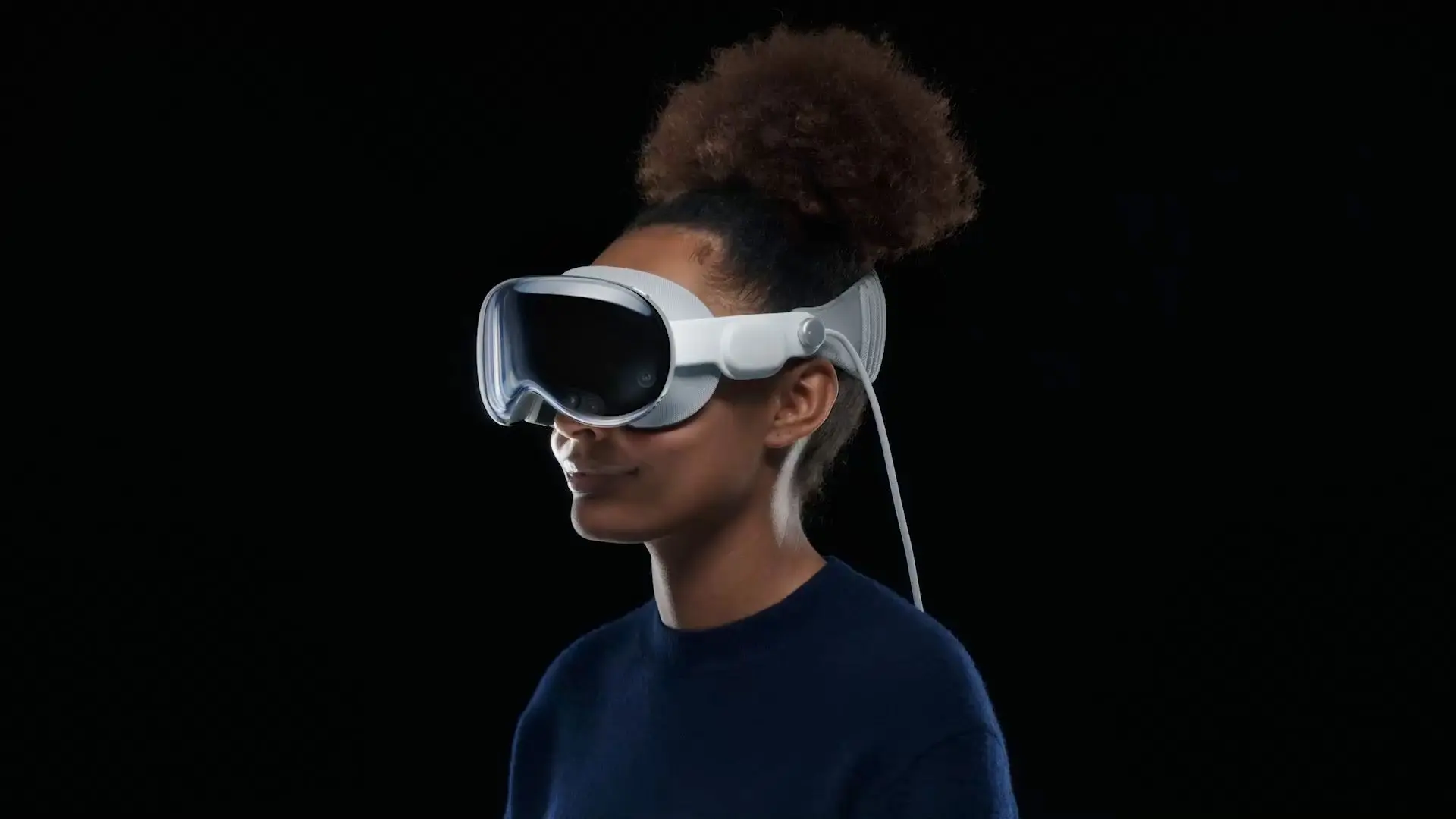
Apple Vision Pro: Key Facts
Apple Vision Pro is Apple's augmented and virtual reality headset, often described as a "spatial computer." The device blends digital content with the physical world using over a dozen cameras and sensors. It was first released in February 2024 with an M2 chip, and updated in October 2025 with an M5 chip. The new model brings several improvements in comfort, performance, and battery life.
Pricing and Availability
The M5 Vision Pro starts at $3,700 for 256GB of storage. Higher capacities of 512GB and 1TB are also available. Due to the global memory crisis, Apple raised the price from $3,499 to $3,699 in June 2026, making it one of the most expensive consumer headsets on the market. It is sold directly from Apple's online store and retail locations in countries including the US, UK, Canada, Australia, China, and others.
Comfort and Design Improvements
One of the biggest complaints about the original Vision Pro was its weight—over 1.3 pounds—which caused discomfort during extended use. With the M5 model, Apple introduced a new Dual Knit Band that replaces the earlier Solo Knit Band. The Dual Knit Band features two straps: one behind the head and one over the top, with counterweights to distribute the weight more evenly. Reviewers found it significantly more comfortable for sessions longer than an hour. The headset remains a chunky ski-goggle design with a laminated glass front, aluminum frame, and a magnetic Light Seal for blocking out light.
Display Upgrades
The Vision Pro uses custom micro-OLED displays with 23 million pixels total—more than a 4K TV per eye. With the M5 chip, the headset can render 10 percent more pixels than the M2 version, resulting in sharper text and more detailed visuals. The refresh rate has been increased to up to 120Hz (from 90Hz), reducing motion blur and making the experience smoother when using the device as a Mac display. The external EyeSight display still shows the user's eyes to others, indicating whether they are in immersive mode or not.
Processing and Performance
Under the hood, the Vision Pro is powered by Apple's M5 chip (third-generation 3nm) with a 10-core CPU and 10-core GPU, along with 16GB of RAM. The M5 provides up to 50% faster Neural Engine performance for AI tasks, faster app loading, and better graphics. The dedicated R1 chip handles input from cameras and sensors, streaming images to the displays with just 12ms latency. Users will notice more consistent performance, no lag, and improved Spatial Persona generation.
Battery Life
The Vision Pro uses an external battery pack worn at the hip, connected via a braided cable. The M5 model offers up to 3 hours of video playback and 2.5 hours of general use, which is 30 minutes longer than the M2 version. The battery pack can be swapped for extra power, and the headset can also be plugged into a power adapter for all-day use. Despite improvements, battery life remains a limiting factor for long sessions away from an outlet.
Control and Interaction
There are no physical controllers. Instead, the headset relies on eye tracking, hand gestures, and voice commands. Users look at an item to highlight it and tap their fingers to select. Scrolling is done with a flick of the fingers. Bluetooth keyboards, trackpads, and game controllers can be connected for more traditional input. Optic ID uses iris scanning for authentication, similar to Face ID.
Software and Ecosystem
visionOS is the operating system, offering a three-dimensional interface where apps can be placed anywhere in the user's space. It runs iPhone and iPad apps natively, and has a dedicated App Store. The headset can serve as a 4K display for a Mac, and supports spatial video playback. New features in visionOS 26 and 27 include persistent widgets, Siri AI with conversational abilities, and enhanced Personas. The Cinema Environment lets users watch movies on a virtual 100-foot screen.
Camera and Recording
The Vision Pro can capture 3D photos and videos using its external camera, activated by a top button. When recording, the EyeSight display shows an animation to alert others. The camera can also convert existing 2D photos into 3D using depth information. Video quality is impressive, but the feature is primarily for immersive memory capture.
What's Next for Vision Pro
Apple has paused development on a next-generation high-end headset, with no new model expected until at least 2028. Instead, the company is focusing on smart glasses similar to Meta Ray-Bans, which will have cameras and speakers but no display. These AI-powered glasses are rumored for a 2026-2027 launch. A cheaper version of the enclosed headset may come later, but current efforts are centered on more mass-market wearable devices. Apple also continues to explore AR glasses with in-lens displays, though no concrete product timeline exists.
Source:MacRumors News